



You might assume that an Idaho project involving salt would also include butter, pepper, and potatoes.
But experts at the Department of Energy's Idaho National Laboratory are working with molten salt, not Morton's. Their latest announcement is "a major milestone for American innovation," according to researcher Bill Phillips.
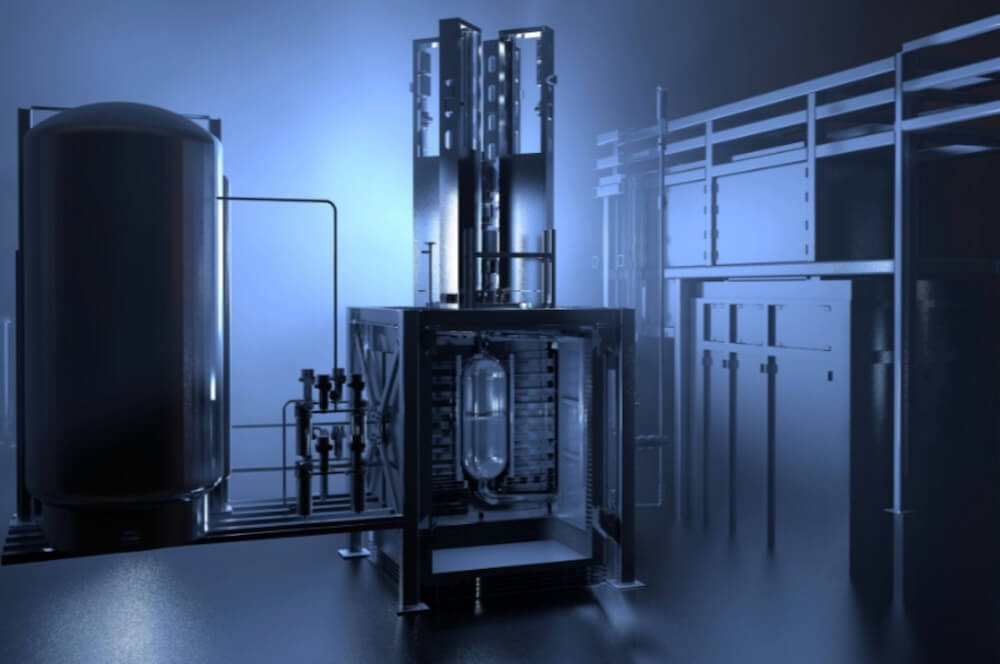
That's because the project could expand nuclear power's use on land and sea through the development of a fuel salt for the world's first fast-spectrum, salt-fueled reactor test.
It's part of efforts to advance the Molten Chloride Reactor Experiment — leading to a new class of reactor — for commercial use.
Most common fission reactors use pressurized water to cool chambers where atoms are split to make energy. Salt absorbs more pressure and heat than water, allowing the reactors to reach higher temperatures. The heat can be used for energy production and for industrial processes that normally generate air pollution, according to the International Atomic Energy Agency.
Last year, the Idaho team found the "right recipe" to convert 95% of uranium metal into just under 40 pounds of fuel salt within hours, instead of a week. The work provides crucial data for nuclear experts working for Southern Company and the Bill Gates-backed TerraPower. They aim to have molten salt reactors ready for potential "terrestrial and maritime" use by the 2030s, the DOE announcement added.
Numerous other innovations are making headway, too. Several small modular reactors, billed as lower-cost and portable, are set to activate around the world within a decade. While fusion energy is likely years from viability, experts continue to make progress on the alternative reaction type that combines atoms and doesn't produce long-lasting radioactive waste or meltdowns — risks often cited by critics.
While rare, nuclear accidents can have long-lasting and deadly results, as noted by the Union of Concerned Scientists. The expert group also mentioned possible weapons development as a worrisome offshoot of the energy research.
Radioactive waste is perhaps the most popularized concern, but it's not in the form most people likely expect. Nuclear fuel and waste are solid ceramic pellets, not glowing green ooze. The country's 94 reactors' waste would fill less than half of an Olympic-size swimming pool, according to the DOE.
The fuel isn't quite everlasting, but it is long-lasting and abundant — and it doesn't produce lung-troubling air pollution. Exposure to high levels of smog can increase risks to lung, obesity, and immune system health, the National Institutes of Environmental Health Sciences reported.
TCD Picks » Quince Spotlight
💡These best-sellers from Quince deliver affordable, sustainable luxury for all




|
Would you feel safe living close to a nuclear power plant? Click your choice to see results and speak your mind. |
 Absolutely ✅
 Solar energy is an alternative that's free of air pollution and radiation as well as cheap and fast to deploy. That's why New York financial advisory firm Lazard called solar a renewable that will "continue to play a key role in … new power generation."
It's also an asset to homeowners since rooftop panels can provide electricity independent of the grid and serve as blackout protection when packaged with a battery backup. An array can help you reduce or eliminate your electric bill, with savings vetted by a government study.
The Cool Down's Solar Explorer can guide your path with curated quotes, installer recommendations, and other information that can save you up to $10,000.
For nuclear energy's part, the breakthroughs seem poised to continue, as it has strong government backing. The Idaho team has one fuel salt batch in the proverbial cabinet, with up to 74 more to go. The team plans to test-run the reactor in 2028 for six months.
"This is the first time in history that chloride-based molten salt fuel has been produced for a fast reactor," Phillips said in the announcement.

Get TCD's free newsletters for easy tips to save more, waste less, and make smarter choices — and earn up to $5,000 toward clean upgrades in TCD's exclusive Rewards Club.
Cool Picks





