


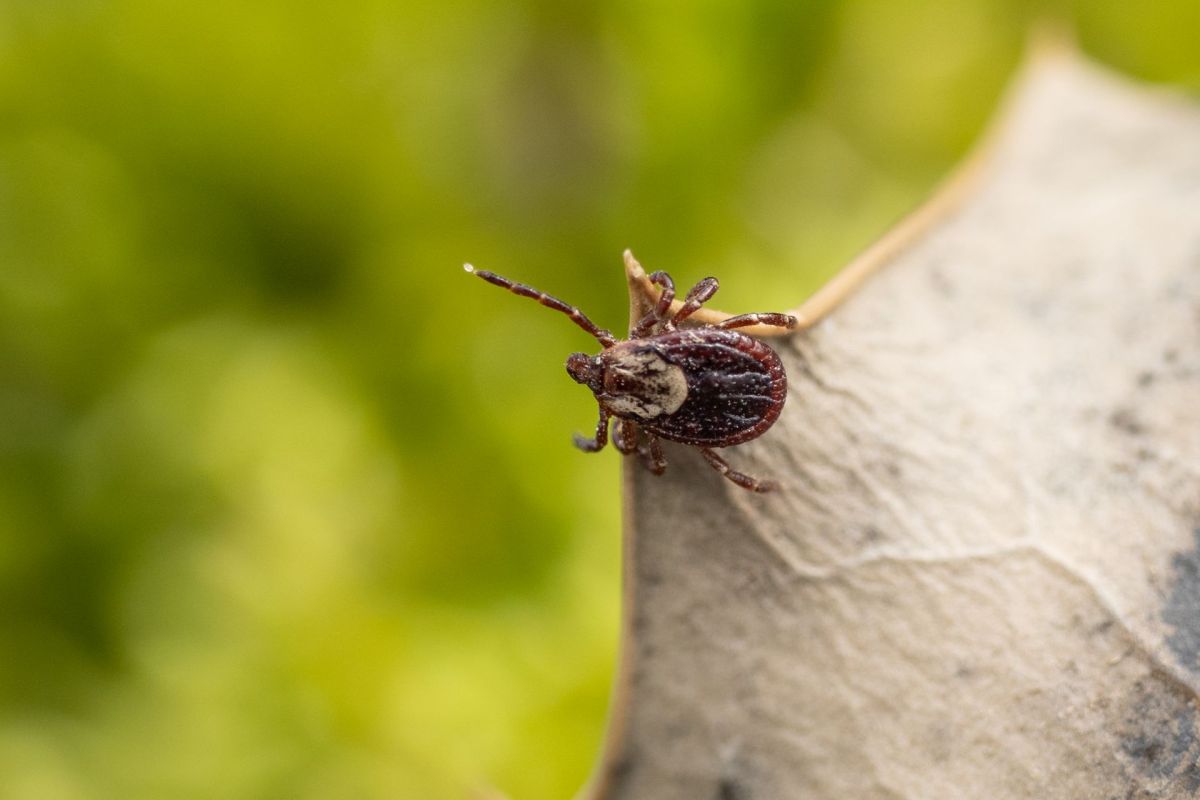
Researchers in Biltmore Forest, North Carolina, found bacteria associated with Lyme disease in nearly 40% of the adult deer ticks they collected.
Here's what to know
According to NBC News, the study from the Centers for Disease Control and Prevention was led by Dr. Ross Boyce of the University of North Carolina School of Medicine. Researchers surveyed 22 household lawns in Biltmore Forest between November 2024 and August 2025 and collected 373 ticks.
Blacklegged ticks, also called deer ticks, accounted for 76.9% of the sample. Tests showed that 39.6% of the adult blacklegged ticks carried Borrelia burgdorferi, which is the bacterium that causes Lyme disease in humans.
Boyce said that level matches what is seen in long-established Lyme hotspots like Pennsylvania and New York. Researchers also reported the first North Carolina ticks found with Anaplasma phagocytophilum and Borrelia miyamotoi, which can both cause flu-like illness in people.
More background
Angela Newman, a 57-year-old Biltmore Forest resident, told NBC News that it took five years for her to receive a Lyme diagnosis after dealing with blurry vision, numbness, weakness, and other symptoms. She said one doctor told her, "I don't think you have Lyme. We don't really have that around here."
Her test eventually came back positive, and antibiotics helped. Newman said to the outlet, "It's frustrating to have people basically say, 'I think you need antidepressants.'"
TCD Picks » Quince Spotlight
💡These best-sellers from Quince deliver affordable, sustainable luxury for all




In some places, however, the spread of ticks has moved faster than awareness and testing. Lyme and other tick-borne illnesses are generally treatable with antibiotics, but delayed diagnosis can prolong symptoms and make recovery harder.
Roughly half a million people in the U.S. are diagnosed with Lyme disease each year. The illness has long been centered in the Northeast and Upper Midwest, but researchers say shifting tick ranges are putting more communities at risk.
Ticks can become established in new places as winters grow warmer and animal populations migrate.
What's being done?
Newman and Jonathan Kanipe, the Biltmore Forest town manager, helped organize a community group to raise awareness about the local tick threat, NBC News reported. Both became citizen co-authors of the study.
Mark Soloski, a senior adviser at Johns Hopkins Medicine's Lyme Disease Research Center, also told NBC News, "Physicians and healthcare workers, especially in that region, need to be very mindful and aware that ticks infected with this bacteria have moved in."

Get TCD's free newsletters for easy tips, smart advice, and a chance to earn $5,000 toward home upgrades. To see more stories like this one, change your Google preferences here.






