


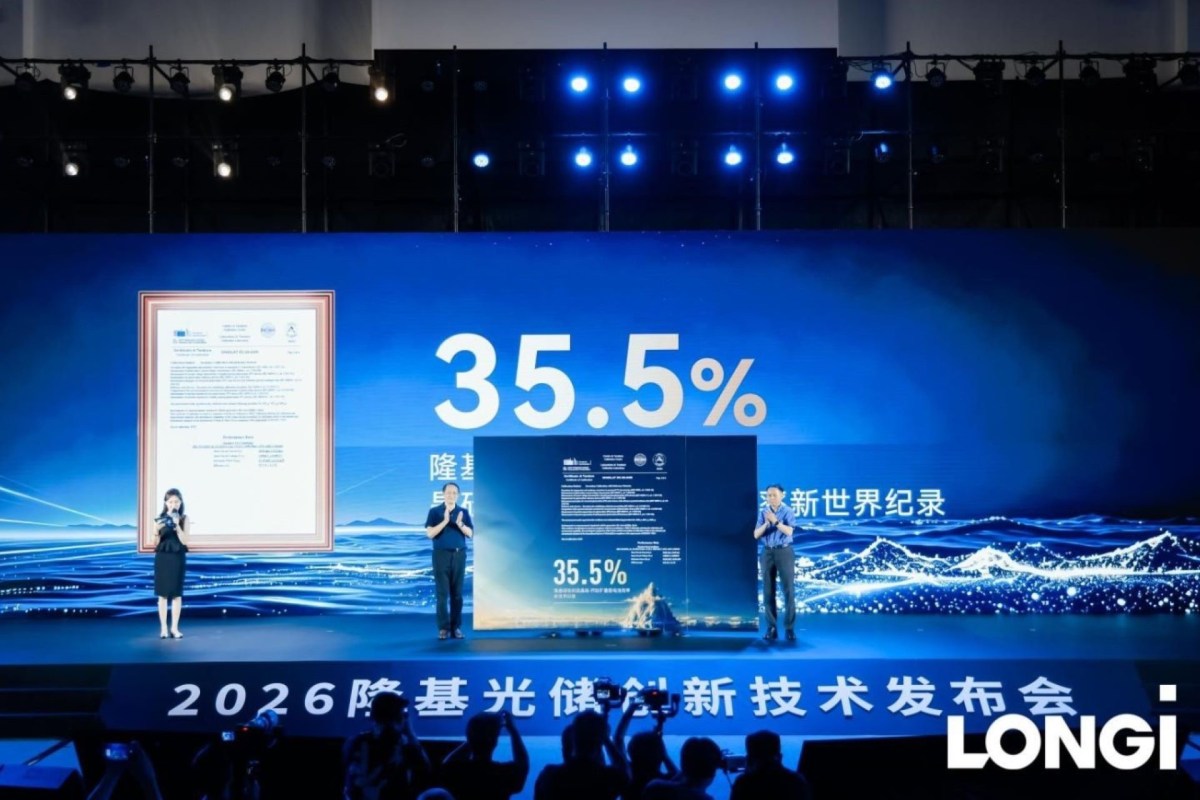
Chinese solar manufacturer Longi says it has set a new world record for a tandem solar cell, reporting a power-conversion efficiency of 35.5% for a two-terminal crystalline silicon-perovskite device, as pv magazine detailed.
Higher-efficiency solar technology could mean more electricity from the same rooftop, parking lot, or solar farm, helping lower energy costs and reduce pollution at the same time.
What happened?
At Shanghai Jiao Tong University on July 14, Longi used its 2026 Solar and Storage Innovation Technology Conference to reveal the new result.
Independent certification came from ESTI, the European Solar Test Installation in Italy, which is part of the European Commission's Joint Research Centre.
The company's certified tandem results have climbed from 31.8% in 2023 to 33.9% later that year and 34.6% in 2024, per pv magazine. Longi said the latest number also beats its earlier comparable laboratory best of 34.85%, which it announced in April 2025 and later had certified by the U.S. National Renewable Energy Laboratory.
Longi also did not disclose the record cell's active area or full electrical characteristics. That means the 35.5% figure refers to a certified lab device, not a commercial panel available for purchase today, pv magazine clarified.
TCD Picks » Quince Spotlight
💡These best-sellers from Quince deliver affordable, sustainable luxury for all




Why does it matter?
Solar-cell efficiency determines how much sunlight a device can convert into usable electricity. The higher that number rises, the more power can be generated from the same amount of space.
Space is often limited where solar can be most useful, whether that be on home rooftops, apartment buildings, warehouses, schools, or city infrastructure. More efficient panels could help property owners get more value from constrained spaces and potentially reduce the cost of producing each unit of electricity.
As solar power becomes more effective and affordable, it can displace dirty energy sources that contribute to planet-warming pollution and unhealthy air. That can mean lower utility bills, cleaner local air, and a more resilient electric grid.
It is also a sign that tandem solar technology is advancing quickly. These cells combine crystalline silicon with perovskite, a material that has drawn major attention because it can capture different parts of sunlight more effectively than conventional silicon alone.
What's being done?
Longi's announcement shows that companies are still pushing to improve next-generation solar performance, even before mass production is ready. At the same time, the company has made clear that commercial rollout is not imminent.
In June, the company said it was not actively planning mass production of crystalline silicon-perovskite tandem cells, per pv magazine. Longi added that the technology still needs more work on larger-area deposition, manufacturing yield, encapsulation, stability, and cost before it can move from the lab to widespread use.
Steady record-setting progress can help move the industry forward. Repeated gains give researchers, manufacturers, and investors more reason to keep refining the technology until it becomes practical at scale.

Get TCD's free newsletters for easy tips, smart advice, and a chance to earn $5,000 toward home upgrades. To see more stories like this one, change your Google preferences here.






