


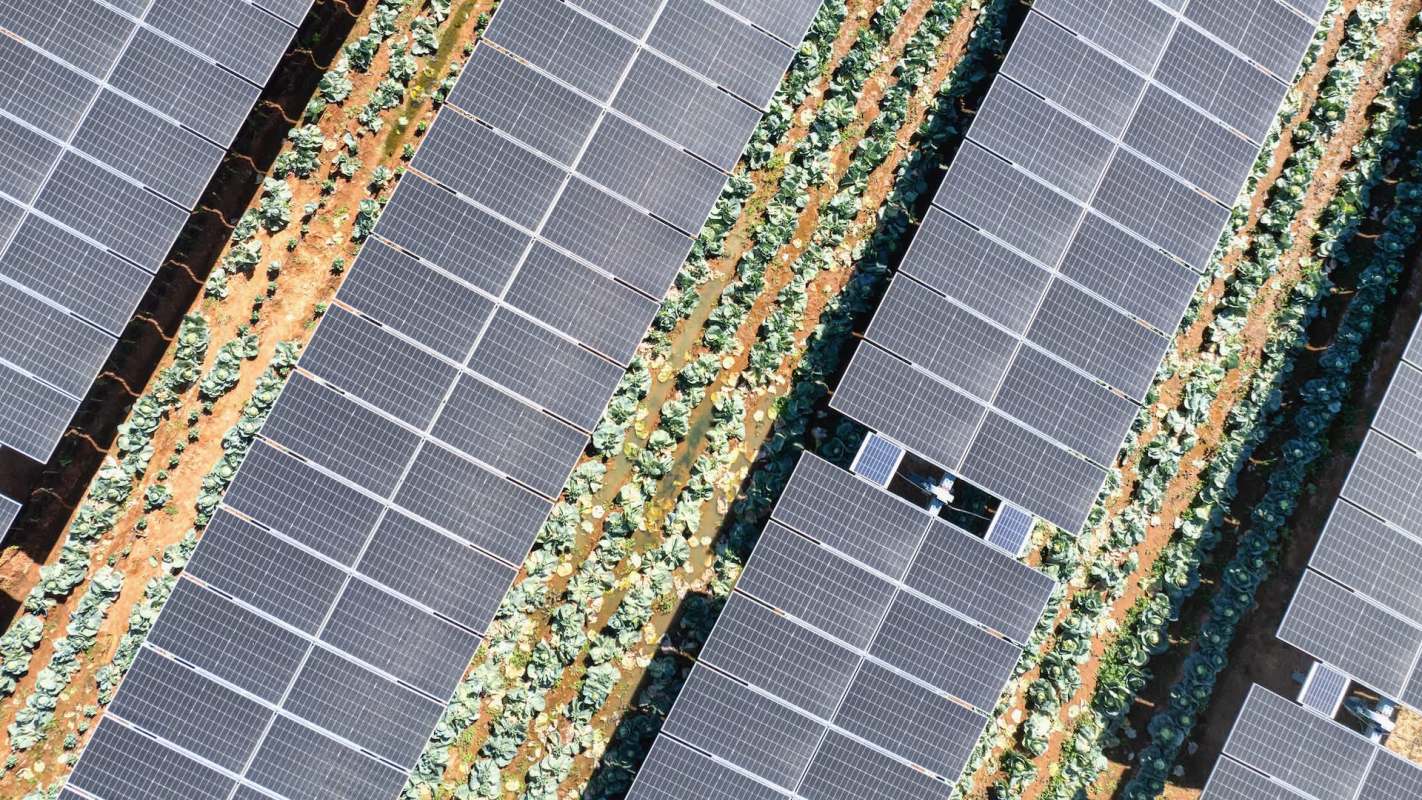
Germany's largest solar farm is expected to begin operations later this year — and its unique design has several potential benefits that could change the future of solar farming.
SolarQuarter reported that the project is being built by the Greenbuddies group in the Bavarian town of Oberndorf am Lech. With a nearly 17-megawatt peak capacity spread over 69 acres, the farm is Germany's largest agrivoltaic project.
The panels will be mounted on tracking systems that follow the sun's path throughout the day, allowing them to generate up to 30% more electricity than fixed panels. But it's what happens under the panels that is arguably most exciting.
Wheat will be grown underneath the panels, in an attempt to show that solar farms and agricultural farms can occupy the same space on a large scale. In fact, this project is named Triticum, which is Latin for "wheat."
Solar is one of the world's cleanest and cheapest forms of energy. Plus, when solar is combined with other sustainable energy sources such as wind, it can drastically reduce the amount of fossil fuels we burn and the heat-trapping pollution released into our atmosphere.
But solar farms take up large amounts of space, which makes agrivoltaic projects such as Triticum so exciting. By using the land beneath solar panels to grow crops, solar farms can serve dual purposes, making many farmers more likely to install panels on their properties — and to provide them with extra income streams.
This has already proved to be successful in other parts of the world. One Puerto Rican farmer installed solar panels on his coffee farm, and a peach farmer did the same in western Colorado. And as SolarQuarter pointed out, the Czech Republic adjusted farming regulations this year to allow solar panels to be installed above land used for crops such as cabbage and tomatoes.
Triticum is expected to be completed by the end of this year.
|
Would you like to have large solar farms in your state?
Click your choice to see results and speak your mind. |
 Yes! 👍
Get TCD's free newsletters for easy tips to save more, waste less, and make smarter choices — and earn up to $5,000 toward clean upgrades in TCD's exclusive Rewards Club.
Cool Picks





