


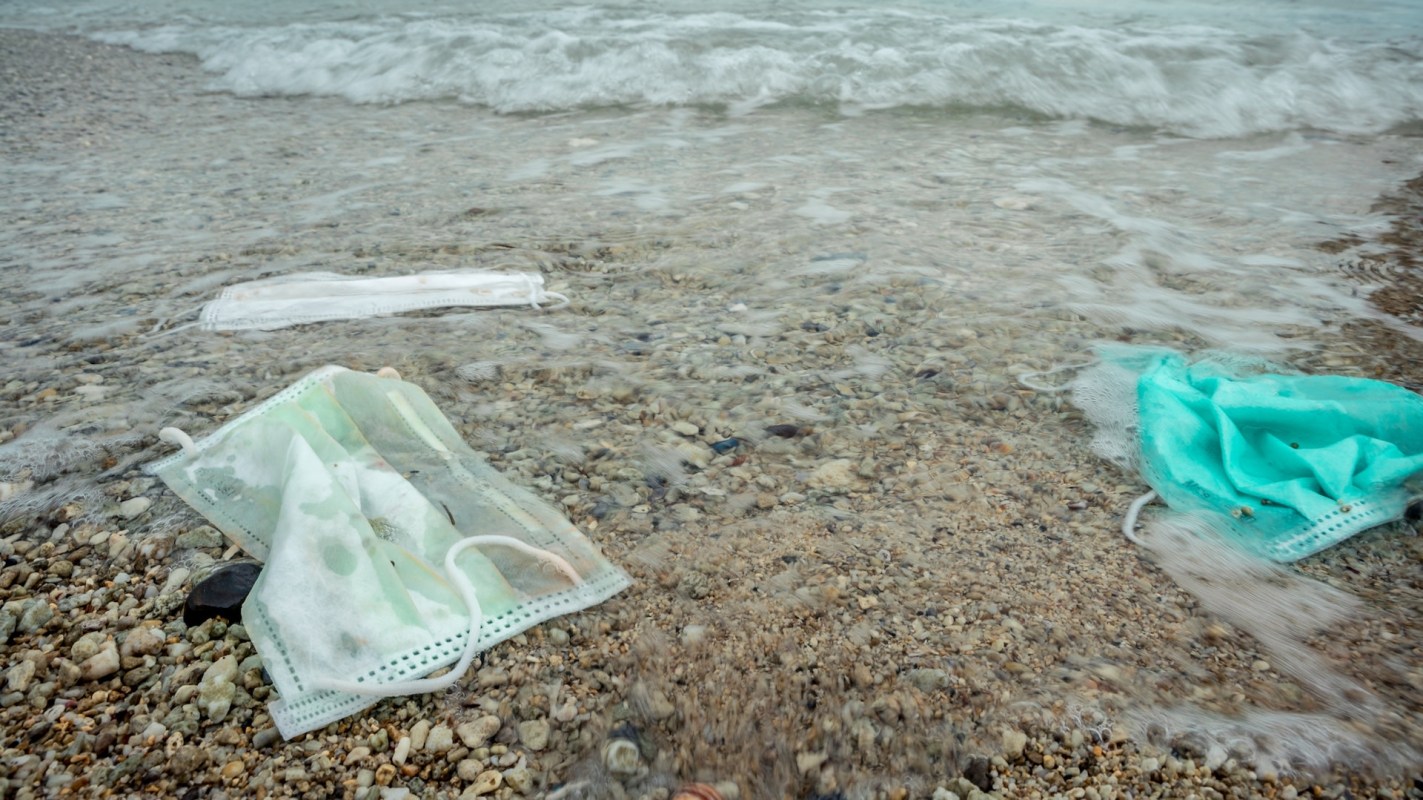
The face masks that many of us relied on during the pandemic are now causing unexpected issues. New research from engineers at Washington University in St. Louis revealed that discarded disposable masks can trigger a chain reaction of pollution that's more dangerous than previously understood.
What's happening?
The new study, published in the Journal of Hazardous Materials, shows that sunlight exposure causes face masks to degrade into microscopic plastic particles. In the presence of water and trace metals, these microplastics and nanoplastics can generate reactive oxygen species, triggering unexpected chemical reactions in the environment.
Within hours of exposure, these reactive particles can form manganese oxide, a transformation that changes the way both the plastic and nearby metals behave in water.
"These chemical reactions can change the reactivity and transport of these mask materials, and thus how the materials will distribute will also change — something that has been generally overlooked," lead researcher Young-Shin Jun told the WashU Newsroom.
Why is mask pollution concerning?
An estimated 1.5 billion masks ended up in the oceans in 2020 alone, WashU noted. As these masks break down, they become a "double threat" through their physical presence in ecosystems and their less visible chemical impacts on trace metals such as manganese and iron, which can influence everything from water quality to microbial life.
Microplastics are turning up everywhere these days — in our drinking water, in the food we eat, and even in our blood. The worry is that these tiny bits of plastic can carry harmful chemicals, build up in our bodies, and mess with our health in ways we're only just starting to understand.
However, the risks to human health from these masks aren't limited to potential water contamination or ingestion of microplastics. They also include the way they transform as they break down. Jun emphasized that discarded masks can release pollutants and alter how other harmful substances move through the environment — all while being nearly invisible to the naked eye.
What's being done about face mask waste?
This discovery is fueling new calls for better plastic waste management and pollution research. Jun and her team are studying how these nanoplastics interact with biofilms and other organic materials in water, which could help inform future regulations and cleanup strategies.
In the meantime, experts emphasize that reducing plastic use is one of the best ways to protect communities and ecosystems from similar pollution. Switching to reusable alternatives, from grocery bags to cloth masks, can make a big difference.
While this study focused on the pollution risks of face masks, the research could also lead to other solutions. Jun believes the findings may even help scientists develop better energy-storage materials in the future.
TCD Picks » Quince Spotlight
💡These best-sellers from Quince deliver affordable, sustainable luxury for all




|
Do you worry about the longevity of EV batteries? Click your choice to see results and speak your mind. |
 For sure 💯
Join our free newsletter for weekly updates on the latest innovations improving our lives and shaping our future, and don't miss this cool list of easy ways to help yourself while helping the planet.
Cool Picks





