


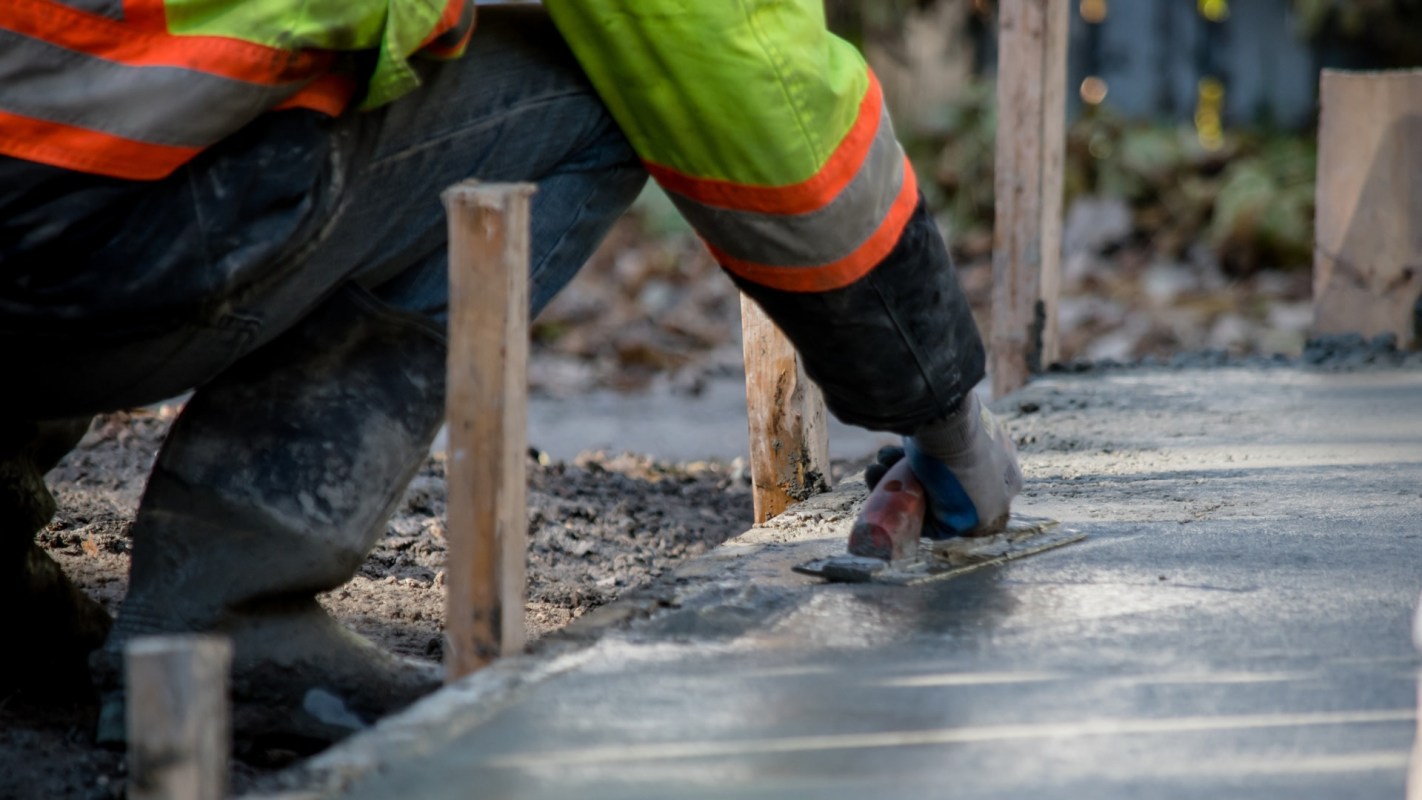
Scientists are making strides toward an eco-friendly overhaul of cement production, which emits large amounts of carbon dioxide.
Cement is needed all over the world for city infrastructure and building materials, but making it is not good for the environment. A new study from the Paul Scherrer Institute used artificial intelligence to show that it's possible to change this, though.
"Cement is basically a mineral binding agent — in concrete, we use cement, water, and gravel to artificially create minerals that hold the entire material together," said John Provis, co-author of the study, per the press release. "You could say we're doing geology in fast motion."
Extreme heat is needed to produce cement that can't be generated with electricity alone. Instead, the industry uses combustion processes that are energy-intensive and emit high levels of carbon dioxide.
Even more pollution is released during the production process from the raw materials that make up cement. The research team behind the study set out to develop a new cement "recipe" to reduce those emissions.
They used machine-learning models to test and simulate many potential cement formulations to find the optimal solution. With cement in such high demand, lowering the emissions profile by even a few percent would have a huge global impact.
"Instead of testing thousands of variations in the lab, we can use our model to generate practical recipe suggestions within seconds — it's like having a digital cookbook for climate-friendly cement," said Romana Boiger, first author of the study, per the press release.
The team has already identified some potential combinations for a new cement formulation, but they need to go through proper lab testing before being used in real-world applications.
It's important to remember that even though machine learning was used to find these solutions, AI as a whole is not good for the environment due to the massive amounts of energy it requires.
But cement is an extreme source of carbon emissions, and this study demonstrates that it's possible to do better and curb that pollution.
TCD Picks » Quince Spotlight
💡These best-sellers from Quince deliver affordable, sustainable luxury for all




A more eco-friendly cement production process will have significant positive impacts on the health of humans and the environment. It could also improve future infrastructure and reduce production costs with alternative materials that use less time, labor, and resources.
|
Should the government continue to give tax incentives for energy-efficient home upgrades? Click your choice to see results and speak your mind. |
 Absolutely 💯
Join our free newsletter for weekly updates on the latest innovations improving our lives and shaping our future, and don't miss this cool list of easy ways to help yourself while helping the planet.
Cool Picks





