


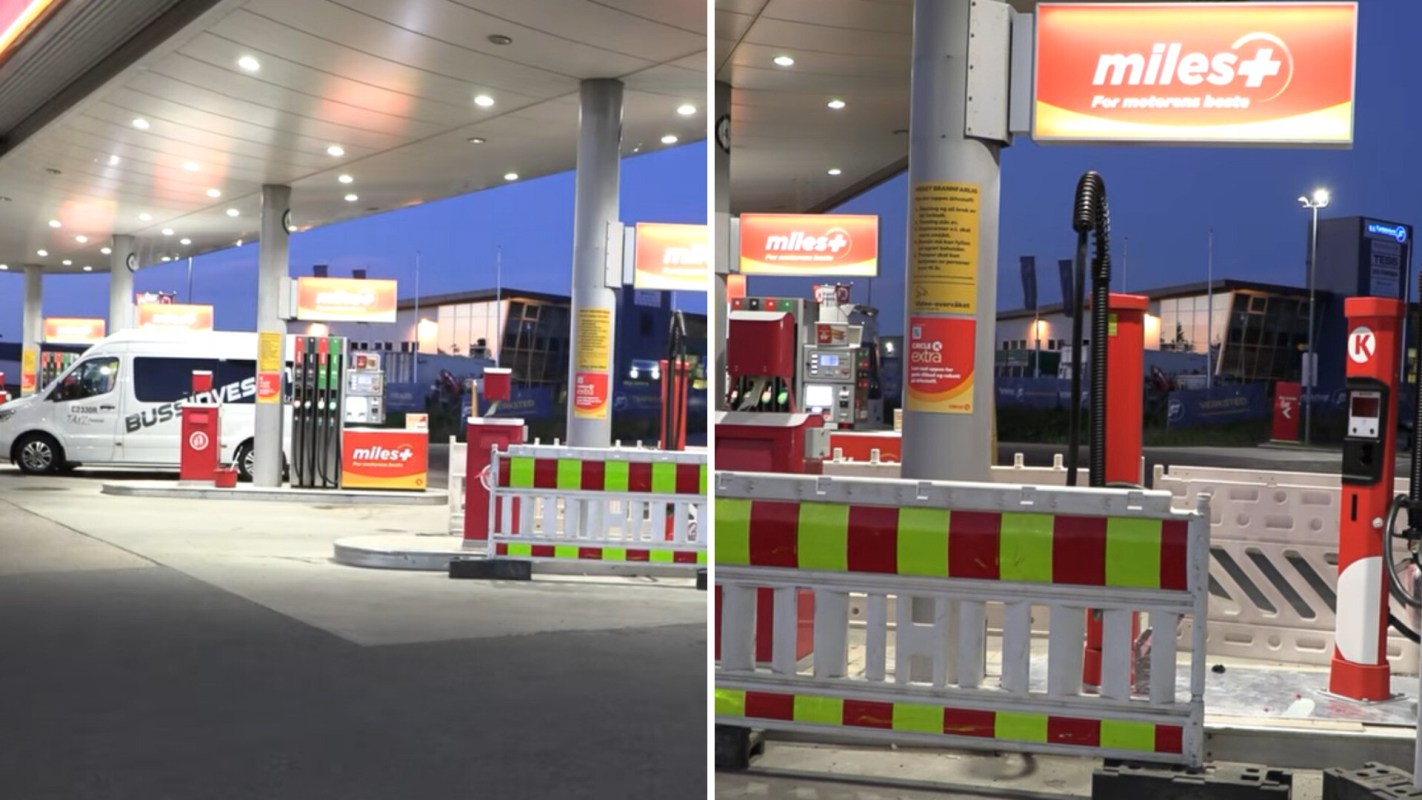
At a Circle K outside Oslo, Norway, the shift away from gas pumps is no longer abstract. It is already visible on the pavement, as creator Bjorn Nyland (@BjornNyland) showed in a new video.
A fuel station in one of the world's most electric vehicle-heavy markets has begun removing pumps and replacing them with a new bank of fast chargers.
What's happening?
In a recent video, Nyland showed a Circle K in Berger, near Oslo, partway through a conversion from fossil fuel service to EV charging.
Pumps had been taken out only days before, and new Kempower charging equipment was already installed.
He framed the update as part of a much larger national shift. Norway, Nyland said, now sees new car sales that are "about 97% pure EVs." At the Berger site, he added, a station employee told him that "just 1 week ago they removed the pumps here."
The site still had six fuel pumps remaining instead of the eight it had before, and older fast chargers were still nearby. The new hardware, though, appears intended to handle more EV traffic with a layout that can distribute power across several stalls.
TCD Picks » Quince Spotlight
💡These best-sellers from Quince deliver affordable, sustainable luxury for all




Berger offers an idea of how service stations can change once electric vehicles dominate the market. Space once used for gasoline starts being redesigned around charging.
Why does it matter?
For drivers, the payoff could be practical in providing more charging choices, smoother road trips, and fewer headaches. Nyland also noted that Norway now requires card payment on new chargers, helping cut through what he called a "freaking jungle of apps."
The development marks a positive shift away from an industry that harms people and communities at every stage, from extraction to burning. The fossil fuel industry plays a major role in worsening extreme weather disasters that destroy homes, livelihoods, and local economies.
It also drives air and water pollution linked to asthma, heart disease, cancer, and premature death, while keeping household energy costs high even as corporate profits soar. Industry lobbying has also slowed cleaner, cheaper alternatives that could better protect public health and family budgets.
Norway's transition offers a glimpse of what cleaner transportation can look like when charging infrastructure keeps pace with demand. Replacing underused pumps with chargers may also make economic sense in places where EV adoption is already high.
What's being done?
Circle K appears to be putting money into that kind of setup. In the video, Nyland spent much of his time highlighting the Kempower design, which separates power cabinets from dispensers so electricity can be assigned more efficiently among multiple charging stalls.
That can matter a lot at crowded locations. A slower-charging vehicle does not have to tie up a single high-powered unit, and operators may be able to serve more cars without installing a dedicated top-capacity charger at every stall.
"Remember, gas stations are not in the gas business, they are in the snacks business," one commenter pointed out. "They don't cry over closing a pump and putting up a charger where a potential snacks customer is stuck for 15-ish minutes."

Get TCD's free newsletters for easy tips, smart advice, and a chance to earn $5,000 toward home upgrades. To see more stories like this one, change your Google preferences here.






