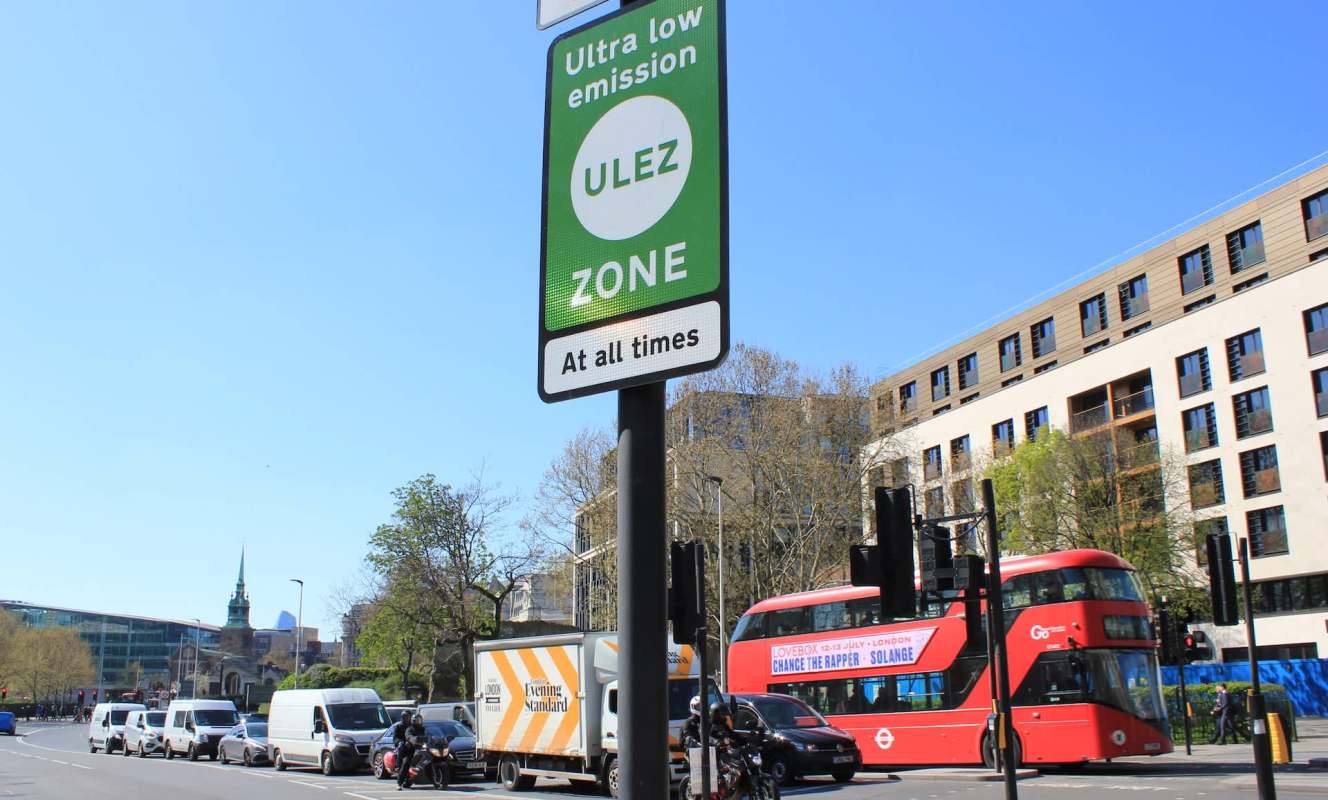
Children in London's lungs "grew bigger and stronger" after the city restricted the dirtiest vehicles from entering its ultra-low emission zone, offering new evidence that cleaner air can lead to measurable health gains in a relatively short time.
Here's what to know
According to The Guardian, a study found that London schoolchildren's lung capacity improved after the ultra-low emission zone, or Ulez, was launched in 2019.
The researchers' results indicated that policies designed to reduce traffic pollution can help undo damage that had been holding back children's lung development.
From 2018 through 2022, the team visited schools each year to track the children's growth, health, and lung function.
The study had been set up before Ulez started and included 1,664 London children ages 6 to 9, as well as 1,750 children in Luton, which The Guardian described as a comparable town with a similar mix of traffic pollution but no clean air zone.
At the start of the study, the London children had markedly smaller lungs than the children in Luton.
TCD Picks » Quince Spotlight
💡These best-sellers from Quince deliver affordable, sustainable luxury for all




Once Ulez was in place, the London group's lung measurements improved over time, eventually aligning with those of the Luton children.
Within five years of the policy taking effect, nitrogen dioxide exposure among London children fell at twice the pace and by twice the amount seen among children in Luton.
More background
The Guardian noted that research found children in London's most polluted neighborhoods could reach ages 8 or 9 with lung capacity 5% to 10% lower than that of children elsewhere.
Scientists have associated that loss of lung function with greater risks later in life, including asthma, chronic obstructive pulmonary disease, cardiovascular disease, metabolic disease, and premature death.
Published in Lancet Public Health, the new paper enters the public health debate over whether low-emission zones are worth their cost and the political backlash they can trigger.
Some motorists have criticized Ulez as an unfair burden, while supporters say cutting harmful vehicle exhaust is particularly important for children.
Chris Griffiths, joint senior author of the study and a primary care professor at the University of Oxford and Queen Mary University of London, addressed the findings.
"Traffic pollution in cities damages children's health and development," Griffiths noted. "We provide the strongest evidence yet on how these harms can be prevented."
The Guardian also cited Stephen Burgess, a University of Cambridge biostatistics professor who was not involved in the research. He argued that it was unclear whether the changes could be attributed entirely to Ulez rather than to other factors, including shifts in pollution during the COVID-19 pandemic.
What's being done?
Public health was a central reason for introducing London's low-emission zone, and the study suggested that approach may be working as intended.
By restricting the most polluting vehicles, the policy targets one of the biggest sources of nitrogen dioxide exposure in dense urban neighborhoods.
Children breathe faster than adults and are more vulnerable to traffic-related pollution during key stages of development.
Per The Guardian, health minister Karin Smyth called the study "a powerful reminder of the impact that air quality has on children's lung health."
"For years, politicians and pundits opposed to the Ulez have cynically sought to turn questions of public health into a crude culture war," London mayor Sadiq Khan wrote.
"Today, though, it's clear that we're winning the battle against toxic air in the capital — and it's London's children who are reaping the rewards."

Get TCD's free newsletters for easy tips, smart advice, and a chance to earn $5,000 toward home upgrades. To see more stories like this one, change your Google preferences here.