


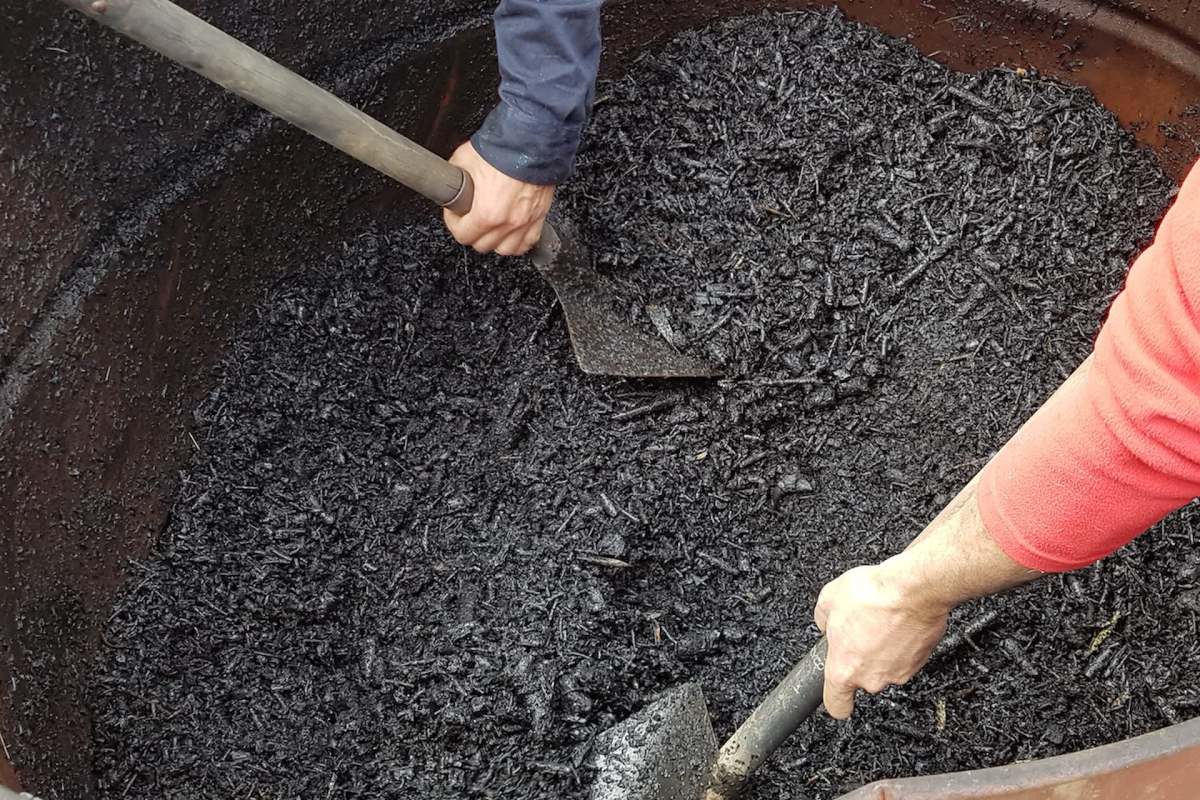
Scientists are celebrating an innovative way to transform farming waste into a soil enhancer that boosts crop yields and fights rising global temperatures.
Called biochar, the substance has been around for a while — but a new study is proving just how beneficial it can be toward aiding food security and supporting a healthy planet.
Farming creates a large amount of crop waste, such as straw, husks, and stalks. Farmers have different strategies for dealing with this waste. Some simply burn it. Others feed it to animals, plow it into the soil, or compost it. But these methods all release gases like methane and carbon, which pollute the air and contribute to rising global temperatures.
Scientists at the Chinese Academy of Sciences' Institute of Soil Science recently found that this agricultural waste can actually boost crop yield and lower pollution — when treated properly. When heated in low-oxygen conditions, this "waste" becomes biochar, a charcoal-like material that provides many soil-enriching benefits.
In the study, which was recently published in Proceedings of the National Academy of Sciences, the scientists looked at data from 438 studies, including 29 long-term field trials.
"We wondered how significant biochar's potential could be for carbon sequestration and emission reduction in global farmlands under long-term application," study author Jingrui Yang said in a news release.
The study found that regular application of biochar to farmland improves harvests and helps reduce pollution. On average, crop yields went up by about 11%, while methane dropped by about 14% and nitrous oxide by about 21%.
Soil organic carbon also increased by about 53% on average, meaning biochar helps the soil hold more carbon. This could help make agricultural fields valuable carbon stores, pulling carbon out of the atmosphere and reducing pollution-related climate shifts.
With these benefits in mind, the scientists highlighted that biochar offers a "promising strategy to improve food security and mitigate climate change."
The researchers estimate that if 70% of leftover crop straw were turned into biochar and added to fields, it could increase global grain harvests by 190 million tons every year. Doing so would also remove 2.01 petagrams of carbon pollution.
TCD Picks » Quince Spotlight
💡These best-sellers from Quince deliver affordable, sustainable luxury for all




Even after factoring in the pollution from making biochar, about 1.84 petagrams of carbon would still be removed from the atmosphere — enough to offset around 5% of the world's total carbon pollution.
There are, however, some challenges to biochar's implementation, per the study. One-off applications of biochar have weaker effects over time compared to repeated annual applications, meaning that farmers need to be dedicated to application to see continued perks. Additionally, there are upfront costs for farmers undertaking such an operation.
|
What is the biggest reason you don't grow food at home? Click your choice to see results and speak your mind. |
 Not enough time ⏳
 The study found that increased yields and reduced pollution from application could cover about 81% of biochar production costs. It also stated that government subsidies and supportive policies would be key to help encourage biochar implementation reach its full potential — and for its benefits to be felt globally.
Once scaled, the scientists believe farmers could actually economically benefit from biochar application.
The scientists said more field tests are needed in different soils, climates, and cropping systems to figure out the best ways to use biochar, like how often and how much to apply. They believe this future research could give farmers and governments stronger proof that biochar is worth the investment.

Join our free newsletter for weekly updates on the latest innovations improving our lives and shaping our future, and don't miss this cool list of easy ways to help yourself while helping the planet.
Cool Picks





