


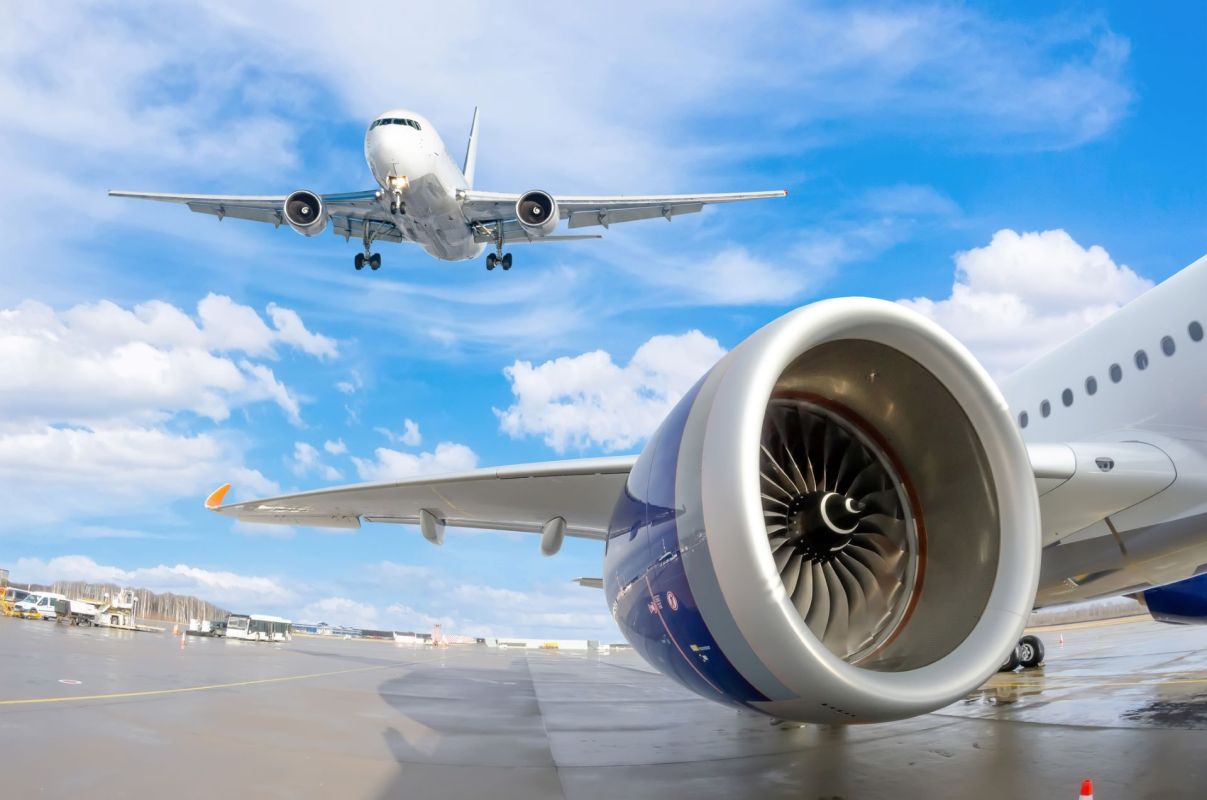
A team of researchers at the Technical University of Denmark (DTU) has developed a lightweight, 3D-printed fuel cell based on intricate structures found in nature that could transform the aviation industry.
According to a report from Tech Xplore, the DTU Energy and Construct departments have redesigned solid oxide cells through the use of 3D printing and gyroid geometry.
Their ceramic version is described as mathematically optimized to improve surface area within a given volume, and it is similarly used by engineers for heat exchangers and seen in nature in butterfly wing scales and bird feathers.
Weight is a crucial factor in upgrading the power systems for aircraft, which is why battery-powered electric aircraft are frequently small and largely remain under development.
DTU's research revealed that replacing the 70 tons of fuel a jet uses for power would require approximately 3,500 tons of lithium-ion batteries, rendering it impossible to attain flight.
"Currently, using electricity-based energy conversion, such as batteries and fuel cells, doesn't make sense for aerospace applications. But our new fuel cell design changes that," said Venkata Karthik Nadimpalli, a senior researcher at DTU Construct and corresponding author of the related study.
TCD Picks » Quince Spotlight
💡These best-sellers from Quince deliver affordable, sustainable luxury for all




Their 3D-printed structure, known as a triply periodic minimal surface, allows for maximum surface area with minimal weight, making it a more viable solution for aircraft propulsion than conventional fuel cells.
Not only do these cells generate energy, but they can also be reversed to a power-storing mode through electrolysis, making them highly versatile for several applications.
Testing revealed that these 3D-printed fuel cells allow more efficient gas flow, improved heat distribution, and enhanced mechanical stability. When switched to electrolysis mode, they further succeeded in producing hydrogen at 10 times the rate of conventional designs.
"We also tested the system in extreme conditions, including temperature swings of 100°C, and repeatedly switched between fuel cell and electrolysis modes," explained Vincenzo Esposito, corresponding author and professor at DTU Energy.
|
Would you trust a wingless jet on a cross-country flight? Click your choice to see results and speak your mind. |
 No way 🙅
 "The fuel cells held up impressively, showing no signs of structural failure or layers separating."
The International Civil Aviation Organization (ICAO) has set forth the goal of decarbonizing the sector by 2050, which will require various innovative solutions to achieve.
In 2023, the aviation industry accounted for around 2.5% of global energy-related CO2 pollution, and its growth outpaced rail, road, and shipping between 2000 and 2019.
Part of the ICAO's plan to reach its 2050 goals is to increase investment in new aircraft propulsion systems like the DTU fuel cell and other hydrogen or electric methods.
It also made the advancement of sustainable aviation fuels (SAFs) a major part of its mission, and they can be used with existing infrastructure.
The Department of Energy concluded that the U.S. could expand its production of biomass — such as renewable biological materials such as plants, algae, and waste materials — to more than 1 billion tons per year.
The International Energy Agency estimates that planet-warming CO2 pollution could be reduced by up to 80% with SAFs, owing to the recycled nature of their source materials.

Join our free newsletter for weekly updates on the latest innovations improving our lives and shaping our future, and don't miss this cool list of easy ways to help yourself while helping the planet.






