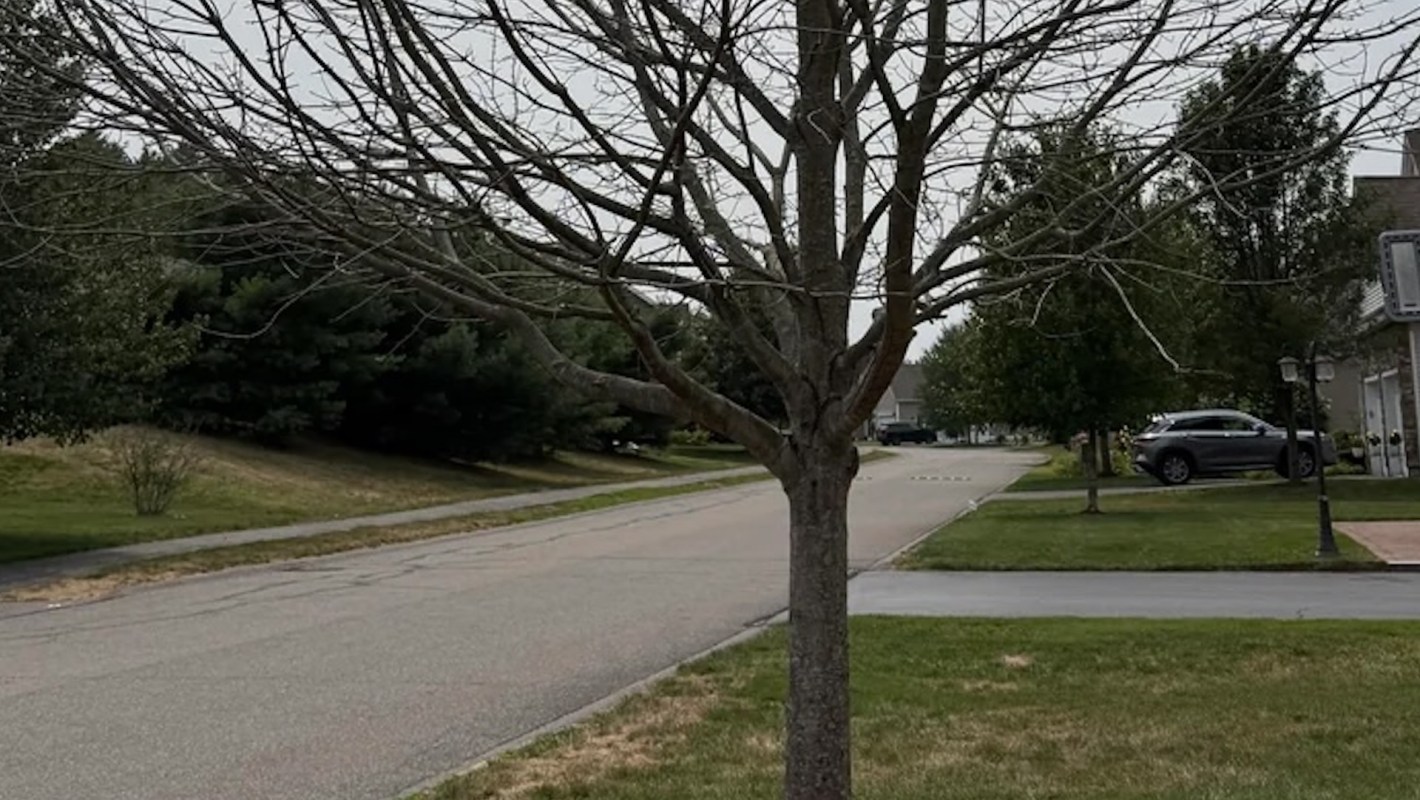
Shocking photos of a dormant tree in the middle of summer have made waves across the r/Tree subreddit.
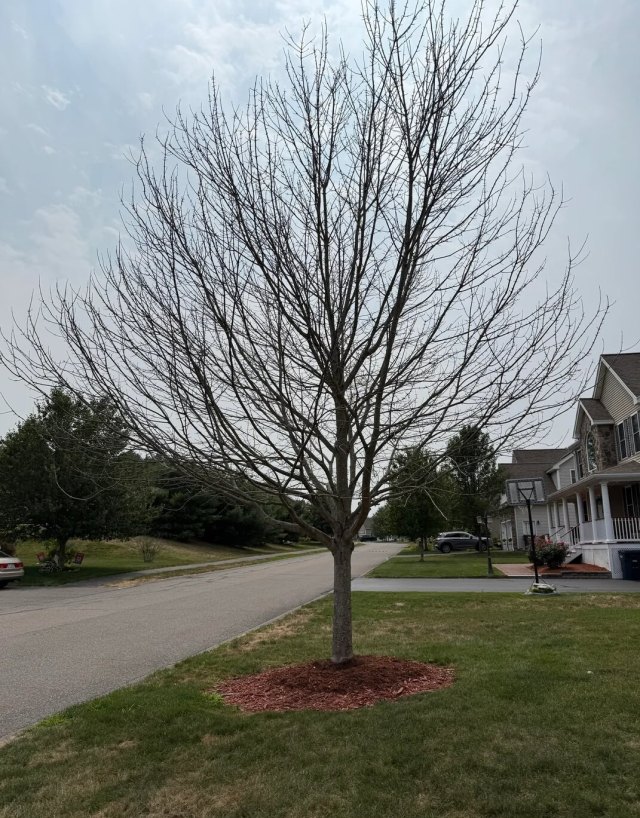
In the post, which has gotten over one hundred comments, OP said, "My maple tree didn't bloom at all this year. It was very full last year."
The photos show the leafless tree surrounded by others in OP's neighborhood, which have bloomed.
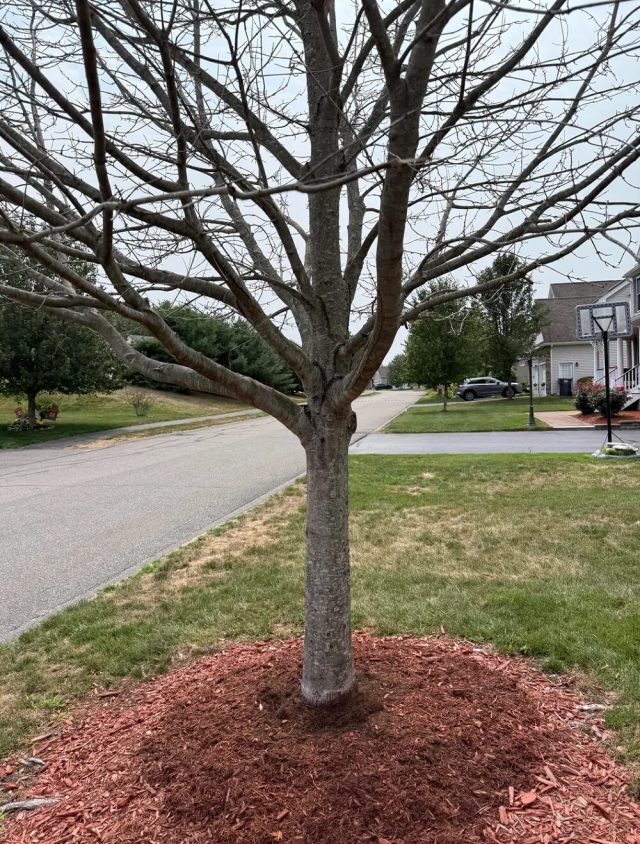
However, there is one problem in these photos that OP, like many others, may not realize: volcano mulching.
Volcano mulching is the act of piling up mulch at the base of a tree in a volcano shape, rather than evenly spreading the mulch around the base.
Mulching with this method is bad for many reasons. All that extra mulch costs more money upfront and often needs to be replaced sooner when it rots or blows away, turning yard maintenance into a more expensive chore.
TCD Picks » Quince Spotlight
💡These best-sellers from Quince deliver affordable, sustainable luxury for all




Mulch volcanoes can quietly wreak havoc on a tree's health. Piling mulch high against the trunk traps excess moisture, which softens the bark and creates a perfect hiding spot for fungi, insects, and rot.
The tree may also struggle to get enough oxygen to its roots, leaving it stressed and more vulnerable to disease. This may be why OP's maple tree didn't bloom this summer.
The comment section of the post mostly agreed with this assertion.
One user commented, "Cause of death — likely whatever is going on under that mulch volcano."
|
What's the hardest thing about taking care of your yard? Click your choice to see results and speak your mind. |
 Mowing the lawn 🏡
 "This is textbook volcano mulching, and it is terrible for trees in the long term," another user added.
"I will review carefully so I do things correctly next year," OP replied.
To maximize the health of your yard and vegetation, opting for a natural lawn encourages balanced soil biology, reduces long-term maintenance costs, and creates a landscape that supports strong, resilient plants without the need for excessive chemicals or artificial inputs.

Join our free newsletter for easy tips to save more and waste less, and don't miss this cool list of easy ways to help yourself while helping the planet.