


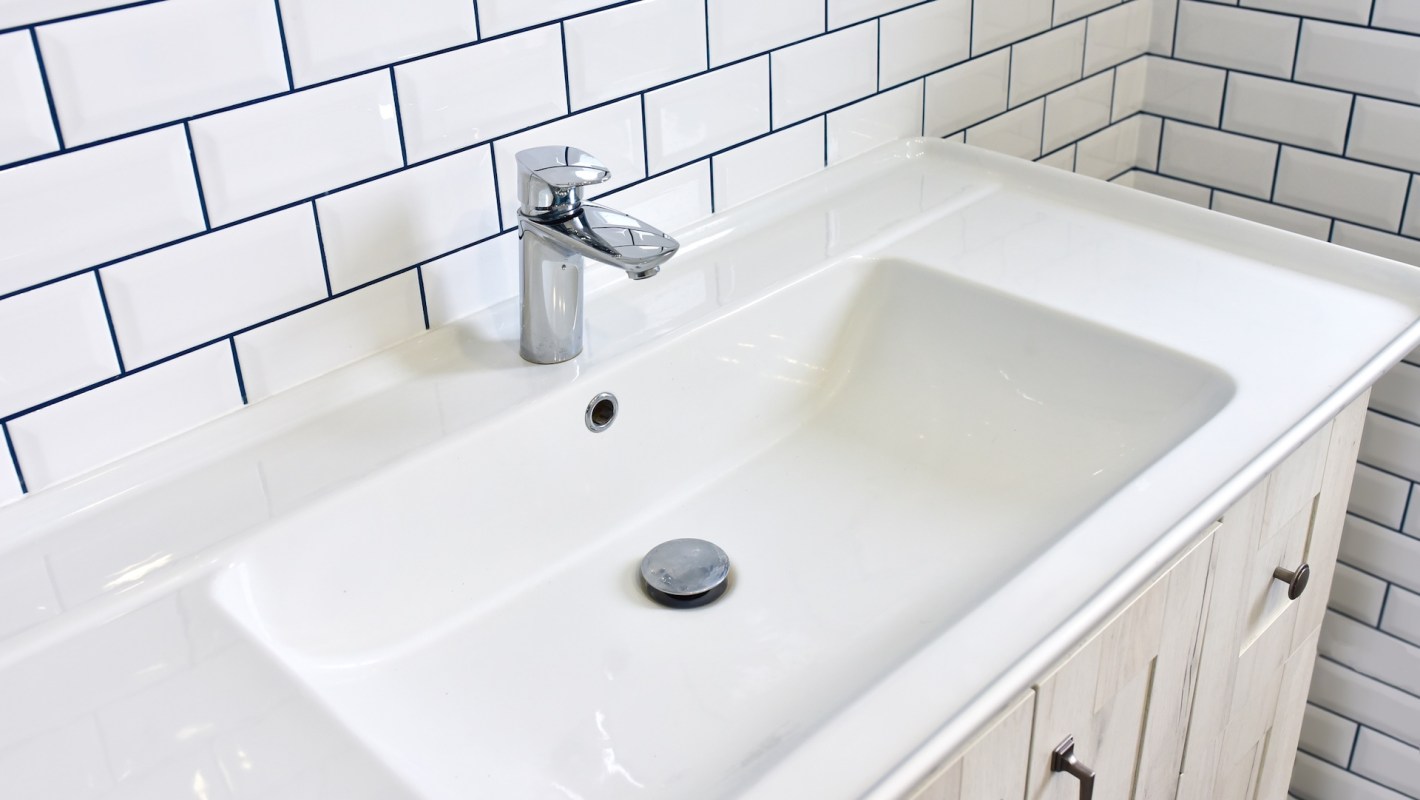
Most clogged drains don't need toxic cleaners or a plumber to fix them. In a YouTube video, Rosco from Rosco Reviews (@RoscoReviews) partnered with Sky Management (@SkyManagement) to demonstrate how to unclog a slow-draining bathroom sink using basic tools and no harsh products.
"Oftentimes when your bathroom drain is running slow, it's because there's hair and gunk built up on the stopper itself," Rosco says. The video walks viewers through how to remove the stopper and P-trap to clear the buildup safely.
"This is a simple solution you can do yourself without calling a plumber," he says.
The scoop
Rosco's method starts by loosening the nut that holds the sink's lifting rod in place, then pulling out the stopper to wipe away accumulated debris instead of washing it down the drain. Rosco recommends checking the P-trap — the curved section of pipe under the sink — and cleaning it out using paper towels, taking care to dump the gunk into the trash or the toilet. The process takes about five minutes and requires only a towel or bucket to catch water, a pair of pliers, and your hands.
Cleaning out your drains yourself, as preventative cleaning or when you run into a clog, promotes natural cleaning alternatives. For example, another eco-friendly method to clean your drains is using baking soda and vinegar to dissolve buildup naturally while also avoiding those chemical drain cleanings that corrode pipes and polluted water systems. Similarly, vinegar and or lemon can help remove gunk from faucets and drains without introducing toxic substances.
How it's helping
According to the World Wildlife Fund, plastic waste from single-use bottles and cleaning containers can take hundreds of years to break down and contribute to lasting pollution. So, swapping harsh drain chemicals packaged in plastic for simple maintenance tricks cuts both waste and household costs.
Additionally, unclogging your drains yourself without chemicals can save you up to $90 per year and keeps the people (and pets) in your household safer. It also keeps plastic bottles out of circulation and reduces the demand for plastic production, and also supports sustainable habits like reusing and repurposing household items.
What everyone's saying
"I like the close up portion of the videos. Makes it easier to understand. Great job!" a viewer replied to the video.
Another suggested using "an old toothbrush" instead of a screwdriver to remove hair. "To clear the hair out of the drain after removing the stopper, don't use a screwdriver. Use an old toothbrush. Or buy one of the little plastic straps covered with little hooks intended for the purpose," they wrote.
"Toothbrush is a great idea! I often use the zipper style hair ball pullers. But I was trying to explain how to do it without any specialized tools. I should have thought of a toothbrush. That would be perfect!" Rosco replied.
TCD Picks » Quince Spotlight
💡These best-sellers from Quince deliver affordable, sustainable luxury for all




|
How would you rate your DIY ability? Click your choice to see results and speak your mind. |
 I can fix anything 💪
Join our free newsletter for easy tips to save more and waste less, and don't miss this cool list of easy ways to help yourself while helping the planet.
Cool Picks






