


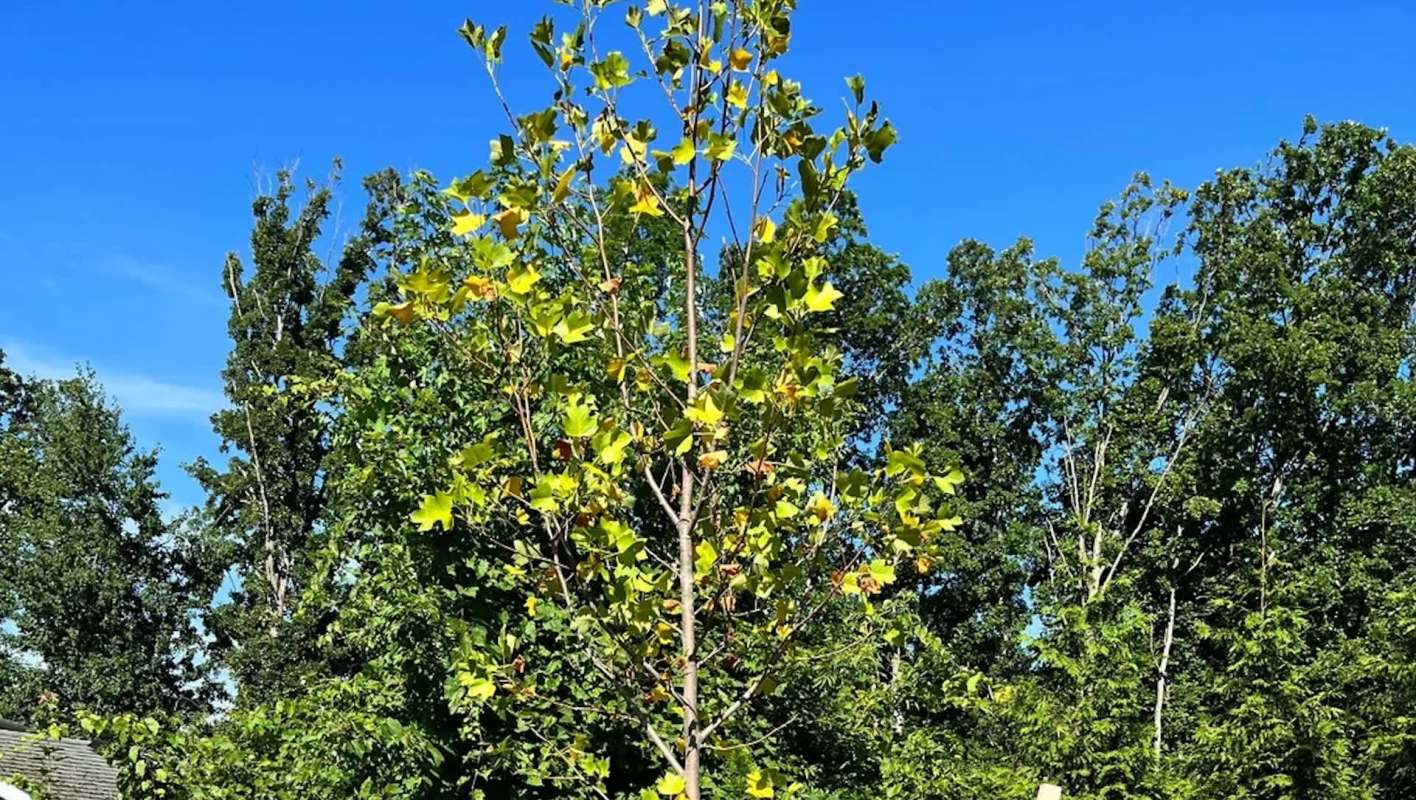
After hiring their local nursery to plant a tulip tree in their backyard, one homeowner checked with the r/Arborists subreddit to see if the tree had been planted correctly. They shared a few close-up pictures of the tree for the subreddit experts to judge.
"Is this tree planted too deep?" the original poster titled the post.
"The tree seems to have more wilt than I'd expect for watering it just about every day. And I've never seen a tree planted like this, almost below grade," they added.
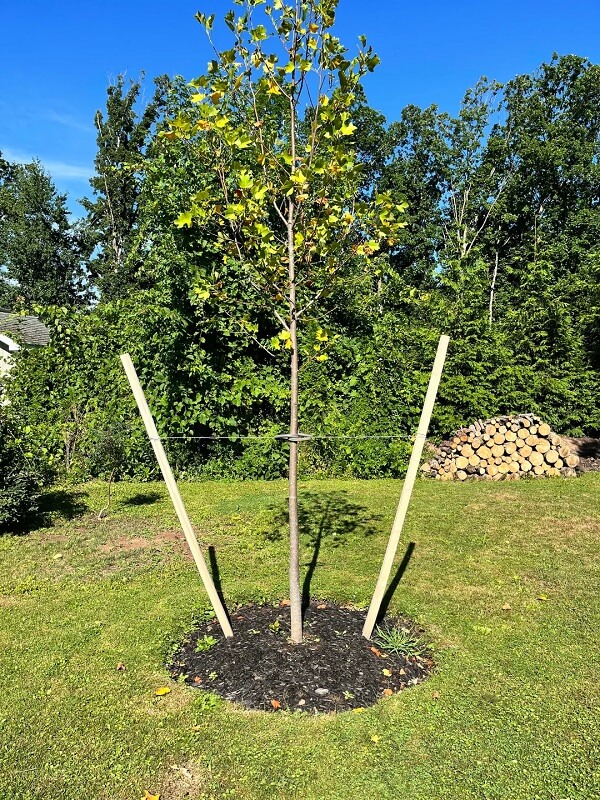
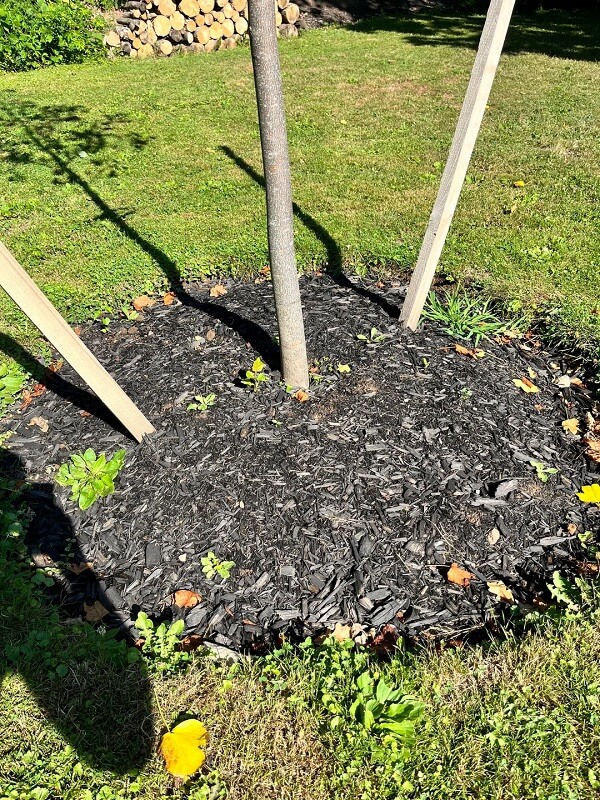
The photos show a newly planted young tree, installed in the middle of a mulch ring. Two wooden stakes with steel lines, anchored at an angle on either side of the tree, are supposed to help keep the tree straight as it grows and matures.
As seen in the photos, the mulch ring around the tree's stem appears to be too high, as the tree's root flare — where the tree's trunk meets its roots — is nowhere to be seen.
Arborist experts in the subreddit quickly confirmed the OP's suspicions.
"Yes," one commenter answered simply.
"Yup, too deep. Definitely pull the mulch to the edge and excavate around the trunk to find the flare," another user suggested.
A tree's root flare is critical to its health. It is where gas exchange occurs, allowing the top of the roots to breathe in oxygen and breathe out carbon dioxide — part of a process also known as root respiration. This allows roots to produce the energy needed to transport nutrients into the plant, which helps it grow and develop.
When a tree's root flare becomes buried, it hinders the plant's growth processes, affecting nutrient and water uptake. This often leads to wilting, as the OP experienced.
TCD Picks » Quince Spotlight
💡These best-sellers from Quince deliver affordable, sustainable luxury for all




|
What's the hardest thing about taking care of your yard? Click your choice to see results and speak your mind. |
 Mowing the lawn 🏡
 Buried root flares can also increase the risk of trunk decay, girdling roots, and death.
An easy way to ensure a healthy and thriving tree is to avoid piling mulch volcanoes at the base of the tree's trunk. Not only are mulch volcanoes a waste of money, but they're also a detriment to the tree's health.
Ensure that you keep the tree's root flare exposed to encourage gas exchange and nurture your tree with adequate water, sunlight, and nutrients. You can even make your own cost-effective fertilizer for your newly planted trees using eggshells, used coffee grounds, and banana peels.
Healthy trees, paired with a native plant lawn, enhance your home's landscape while contributing to the health of the local ecosystem.
Native lawns are not only easier and less expensive to maintain than lawns containing invasive grass species due to less frequent mowing and watering, but native lawns also create healthier ecosystems for pollinators. Pollinators support the reproduction of native flora and food crops, which protect the food supply of humans and wildlife.
Buffalo grass and clover offer homeowners savings on weekly yard work and water bills, which make them great lawn replacement options for homeowners looking for a change.
"Is there a reason why they can't come back and fix their own shoddy work?" one commenter asked the OP.
"Get that money back!" another user urged.

💰Get TCD's free newsletters for easy tips to save more, waste less, and make smarter choices — and earn up to $5,000 toward clean upgrades in TCD's exclusive Rewards Club.
Cool Picks






