


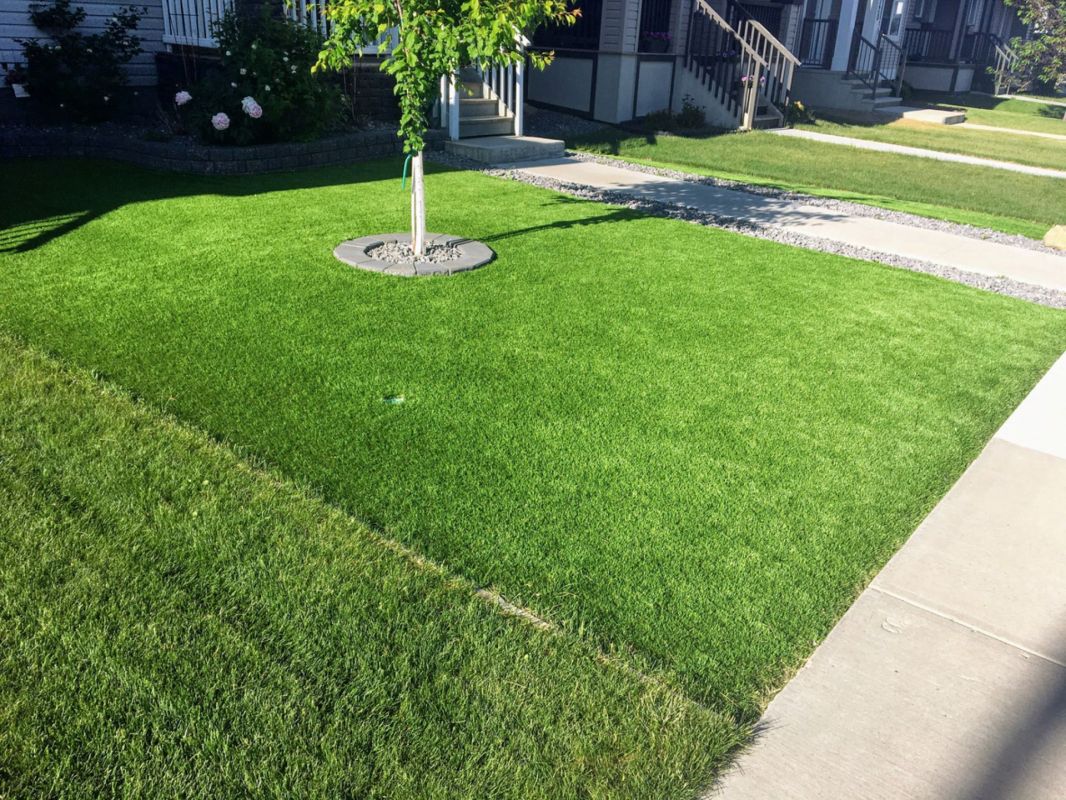
Synthetic grass, a plastic product that is meant to mimic the appearance of grass, is something that both sounds like a bad idea and is somehow even worse in practice than it sounds.
According to one expert, synthetic grass could even slowly kill real trees.
Arborist Nick Mook told Larchmont News that synthetic grass or turf can be harmful to trees if it is put down too close to the tree trunk, where it can block the flow of water and oxygen to the tree's roots.
In addition, he said, installers can sometimes damage the tree while attempting to level the ground to make the fake grass lay nice and flat.
Not only that, but synthetic grass traps an enormous amount of heat — like this Redditor's, who documented their fake grass reaching 190.8 degrees Fahrenheit — compared to real grass.
Mook says the heat can encourage the growth of harmful pathogens and fungi that attack the tree's root systems.
TCD Picks » Quince Spotlight
💡These best-sellers from Quince deliver affordable, sustainable luxury for all




"It can take a mature tree two-five years before it dies, so you won't see the effects of synthetic grass for several years," he said. "Once something impacts the root system, it's very hard to change it back. Pathogens and opportunistic insects come in and further destroy the tree."
Although synthetic grass has been around for 80 years, it experienced a sharp uptick in sales during the early days of the COVID-19 pandemic, as its manufacturers were successfully able to market it as an easy, no-maintenance alternative to grass lawns, which require a lot of care.
However, many of the people who installed synthetic grass did not end up happy with their purchase. Its rise in popularity was immediately followed by a steep drop that even saw many people paying money to get it removed.
For one thing, artificial grass is not nearly as low-maintenance as its buyers were led to believe — it needs to be frequently vacuumed, as leaves and debris that would normally break down and become incorporated into the soil just sit there and pile up.
It also traps heat, as previously mentioned, as well as the stench of animal urine — an often unforeseen and extremely unwelcome side effect.
As synthetic grass is clearly not the way to go, and real grass lawns also have their drawbacks, many homeowners are turning to native plant lawns instead, which encourage ecological diversity, look nice, and are actually among the lowest-maintenance types of landscaping.

Join our free newsletter for easy tips to save more, waste less, and help yourself while helping the planet.






