


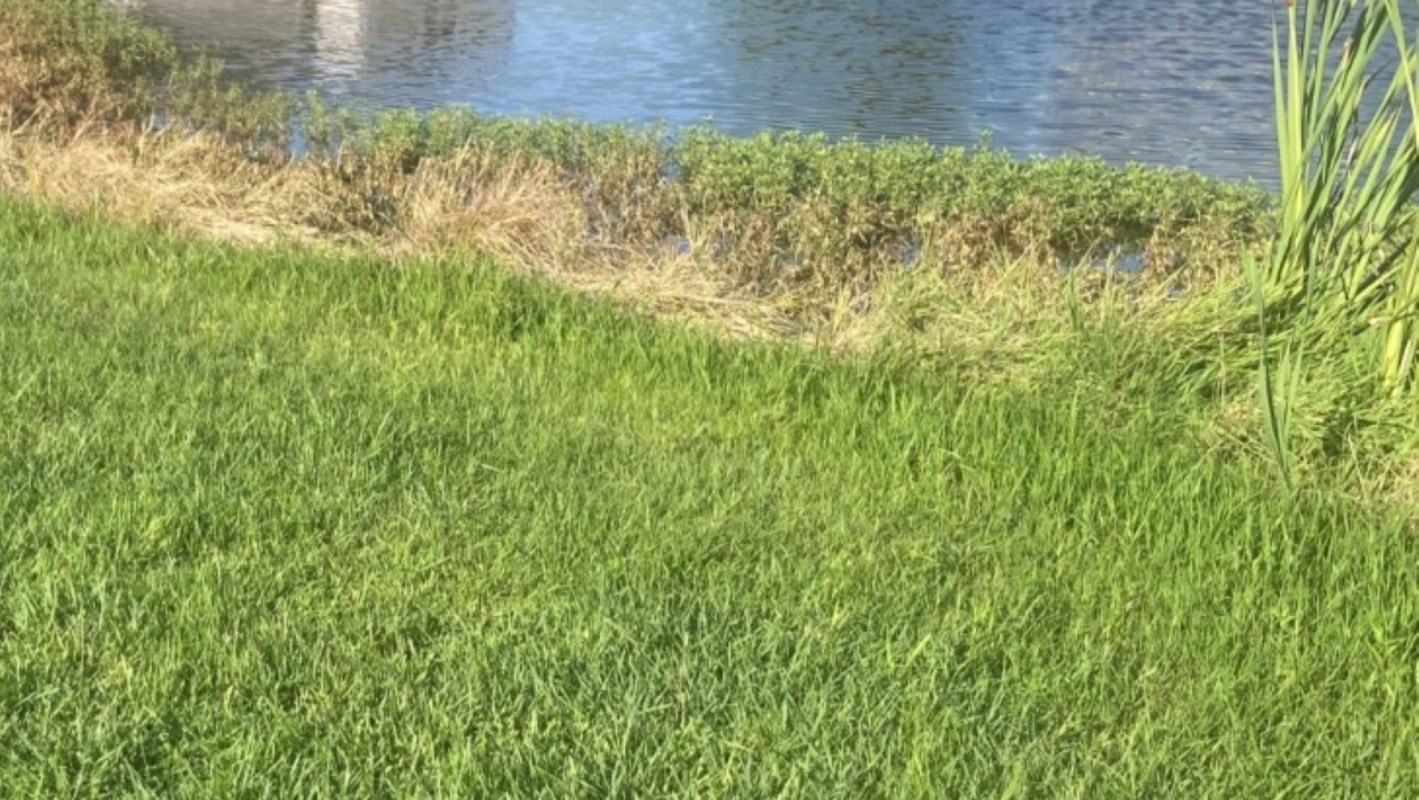
Living with neighbors isn't always a walk in the park. For one environmentalist, this couldn't have been more true when they realized that their family's neighbor might have sprayed harmful pesticides near a shared pond in the neighborhood.
Seething with anger, the original poster took to a no-lawns subreddit to ask for advice.
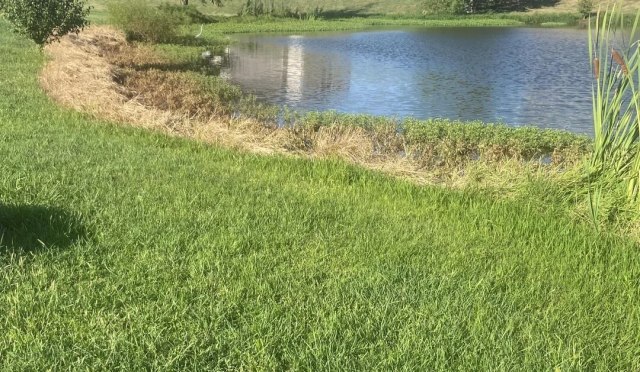
"It looks like they (or a landscaper they hired) sprayed herbicide on the edge of their lawn and also onto the aquatic flowers/plants and into the pond," the OP described.
The attached picture shows a ring of yellowed, non-lawn, tall grass beginning at the edge of the neighbor's manicured green lawn.
"We had a REALLY bad storm yesterday so I also know that that herbicide is definitely all in the pond now," the OP continued. "Is this legal?"
The pond is shared between five houses — each taking responsibility for their portion of the pond. The section belonging to the OP's family contains milkweeds that are currently welcoming monarch butterflies and new eggs. The OP describes the pond as a safe haven for wildlife including dragonflies, turtles, frogs, fish, monarch butterflies, and native bees.
Herbicides are often used in lawn maintenance and agricultural settings to help manage weeds and prevent invasive plant species. They often consist of harmful chemicals, including 2,4-Dichlorophenoxyacetic acid and atrazine, both of which are linked to harmful effects on human health.
In aquatic environments, like this neighborhood pond, the chemicals found in popular herbicides can interfere with organism reproduction and development, diet, stress regulation, and other important factors key to survival, according to Water Issues.
A temporary solution to manage weeds and pests in your lawn could have lasting effects on the rest of the ecosystem.
Fortunately, nature also provides natural solutions to fight unwanted weeds without using chemicals. Pouring boiling hot water on weeds can help eliminate them from your lawn in as little as 24 hours. An alternative solution is to use strong pickling vinegar with a 7% to 9% acetic acid to kill weeds in as little as a day.
TCD Picks » Quince Spotlight
💡These best-sellers from Quince deliver affordable, sustainable luxury for all




|
Should homeowners associations be able to determine what you grow in your garden?
Click your choice to see results and speak your mind. |
 Yes 💯
Yes 💯 Natural weed solutions can be just as effective as store-bought chemical solutions, without the harmful repercussions of toxins.
"Absolutely contact that state department of ag. Herbicides are no joke and I can't imagine many, if any, are allowed this close to water," one commenter recommended.
"That is intentional herbicide damage. It's wrong for every reason you suspect," another user confirmed.

Join our free newsletter for easy tips to save more and waste less, and don't miss this cool list of easy ways to help yourself while helping the planet.
Cool Picks




