


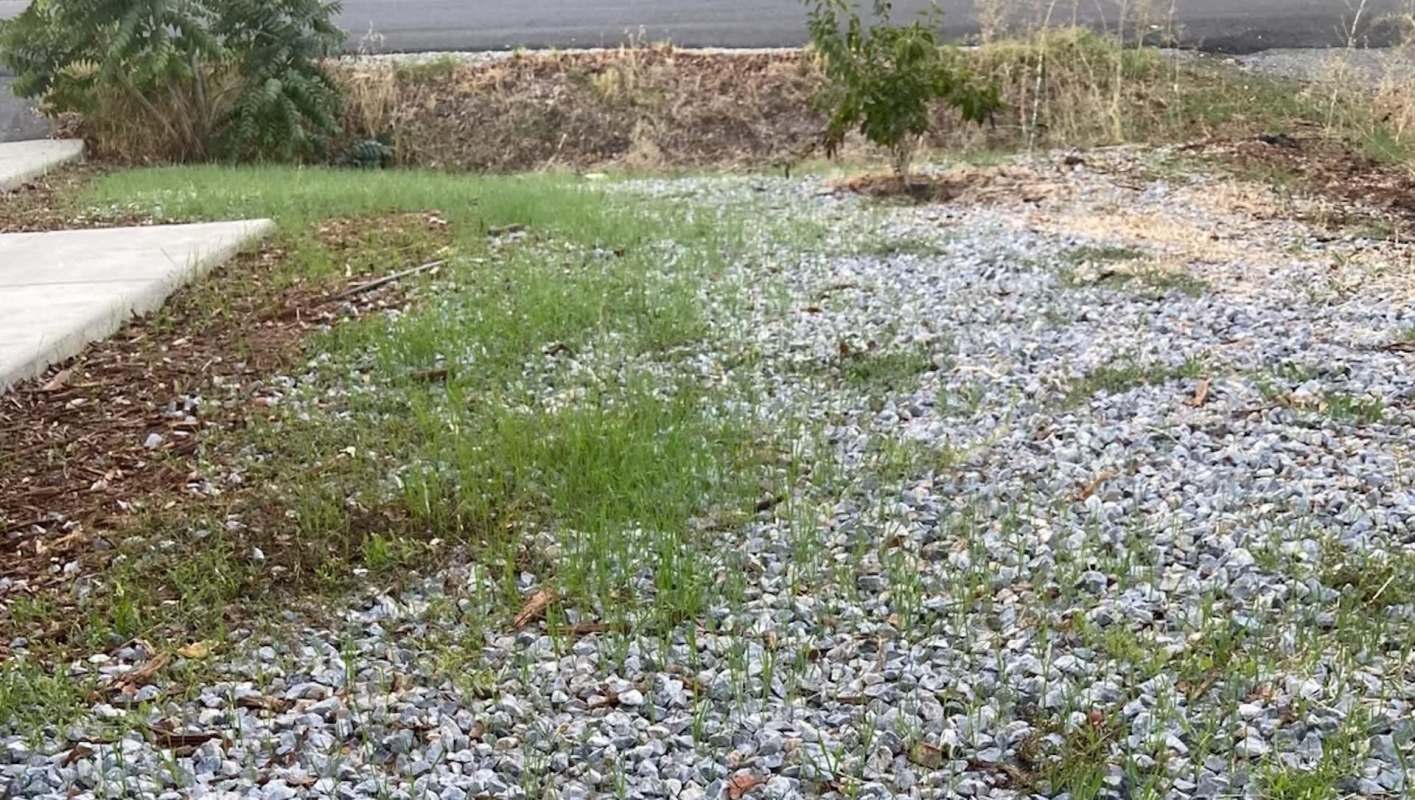
One Redditor is trying to eliminate a major homeowner headache when it comes to maintaining a healthy yard: tarp and gravel, which ultimately do nothing to prevent grass and weeds from growing through, and can't be mowed or weed-whacked away.
On the r/NoLawns subreddit, one user had a simple question about a common yard problem: "Should I replace the tarp or do something different entirely?"


"This is the third house I've moved into that's had grass and weeds growing through tarp and rock," they said. "It's so frustrating because you can't mow it or use a weed whacker."
Photos in the post showed a full layer of rock and tarp with patches of grass growing everywhere.
They added that it can reach over a hundred degrees in their part of Northern California during the summer, and ideally, they'd like to include more native plants and just a path with the rocks. Which could be key in the heat, as landscaping tarp tends to trap heat, overcook plants, and do little to prevent weeds.
Eliminating lawns and non-native plants can help you save money on unnecessary watering and maintenance compared to rewilding your yard with native plants. Some native coverage plants for Northern California include Blue Wildrye, California Sedge, and wildflowers like the California Poppy or Common Yarrow are excellent options to mix in for some color. All of which helps your yard and ultimately the planet cool down.
TCD Picks » Quince Spotlight
💡These best-sellers from Quince deliver affordable, sustainable luxury for all




Not all non-native plants are invasive, but many still grow quickly and overwhelm native plants by dominating nutrients and water. Invasive species can cause native ones to die out, which native species rely on for food and shelter. They also attract pollinators, like bees, butterflies, bats, and hummingbirds, which support the biodiversity of our food supply. According to the U.S. Department of Agriculture, 80% of the 1,400 crops grown for food require pollination.
Commenters on the r/NoLawns post were quick to offer advice and native alternatives:
"Those things [tarps] deteriorate really fast," one wrote. "I would heartily recommend removing the whole thing and doing something different."
"Remove the tarps and rocks, and put down a native wildflower seed mix," one added.
"Look around for some native creeping plants for coverage and a couple native pollinator bushes for interest," another recommended.
|
What's the hardest thing about taking care of your yard? Click your choice to see results and speak your mind. |
 Mowing the lawn 🏡
Join our free newsletter for easy tips to save more and waste less, and don't miss this cool list of easy ways to help yourself while helping the planet.






