



Kudzu is infamous for mastering the hostile takeover, and that awesome power was on display in a recent social media post.
A crafty Redditor took to the air to capture the invasive species' smothering of an abandoned building in Virginia, calling it by one of its nicknames, "the vine that ate the South."
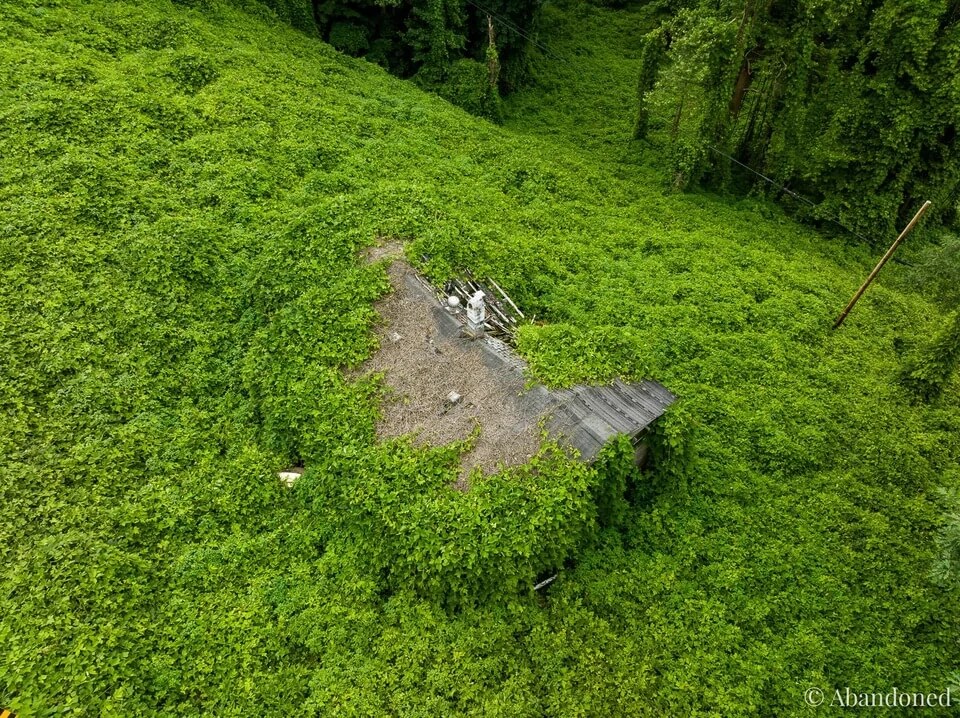
"In the annals of American botanical history, few plant species have so dramatically epitomized the double-edged sword of human intervention as the notorious vine known as kudzu," the poster added in the comments, pointing users in the r/AbandonedPorn subreddit to a website with more photos and information.
They stated the Japanese and southeast Chinese climbing plant was introduced to the United States at the Centennial Exposition in Philadelphia in 1876 and that "by the 1950s, kudzu had begun to spread beyond the farms and fields where it had been planted," with an amazing ability to grow up to a foot per day.
Kudzu can even increase ozone pollution, though at least one expert argues its dangers are mostly mythical. Still, no one disputes its capacity for eye-popping proliferation if left unchecked. Like other invasive species, it outcompetes native species — from grasses to mature trees — for sunlight, inhibiting the photosynthesis they need to thrive.
"This loss of native plants harms other plants, insects and animals that adapted alongside them, leading to cascading effects throughout an ecosystem," according to The Nature Conservancy.
"Over time, these effects of habitat loss can lead to species extinctions and a loss of overall biodiversity."
The conservancy stated that because kudzu and other invasives are more adaptable to change than native species, hotter global temperatures could make it even easier for the vine to spread. Its deep roots give it an advantage when it comes to surviving drought as well.
It's best to control the threat before it gets going, but you can also eat its leaves, flowers, and cooked roots — or employ goats to do the same — or treat it via continuous mowing or cutting it near the ground and applying herbicide (taking this step in late summer is most effective, per The Nature Conservancy).
One commenter called the vine "terrifying," while another responded to someone who said it could be used to make textiles (among other things): "I wish there was a market for it!"
TCD Picks » Quince Spotlight
💡These best-sellers from Quince deliver affordable, sustainable luxury for all




Someone else documented an advertisement for kudzu in a gardening catalog from 1909, showing how it was marketed as an ornamental before it became a problem.
Another Redditor wrote: "How to grow Kudzu: 1. Drop leaf on open ground. 2. Run for your life."

Join our free newsletter for easy tips to save more, waste less, and help yourself while helping the planet.
Cool Picks






