


One Redditor in Colorado took to the platform to ask for advice after finding a troubling plant growing in their yard.
"These popped up in my yard, are they invasive?" the user asked.
In a post featuring four photos holding up a heart-shaped leaf, the comments let the original poster know they're certainly dealing with an invasive species: Japanese knotweed.
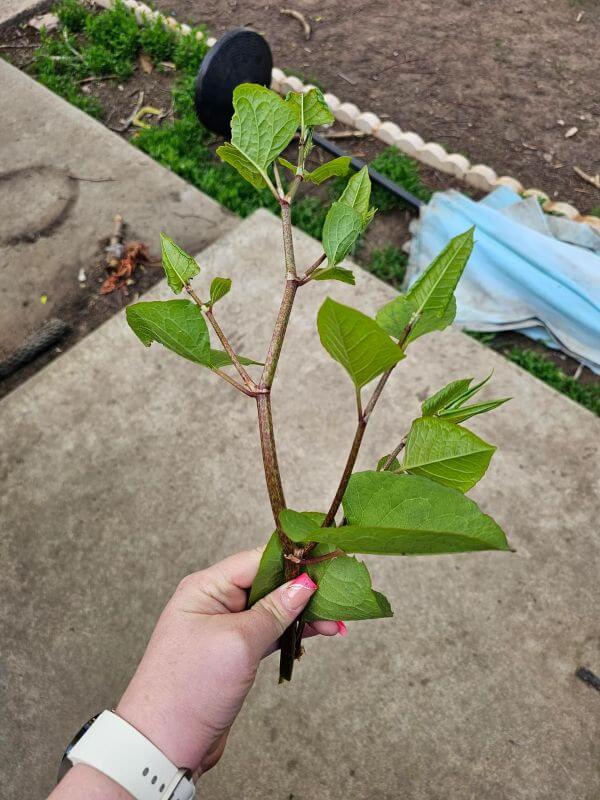

Those heart-shaped leaves of a Japanese knotweed plant are one of the most notoriously invasive species you can have. Most comments state that the plant is hard to kill as it spreads quickly. After altering waterways, the dense thickets can lead to erosion and flooding. It spreads through deep roots and rhizomes that can go 6 feet deep and spread out 65 feet, as well as seed dispersion.
It's destructive enough to grow through pavement cracks and damage your asphalt, concrete, driveways, sidewalks, and other hardscaping. Building foundations can also suffer damage.
The species will crowd out native plants, decreasing your biodiversity and affecting your local pollinators that thrive on various flowers, plants, and trees. Luckily, you can use the power of biodiversity to help fight the invasion off once you cut it down.
According to the New Hampshire Department of Agriculture, a good control method is to wait until the first week of June and cut the plant at the base close. Apply a layer of mulch, such as grass clippings, followed by a weed barrier. Weigh that down with rocks, soil, or mulch. You may need to leave this down for five years before removing and replanting the area.
Prevent further spread by rewilding your yard and adding the best native ground cover for your zone to your lawn. These groundcovers deter weeds while adding their own beauty — some even have blooms.
One commenter informed: "The root systems destroy all underground structures, foundations, pipelines, sewers, etc and it is virtually impossible to get rid of."
|
Should HOAs be able to force homeowners to change their yards?
Click your choice to see results and speak your mind. |
 Absolutely not 💯
 Someone who previously dealt with this invasion said: "I never got rid of it entirely but I managed it by initially digging the whole area where it was and burning everything, then every time a shoot popped up, yanking it out with as much root as I could get. Over a couple of years, the growth got visibly weaker."
TCD Picks » Quince Spotlight
💡These best-sellers from Quince deliver affordable, sustainable luxury for all




According to several comments, you can add the plant to your diet after pulling out the roots. One stated: "Japanese knotweed is edible and has a sour, lemony flavor. It can be eaten raw in salads for crunch and lemony flavor."

Join our free newsletter for easy tips to save more and waste less, and don't miss this cool list of easy ways to help yourself while helping the planet.
Cool Picks






