


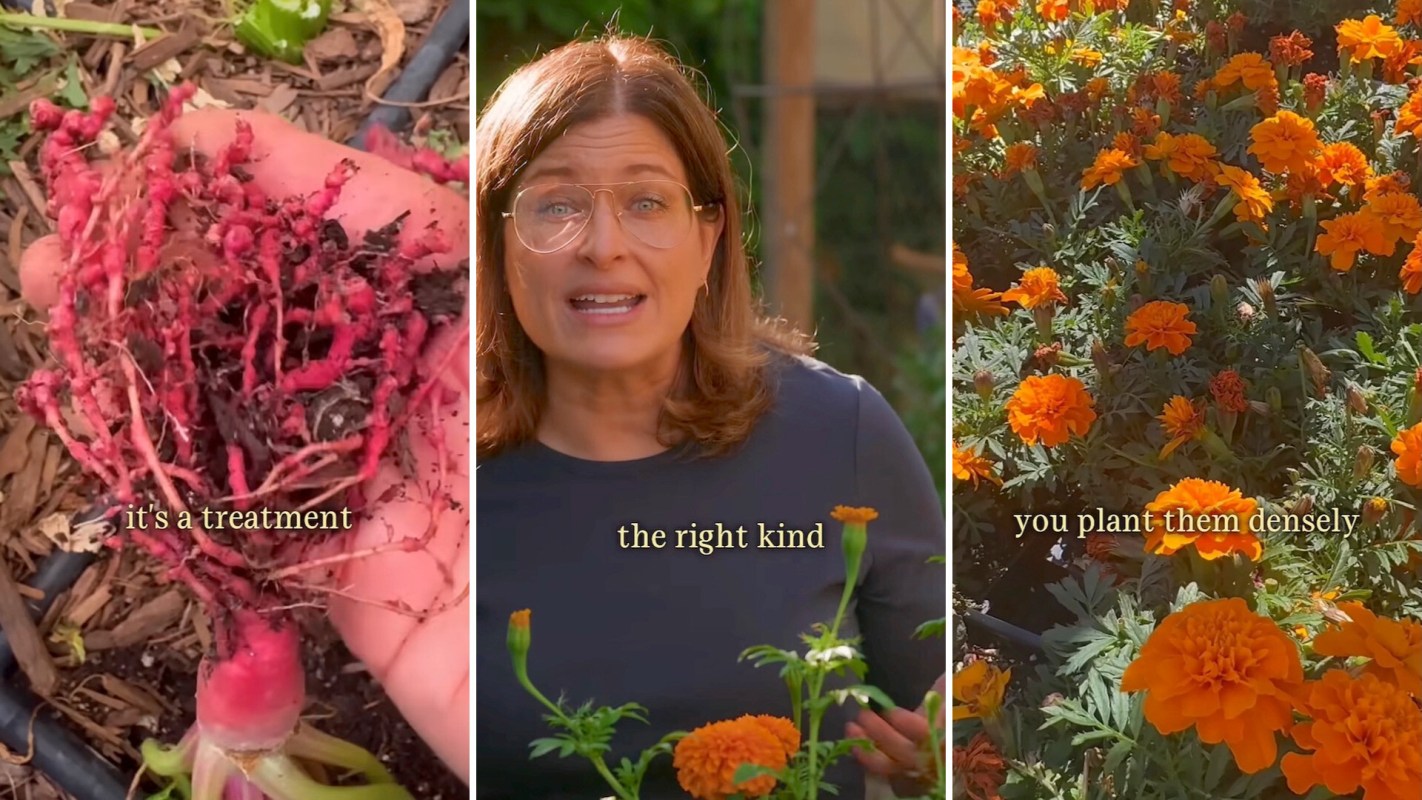
An Arizona gardener is challenging one of the most common companion-planting assumptions out there. Simply putting a marigold or two next to your tomatoes will not solve a nematode problem, as Angela Judd of Growing in the Garden (@GrowingInTheGarden) shared in a video.
For gardeners hoping for a simple, chemical-free fix, the advice is more specific and useful than that.
Here's what to know
In a YouTube video, Judd said marigolds can help curb root-knot nematodes, but only when the right varieties are used, and the flowers are grown more as a temporary bed planting than as a few decorative additions.
"If you're just tucking one marigold next to a tomato, it does nothing for nematodes," the gardener put it plainly.
Instead of scattering a few flowers around, the method calls for filling the bed with French marigolds or certain African marigold types, letting them grow for at least eight weeks, and then either removing them or tilling them into the soil.
Tomatoes, Swiss chard, and beets are among the crops these pests can seriously affect, Judd noted. Because the nematodes attack roots, plants can be weakened and harvests can shrink.
TCD Picks » Quince Spotlight
💡These best-sellers from Quince deliver affordable, sustainable luxury for all




Used this way, marigolds offer an organic pest-management option without requiring synthetic treatments first.
More background
Marigolds have long had a reputation as a garden cure-all, but this advice helps explain why so many gardeners end up disappointed. When the flowers are used incorrectly, they may add color to a bed while doing little to address the underlying soil issue.
"Planting one or two marigolds around your vegetables isn't enough," Judd wrote in the caption. "Variety, planting density, and how long they grow all matter if nematode control is the goal."
Organic gardening often works best with the right timing, spacing, and plant selection. A chemical-free method does not mean it is effortless.
With the right processes in place, gardening can help bolster physical and mental health. It can also allow growers to get fresh produce that is better-tasting, and, of course, cheaper than store-bought alternatives.
Pesky obstacles like nematodes can upset that equation, which is why Judd's tips can be important to getting gardeners back on track.
What can be done?
Marigolds can still play a role, but not as a one-flower fix. Gardeners need an effective variety, dense planting in the bed meant for vegetables, and enough time for the treatment to work.
Planning by bed, not by individual plant, may be more effective. If a garden space has a known nematode issue, dedicating that area to marigolds before the food crop goes in may work better than mixing in a few flowers afterward.
Another gardener had an alternative idea and a tip.
"The other thing that works is crab meal," they suggested. "Also, grow every plant from seed or cuttings."

Get TCD's free newsletters for easy tips, smart advice, and a chance to earn $5,000 toward home upgrades. To see more stories like this one, change your Google preferences here.







