
A Redditor shared an overlooked part of induction cooking that they believe is the technology's true "superpower."
What is induction cooking?
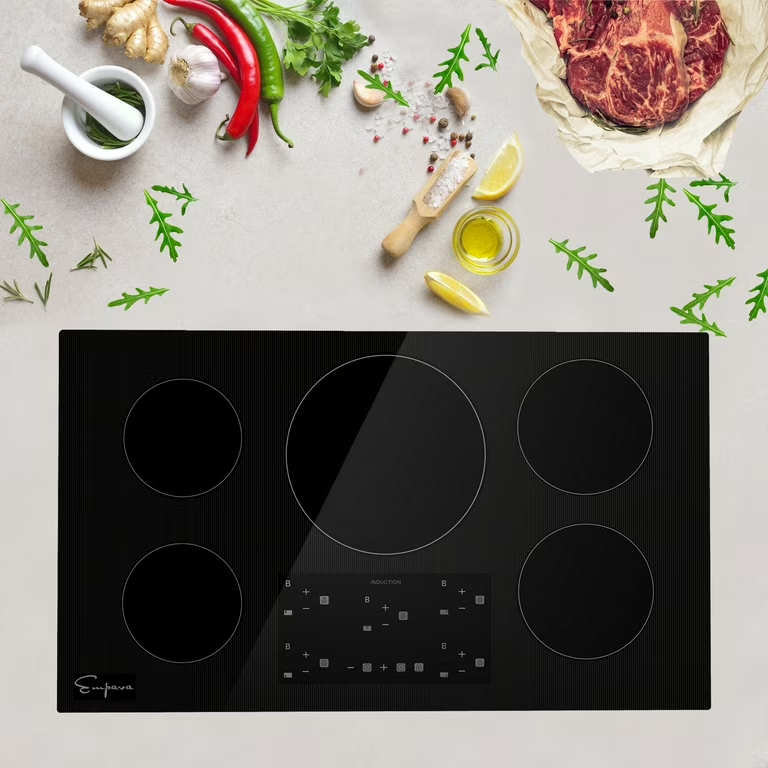
Induction stoves create a magnetic current that gets transferred from the cooktop to pots and pans. Heat is generated as that current then moves through the cookware.
As a home chef shared in the r/inductioncooking subreddit, that energy-efficient current means only the pots and pans heat up, not the cooktop. More specifically, only the cooking surface of the pots and pans gets hot.
To prove this, the Redditor posted a video of their cooktop, which featured a pot that had been simmering for nearly an hour. Despite that, they were able to grab the lid comfortably with their bare hand and remove it without getting burned.
TCD Picks » Induction Cooking
💡Discover the induction option that’s just right for your needs and your home



(Click here to watch the video if the embed does not appear.)
Handles on pots and pans also stay cool with induction, the original poster pointed out.
"I would never dream of doing this on a gas stove," the OP wrote. "Heck, I would take the pot off the stove to stir it, so my hand doesn't get burned by the heat blasting away from the gas burner."
Why is induction cooking becoming so popular?
Induction cooktops are a hot topic in home cooking, and for good reason.
Stay warm all winter long with the Apple of intelligent space heaters Kelvin is the Apple of space heaters, designed for energy efficiency and maximum comfort. It's completely silent and intelligently controlled, with setup taking just 5 minutes. Built from premium materials like aluminum and glass, Kelvin works beautifully as a full-home heating system or as the perfect solution for that one room that never feels warm enough. |

It's a more energy-efficient method of cooking than either gas or traditional electric stoves, resulting in lower energy bills. That also translates to more efficient cooking, so water boils more quickly and temperature settings are more precise.
Best of all, induction is safer for both people and the planet.
|
Which of these factors would most effectively motivate you to buy an induction stove?
Click your choice to see results and speak your mind. |
 Healthier indoor air 🏠
 Because all of the heat from induction cooking is generated within the cookware, it keeps other surfaces from getting too hot. This includes not just lids and handles, but also the cooktop itself. If you've ever accidentally hurt yourself by touching a hot burner, or have kids who tend to reach out near the top of the stove, induction can save a lot of pain.
Because they don't burn gas, induction cooktops don't emit any of the toxic fumes that exacerbate global temperature rises and reduce air quality. Gas stoves have been proved to increase the risk of asthma among children.
How else can induction cooking help?
For many people, the biggest factor with any new appliance upgrade is cost. Fortunately, induction stoves shine here, too, as federal rebates can knock up to $840 off the price of a new cooktop.
If a whole new stove isn't in your plans, more budget-friendly options also exist in the form of plug-in induction burners.
These burners provide the benefits of induction cooking in a package small enough to easily fit on a countertop, making them ideal for renters. They also start at just $50, making them more affordable than you may have first imagined.

Join our free newsletter for easy tips to save more and waste less, and don't miss this cool list of easy ways to help yourself while helping the planet.
Cool Picks