


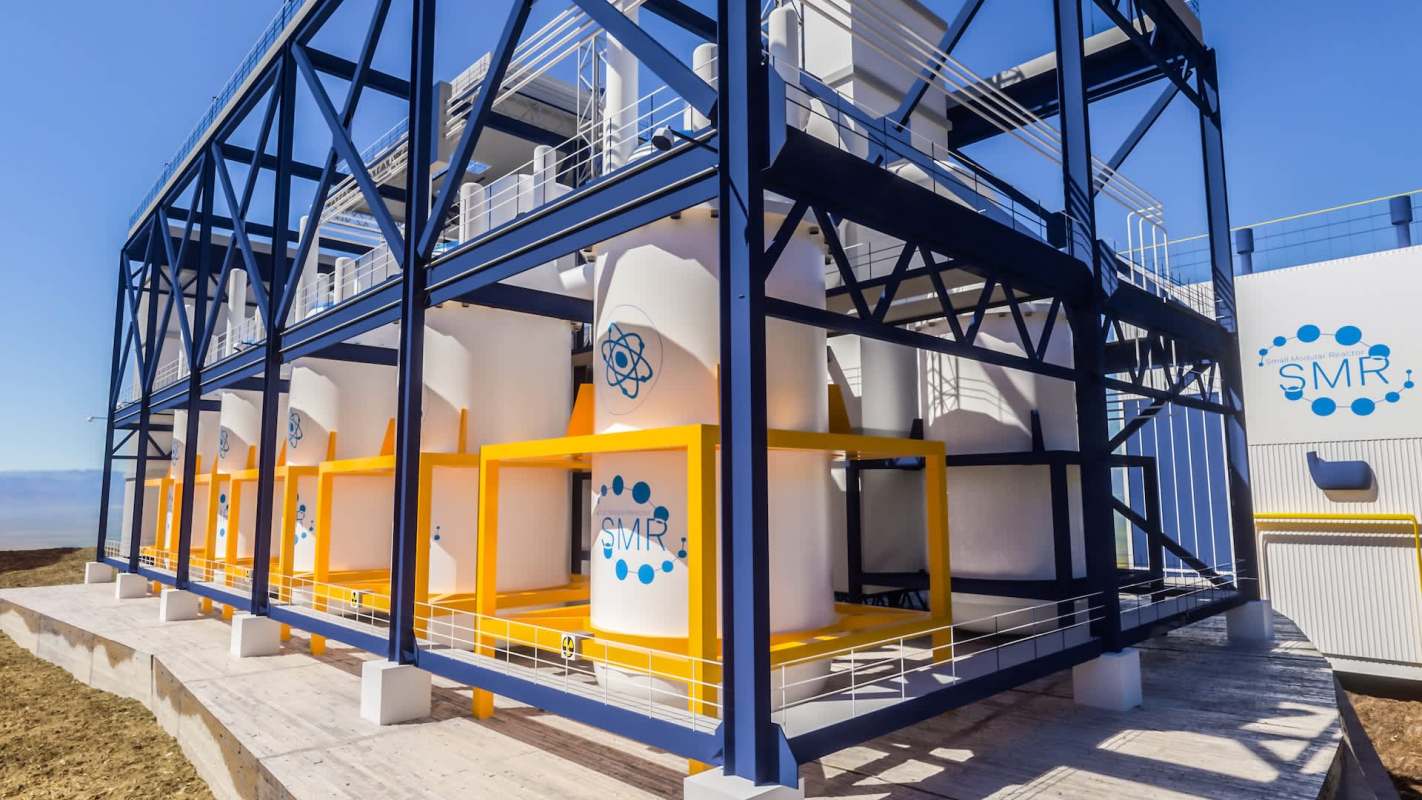
Petite power plants could help transition away from oil, coal, and gas, but they face significant challenges.
What's happening?
Small modular reactors are small-scale nuclear reactors that can be factory-assembled and easily shipped and installed.
Although SMRs have lower power capacity than standard reactors, they can offer faster construction timelines, installation site flexibility, and fewer safety risks.
Despite their benefits, data shared by the Financial Times shows SMRs are seeing wavering investor commitment.
NuScale, a nuclear power company that designs and sells SMRs, "has shed more than half its market value over the past six months," according to Financial Times.
Other companies have seen similar losses, and without stable support and long-term commitments from investors, the future of SMRs is at risk.
Meanwhile, the Financial Times noted that SMRs produce more nuclear waste than larger plants, while essential uranium remains difficult to source.
Why is the struggle of SMRs concerning?
Nuclear power is a reliable, low-carbon energy source and an alternative to the burning of coal, gas, and oil.
These fossil fuels release planet-warming gases like carbon dioxide and methane into the air, leading to higher average temperatures and other climate impacts, such as extreme weather events.
Nuclear power plants produce little air pollution during operation, and although they are responsible for construction-related pollution, a power plant can easily pay off its carbon debt through its generation of cleaner energy.
TCD Picks » Quince Spotlight
💡These best-sellers from Quince deliver affordable, sustainable luxury for all




|
What's the most you'd pay per month to put solar panels on your roof if there was no down payment?
Click your choice to see results and speak your mind. |
 $200 or more 💰
 Nuclear power isn't without its risks, but the issue is less about the overall viability of nuclear power and more about the ability of SMRs to scale as quickly as countries need them.
Standard nuclear plants have an energy capacity of around one gigawatt — enough to power one million homes. SMRs have a much smaller energy output of around 300 megawatts.
To meet growing energy demands, companies will have to rapidly ramp up production, delivery, and installation of SMRs.
What's being done to support SMRs?
With government policy and enough financial support, "there could be a global fleet of 1,000 SMRs with aggregate capacity of 120 gigawatts" in the next 25 years, per Financial Times.
Until then, researchers are working on ways of improving nuclear energy technology, along with increasing accessibility of renewables like solar, wind, and water.

Get TCD's free newsletters for easy tips to save more, waste less, and make smarter choices — and earn up to $5,000 toward clean upgrades in TCD's exclusive Rewards Club.
Cool Picks




