New Jersey is considering a step toward cleaner power through transitioning away from dirty energy plants.
Lawmakers have advanced Assembly Bill 4215 for consideration. The bill, if passed, would allow the Board of Public Utilities to move forward with constructing small modular reactors to replace coal-fired plants while offering financial incentives to move in this cleaner direction, according to Shore News Network.
These SMRs use nuclear fission to create energy. Fission, the process of splitting atoms to release heat, has already been powering some cities for decades. While it's not renewable (uranium is a finite resource), it produces less air pollution than burning fossil fuels like coal and oil. By slashing this pollution, it lowers the community's risk of asthma, heart disease, and respiratory illnesses.
While SMRs are newer technology and less tested than traditional reactors, their small footprint and design could help utilities generate more stable electricity without the land requirements of wind or solar farms.
Complementing those renewable energy sources, these reactors could diversify the power grid and produce steady, more affordable energy for New Jersey residents facing hotter summers and higher demand from data centers.
Still, experts urge caution. Newer SMR designs come with some unknowns.
Get cost-effective air conditioning in less than an hour without expensive electrical work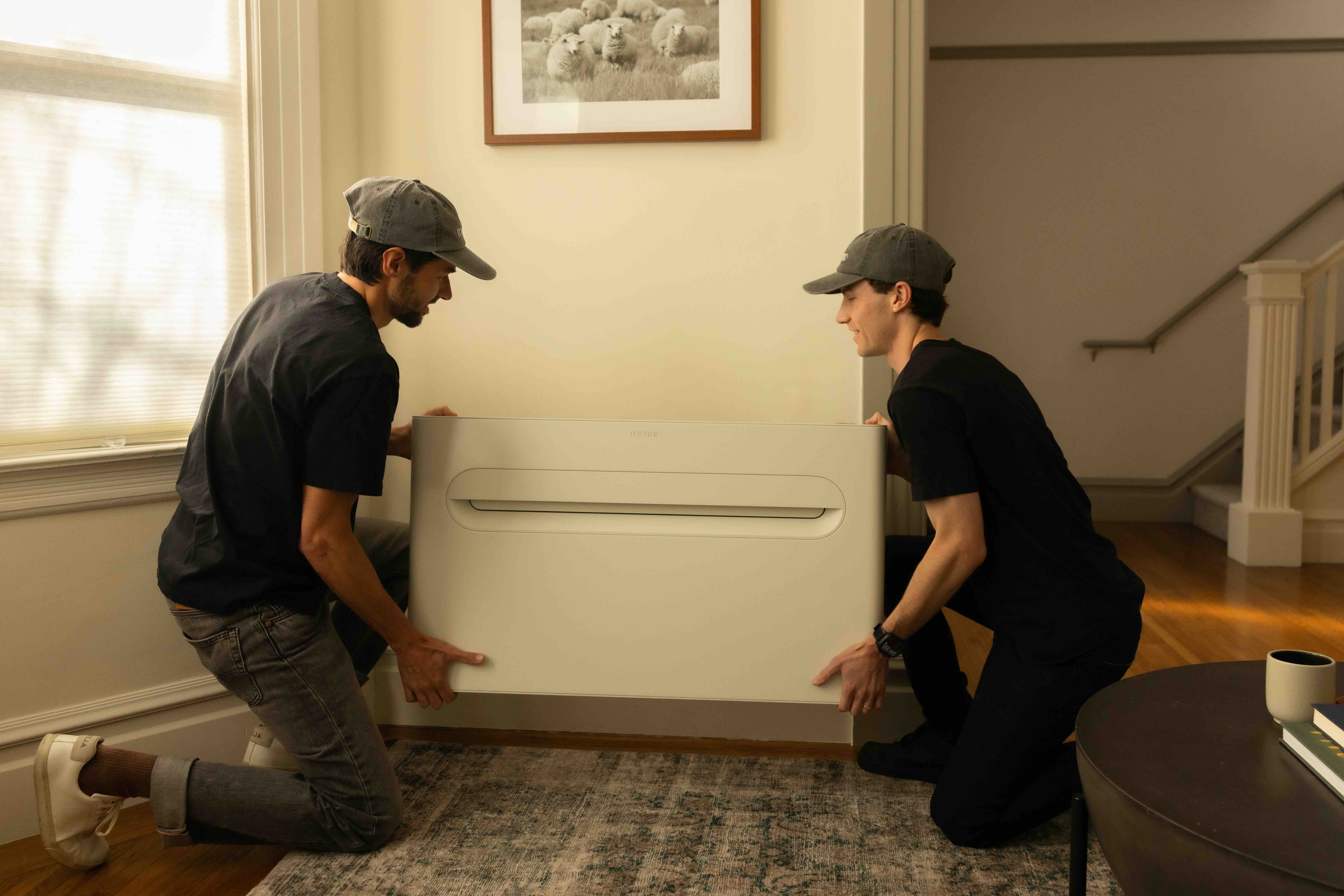 The Merino Mono is a heating and cooling system designed for the rooms traditional HVAC can't reach. The streamlined design eliminates clunky outdoor units, installs in under an hour, and plugs into a standard 120V outlet — no expensive electrical upgrades required. And while a traditional “mini-split” system can get pricey fast, the Merino Mono comes with a flat-rate price — with hardware and professional installation included. |

Dr. Edwin Lyman, writing for the Union of Concerned Scientists, warned that "advanced isn't always better," noting that some next-generation reactors have limited real-world testing and could introduce new risks if deployed too quickly. Nuclear plants also generate long-lived radioactive waste that must be stored securely, and any water used in cooling systems can contain trace radioactive isotopes such as tritium.
Then again, other experts like nuclear engineering professor Robert Hayes say that, compared to plants powered by fossil fuels, nuclear plants are "one of the safest forms of energy that's out there."
The bill being considered includes requirements such as ensuring the reactors can replace energy lost from decommissioning other plants and evaluating whether they can be built on existing sites to repurpose land and infrastructure and preserve jobs. The plants would also have to comply with U.S. Nuclear Regulatory Commission safety standards if they store spent nuclear fuel or radioactive waste on site.
As Assembly leaders told ROI-NJ in a previous discussion about this strategy, "with lower fuel requirements that meet the rising demand in energy production, the reactors would offer a practical path to clean and cost-effective energy."
TCD Picks » Quince Spotlight
💡These best-sellers from Quince deliver affordable, sustainable luxury for all




|
Which of these factors would most effectively convince you to support nuclear energy projects in your area? Click your choice to see results and speak your mind. |
 Lower energy bills 💸
💰Get TCD's free newsletters for easy tips to save more, waste less, and make smarter choices — and earn up to $5,000 toward clean upgrades in TCD's exclusive Rewards Club.
Cool Picks