


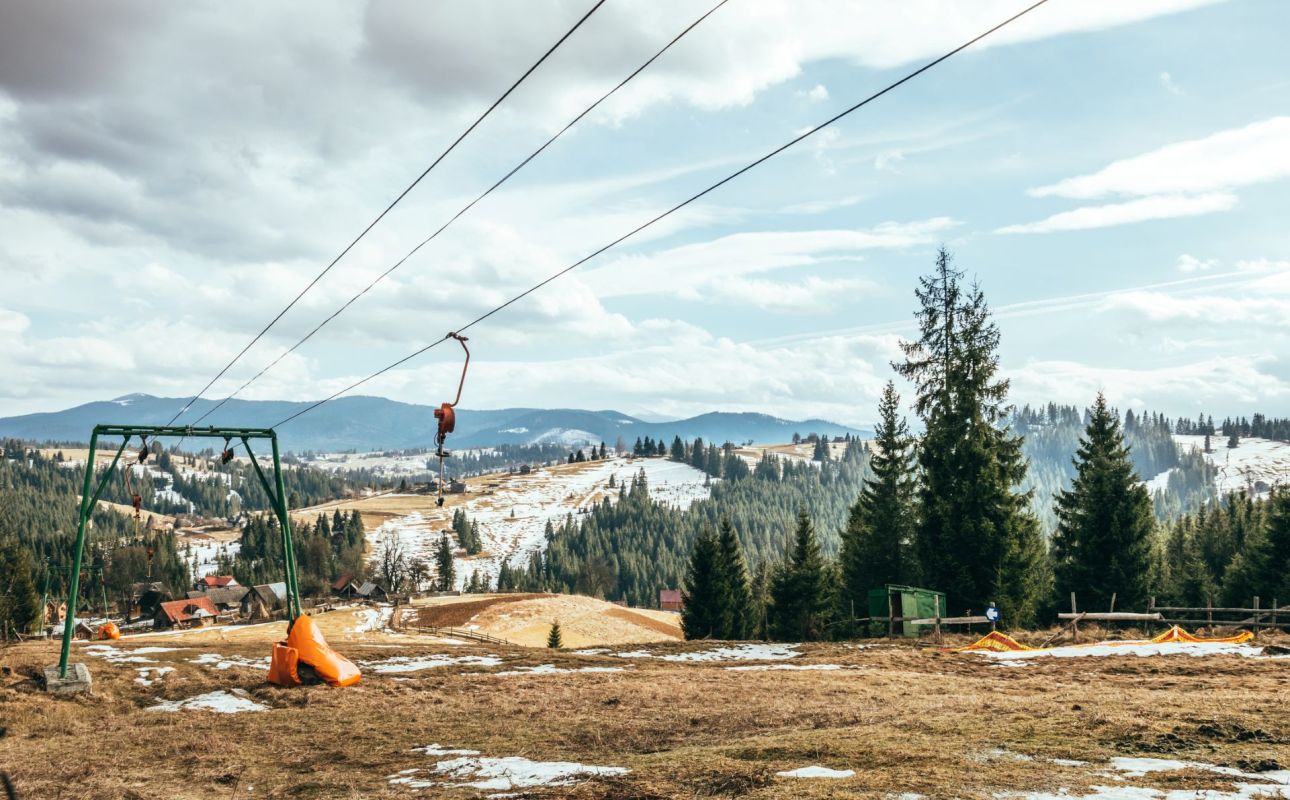
An unsettling weather pattern left would-be skiers high and dry at popular resorts across the Western U.S., highlighting how winter recreation is changing as global temperatures rise.
What's happening?
Heading into a traditionally busy Thanksgiving weekend, ski season was delayed or in jeopardy at some of the nation's biggest resorts as an unusual "split flow" weather pattern pushed precipitation south, as detailed by the San Francisco Chronicle.
Colorado's Steamboat Springs, California's Lake Tahoe, and Utah's Park City Mountain remained mostly bare. Idaho's Sun Valley was unable to open as usual over Thanksgiving weekend. High temperatures also make it difficult to rely on artificial snow.
After the calendar flipped to the final month of the year, Sun Valley revealed its snowmaking team has made a Dec. 3 opening possible.
Meanwhile, Flagstaff's Arizona Snowbowl experienced its snowiest November since 2004, while Los Angeles County's Mountain High got a foot of snow and opened to skiers.
Why is this important?
Thanksgiving weekend is the typical start of ski season in the U.S. — breathing life into resort towns that rely on tourism revenue. However, a changing climate has generally made those dollars harder to come by. One study estimated that national direct economic losses from lost skier visits and the added costs of producing artificial snow totaled $252 million each year.
The U.S. isn't the only country feeling the effects of rising global temperatures. Last year, a Swiss ski resort announced that it was permanently shuttering its doors, as it wasn't feasible to keep operating with its winter season cut almost in half. Ski slopes, along with bars and shops, remained closed at a ski resort near Rome when temperatures remained well above freezing.
While fluctuations in temperature aren't anything new, a warming climate is altering weather patterns and making extreme weather events more unpredictable and powerful. As the San Francisco Chronicle noted, it's too early in the season to officially declare a "snow drought."
However, "the lack of early snow reflects a pattern expected with climate change, which scientists believe will warm up Sierra storms and transform some would-be snow into rain."
These changes would affect more than winter recreation. Reduced snowpack in the Sierras could deplete water supplies for agriculture, as the snowpack serves as a natural reservoir.
TCD Picks » Quince Spotlight
💡These best-sellers from Quince deliver affordable, sustainable luxury for all




|
Do you think America does a good job of protecting its natural beauty? Click your choice to see results and speak your mind. |
 Definitely 👍
 What's being done about this?
Given that burning dirty fuels accounts for the majority of planet-warming pollution from human activities, the scientific community widely agrees that transitioning to clean and low-carbon energy sources is crucial. While the task may sound challenging, there are simple, cost-effective things you can do at home to slash your carbon impact.
For starters, try unplugging energy vampires when they're not in use. If you want to make a more comprehensive change and boost your home's climate resilience by pairing solar with battery storage, The Cool Down's Solar Explorer makes it easy to connect with trusted solar providers. Check out EnergySage, a Solar Explorer partner, to save up to $10,000 on solar.

Get TCD's free newsletters for easy tips to save more, waste less, and make smarter choices — and earn up to $5,000 toward clean upgrades in TCD's exclusive Rewards Club.
Cool Picks





