


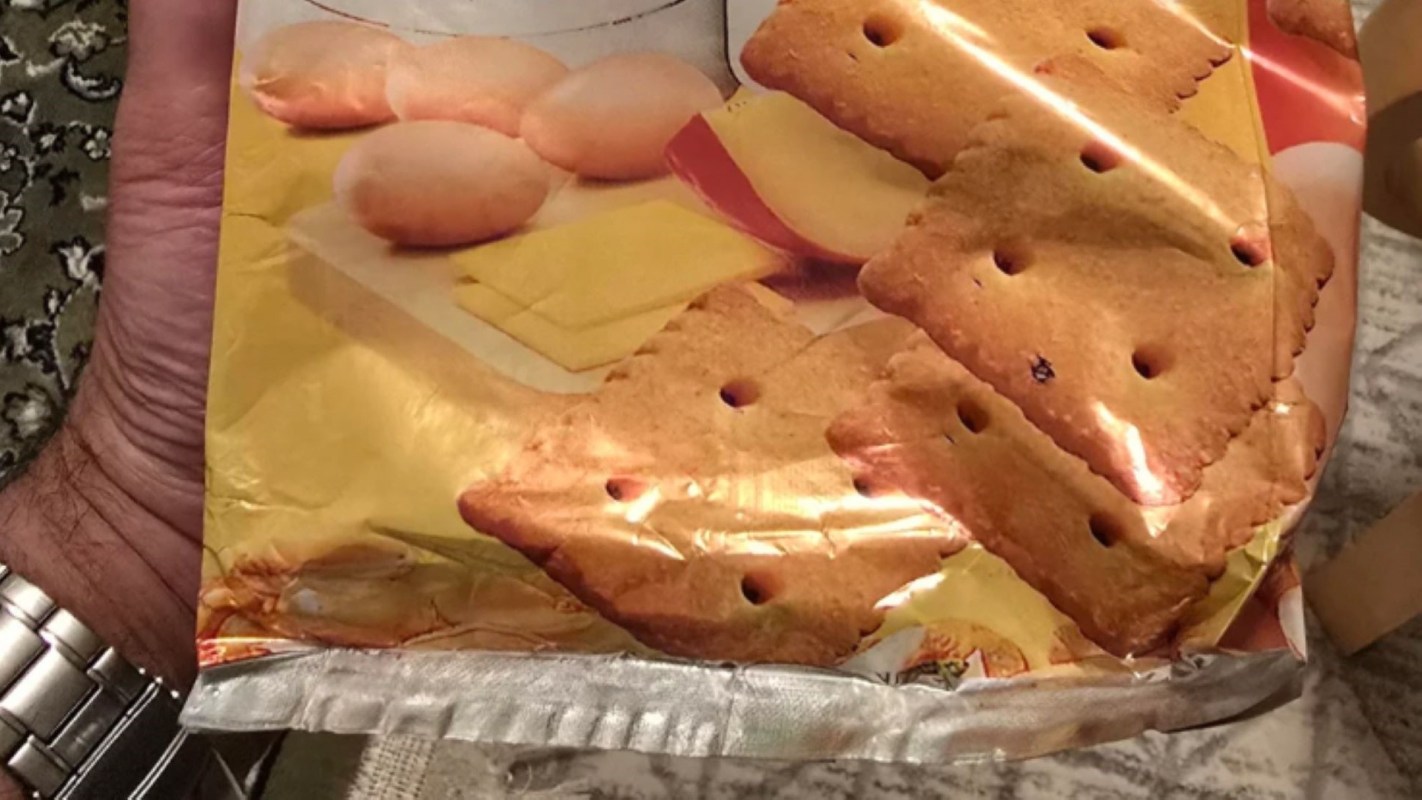
Shrinkflation is frustrating enough on its own, but some companies have made it worse by attempting to deceive consumers with misleading excess packaging.
What's happening?
As food prices and the cost of staple goods continue rising in the U.S. and globally, consumers are forced to make their grocery budgets stretch further.
At the same time, shrinkflation is becoming more common, according to the Government Accountability Office.
The GAO defined the practice as when "manufacturers decrease (or shrink) the quantity of an item without a corresponding price drop," and asserted that shrinkflation is inherently unfriendly to consumers.
A post on a subreddit dedicated to companies' poor yet intentional design decisions, typically for deceptive purposes, captured a perfect example of the way shrinkflation adds insult to injury.

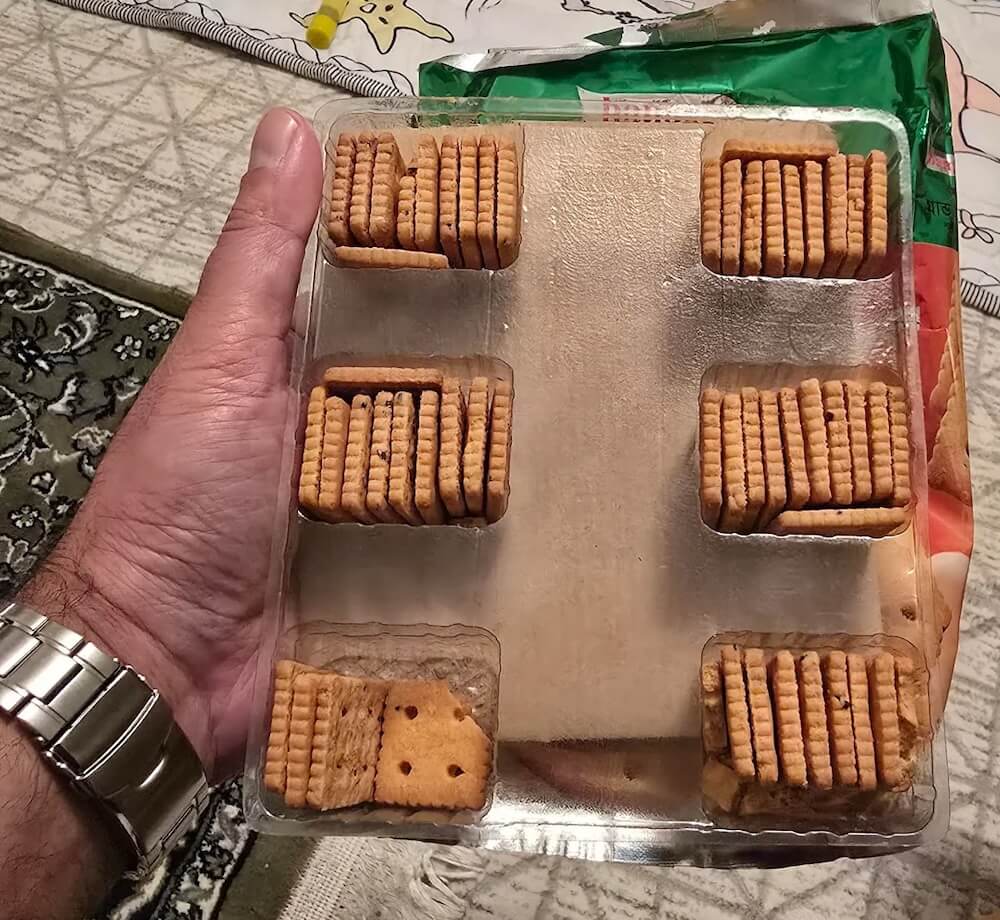
"I expected more," the original poster said of the two photographs they shared.
TCD Picks » Quince Spotlight
💡These best-sellers from Quince deliver affordable, sustainable luxury for all




The first image showed what appeared to be a large package of Bangas Grand Choice Salted Biscuits, roughly the size of a textbook. However, the next photograph was galling.
It showed what was behind the opaque outer layer: far more empty plastic space than biscuits.
What made the design so infuriating was that it was divided into what looked like 15 spaces for biscuits, and only six of the spaces contained biscuits.
"Wow," one user commented. "That package design is downright diabolical. Huge unnecessary waste of material."
|
Should companies be required to help recycle their own products?
Click your choice to see results and speak your mind. |
 Definitely 👍
 "Behold, the reason I check net weights: scummy companies like this," said another vigilant commenter, which drew an objection.
"There's no possible way to [see] how much you're getting of any product when everything weighs differently," another user countered. "Companies should be banned from deceptive, wasteful packaging. Period."
"This should be illegal, in my opinion, packaging should not be allowed to be so big compared to the product inside," a commenter opined. "Hurts the planet, hurts the customer, benefits [a sleazy] company."
Why is deceptive food packaging a problem?
As commenters observed, the original poster's biscuit box was problematic for more than one reason.
There was the matter of intentional consumer deception, which trade publication FoodNavigator posited "backfires," as shrinkflation undermines consumer trust. However, a CBS News report projected that it would become more common as food prices continue rising.
Purposely misleading consumers doesn't just deprive them of the opportunity to make educated choices at the supermarket, either.
Plastic packaging is often a necessary evil at the grocery store, but in this case, it's objectively a wholly unnecessary evil.
When companies deliberately design packaging that uses plastic to mislead customers, it places the burden of waste disposal on the customer. Plastic recycling isn't always straightforward, and unusual packaging shapes could prove difficult to discard.
Is anyone doing anything about this?
"Just because they didn't notice, doesn't mean consumers shouldn't know about downsizing," the GAO said, "and there are some policy options that could increase transparency for consumers."
The GAO proposed requiring "downsizing labels and other disclosures," better unit price labeling across markets, informing consumers, and prohibiting egregious forms of shrinkflation as potential solutions.
In France, officials moved to mandate packaging disclosures for instances when product size shrinks but prices remain the same.
A senator in Pennsylvania proposed legislation, the "Shrinkflation Prevention Act of 2024," but it was not adopted into law.
What can be done about excess plastic packaging more broadly?
Although deceptive packaging makes it more difficult to spot excess plastic, that doesn't mean there aren't steps consumers can take to avoid it.
Overall, using less plastic when possible is healthier for people and the planet, and replacing everyday items with non-plastic alternatives reduces both direct exposure and excess waste.
Voting with your dollars by supporting eco-friendly mainstream companies, clothing manufacturers, and personal care brands is an effective way to move the needle toward greater responsibility.
Likewise, seeking out retailers with plastic-free packaging options sends a strong message to corporations, discouraging the use of unnecessary plastic containers.

Join our free newsletter for good news and useful tips, and don't miss this cool list of easy ways to help yourself while helping the planet.






