


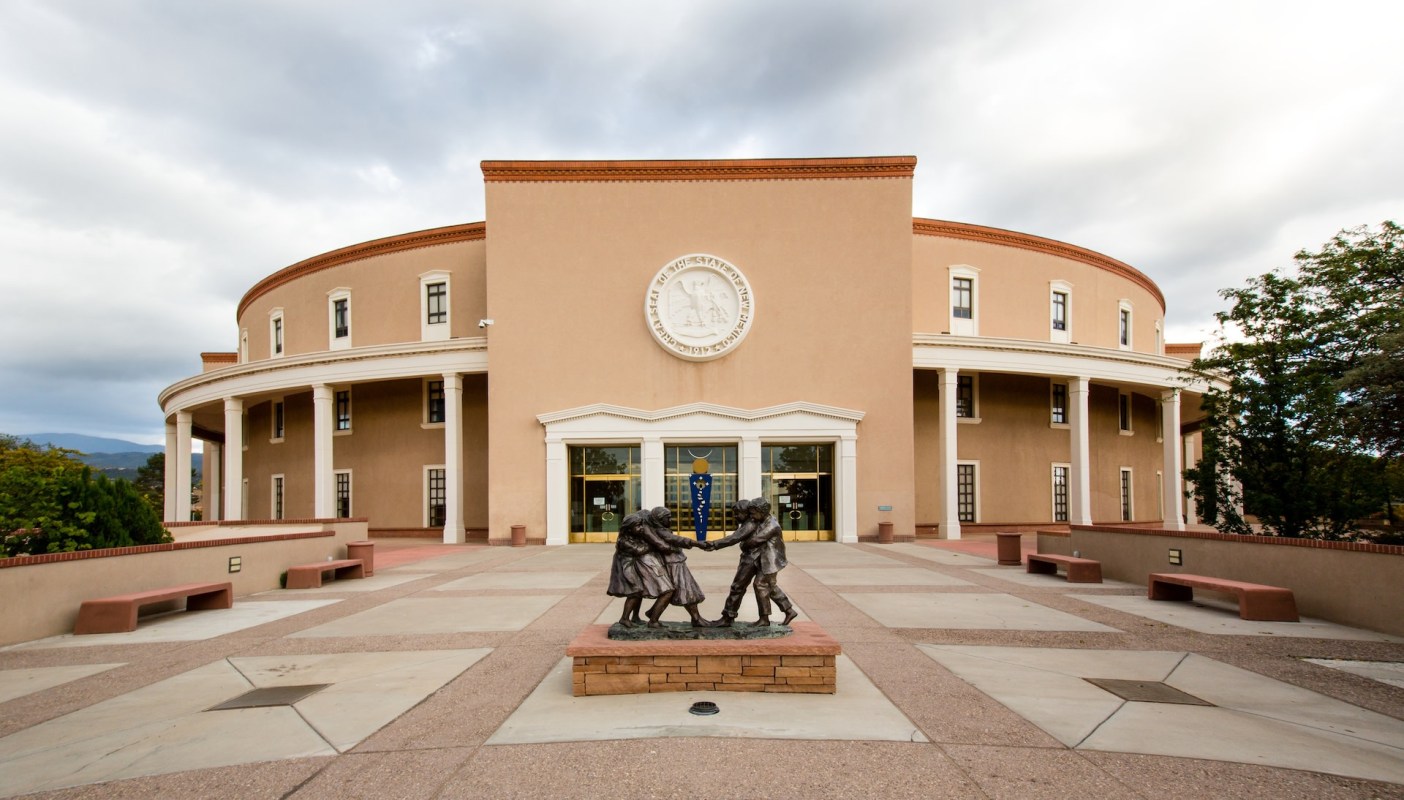
Conservationists reacted with alarm after state government officials intervened to overturn a ruling that banned the outside use of oilfield wastewater.
What's happening?
Capital & Main reported that New Mexico's Water Commission unanimously passed a ruling that prohibits toxic wastewater from oilfields from being used anywhere else. However, at the governor's urging, top cabinet members weighed in on behalf of the oil lobby to overturn the ruling.
The original rule had been the product of over a year of scientific debate and public hearings. Those who supported the law were stunned and dismayed by the governor's intervention.
"They're putting politics over scientifically based policy, and that's illegal," Mariel Nanasi of the New Energy Economy told Capital & Main, citing a state statute that requires officials to recuse themselves if their impartiality can be "reasonably questioned."
The Water, Access, Treatment, and Reuse Alliance, which represents the oil industry, argues that the science of wastewater management has advanced sufficiently to render regulation unnecessary.
Why is oil wastewater a concern?
Oil fields produce vast quantities of wastewater, also known as produced water, during the extraction process. For every barrel of oil, five barrels of produced water are created. Disposing of them is a massive headache for the oil industry if they aren't cleared for outside use. The water is toxic and contains undisclosed chemicals that the oil industry insists are "trade secrets."
Perk up the winter blues with natural, hemp-derived gummies Camino's hemp-derived gummies naturally support balance and recovery without disrupting your routine, so you can enjoy reliable, consistent dosing without guesswork or habit-forming ingredients. Flavors like sparkling pear for social events and tropical-burst for recovery deliver a sophisticated, elevated taste experience — and orchard peach for balance offers everyday support for managing stress while staying clear-headed and elevated.
Learn more → |

Produced water poses a significant environmental risk to groundwater, degrading the soil, and runoff contaminating surface water. Oil field wastewater can be ten times saltier than seawater, per the Environmental Defense Fund.
New Mexico is a state experiencing severe water shortages and one where the oil and gas industry has a significant influence. In 2025 alone, the industry spent nearly $1 million influencing the state government, and the governor is a top recipient of oil and gas money. A law to make lobbying more transparent in New Mexico was one of 35 bills vetoed by Governor Michelle Lujan Grisham in April 2025.
What can be done to protect state water resources?
It's a frustratingly familiar tale repeated endlessly across the United States. One of the biggest impediments to environmental legislation is the significant influence of big money interests behind polluting industries.
As daunting as it may seem, many effective efforts happen locally through raising awareness and holding elected officials to account.
TCD Picks » Upway Spotlight
💡Upway makes it easy to find discounts of up to 60% on premium e-bike brands





|
Do you worry about companies having too much of your personal data? Click your choice to see results and speak your mind. |
 Absolutely 👍
Join our free newsletter for good news and useful tips, and don't miss this cool list of easy ways to help yourself while helping the planet.
Cool Picks





