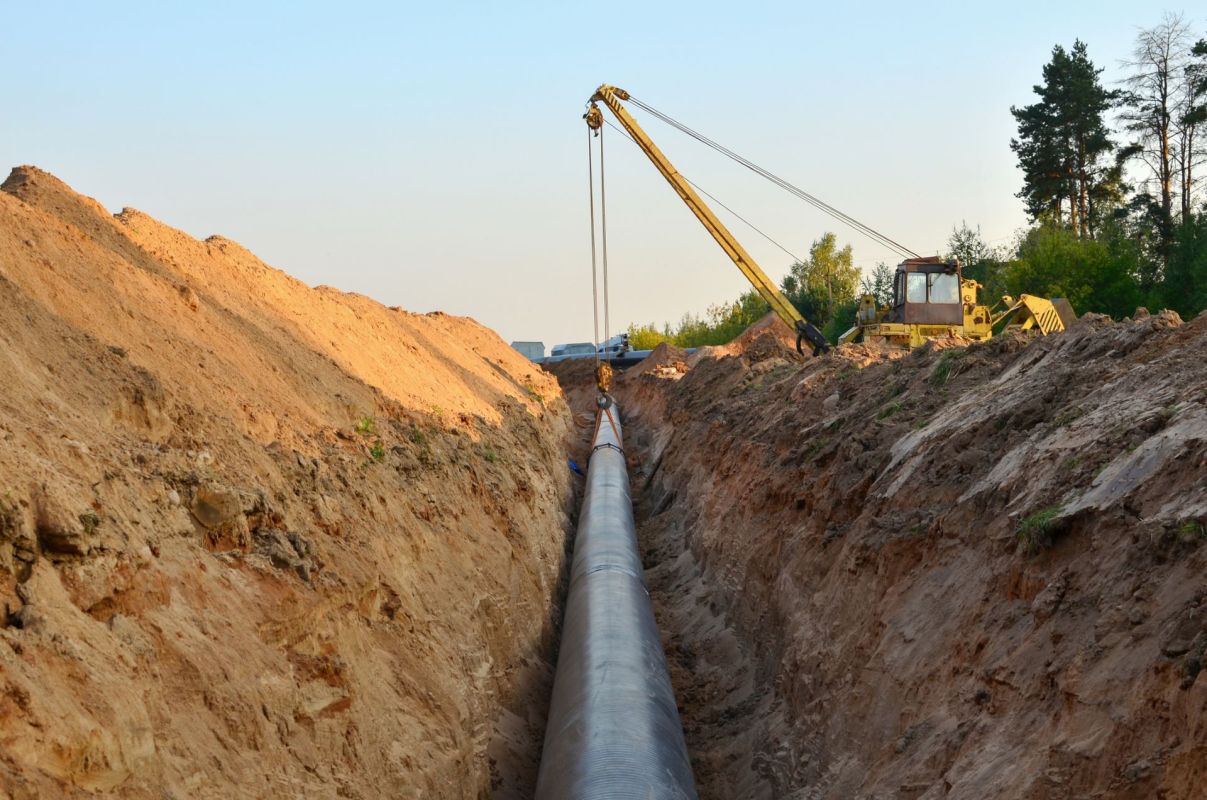
A yearslong fight over a North Dakota pipeline taking is headed to the U.S. Supreme Court, the North Dakota Monitor reported.
At the center of the case is whether landowners who lost property through eminent domain can make the pipeline company pay their attorney fees, a ruling that could influence similar fights beyond North Dakota.
What happened?
In 2018, WBI Energy took parts of the properties owned by Leonard and Denae Hoffmann, Randall Stevenson, and Rocky Prestangen for a natural gas pipeline project.
Under the federal Natural Gas Act, pipeline companies can seize land for qualifying infrastructure projects as long as property owners receive fair compensation, the North Dakota Monitor explained.
A confidential settlement later resolved payment for the land itself, but not the separate fight over legal costs. The unanswered question is whether attorney fees are governed by federal law or North Dakota law.
The outlet noted North Dakota U.S. District Court Judge Daniel Hovland awarded the landowners about $380,000 in attorney fees in 2024, but the regional federal appeals court later reversed that decision.
TCD Picks » Good Store Spotlight
Get 10% off your next purchase with code TCD10




"What you're kind of seeing here is the age-old fight of federalism," lead attorney for the plaintiffs, Robert McNamara, told the North Dakota Monitor.
Why does it matter?
The case could shape how much leverage property owners have when pipeline companies use eminent domain.
If the justices side with the landowners, companies seeking land for federally approved gas infrastructure may also have to follow state rules on attorney fees. That could make it easier for people to challenge takings without taking on substantial legal bills themselves, the North Dakota Monitor noted.
If the court sides with WBI, landowners in similar disputes may have fewer protections when confronting large energy companies operating under federal authority. The ruling would affect similar disputes beyond North Dakota.
TCD Picks » Quince Spotlight
💡These best-sellers from Quince deliver affordable, sustainable luxury for all




The stakes also extend beyond property law.
Coal and natural gas power plants contribute to air and water pollution linked to asthma, heart disease, cancer, and premature death. They can also keep energy costs high for households that remain tied to fuel-based systems instead of cleaner, more abundant energy from sunlight and wind.
Industry lobbying can further delay cleaner and cheaper energy solutions that would better protect families while lowering monthly bills.
The case arrives as WBI pursues another major project, the Bakken East pipeline, which the company has said could be operating by 2030, per the North Dakota Monitor.
What's being done?
By agreeing to hear the case, the Supreme Court has set the stage for both sides to file more extensive legal arguments in the coming months. McNamara said he expects oral arguments this fall, with a ruling likely several months later.
Outside groups have already lined up behind both sides. North Dakota and 11 other states filed a friend-of-the-court brief supporting the landowners, while the U.S. Department of Justice urged the court to rule in favor of WBI, the outlet reported.
WBI Energy President Rob Johnson has previously said that the company would turn to eminent domain only as a last resort for the Bakken East project, according to the North Dakota Monitor. The Supreme Court's ruling could help determine what that "last resort" actually costs.
"It would be nice if everyone knew what the rules were before deciding to build a new pipeline," McNamara concluded.

Get TCD's free newsletters for easy tips, smart advice, and a chance to earn $5,000 toward home upgrades. To see more stories like this one, change your Google preferences here.