


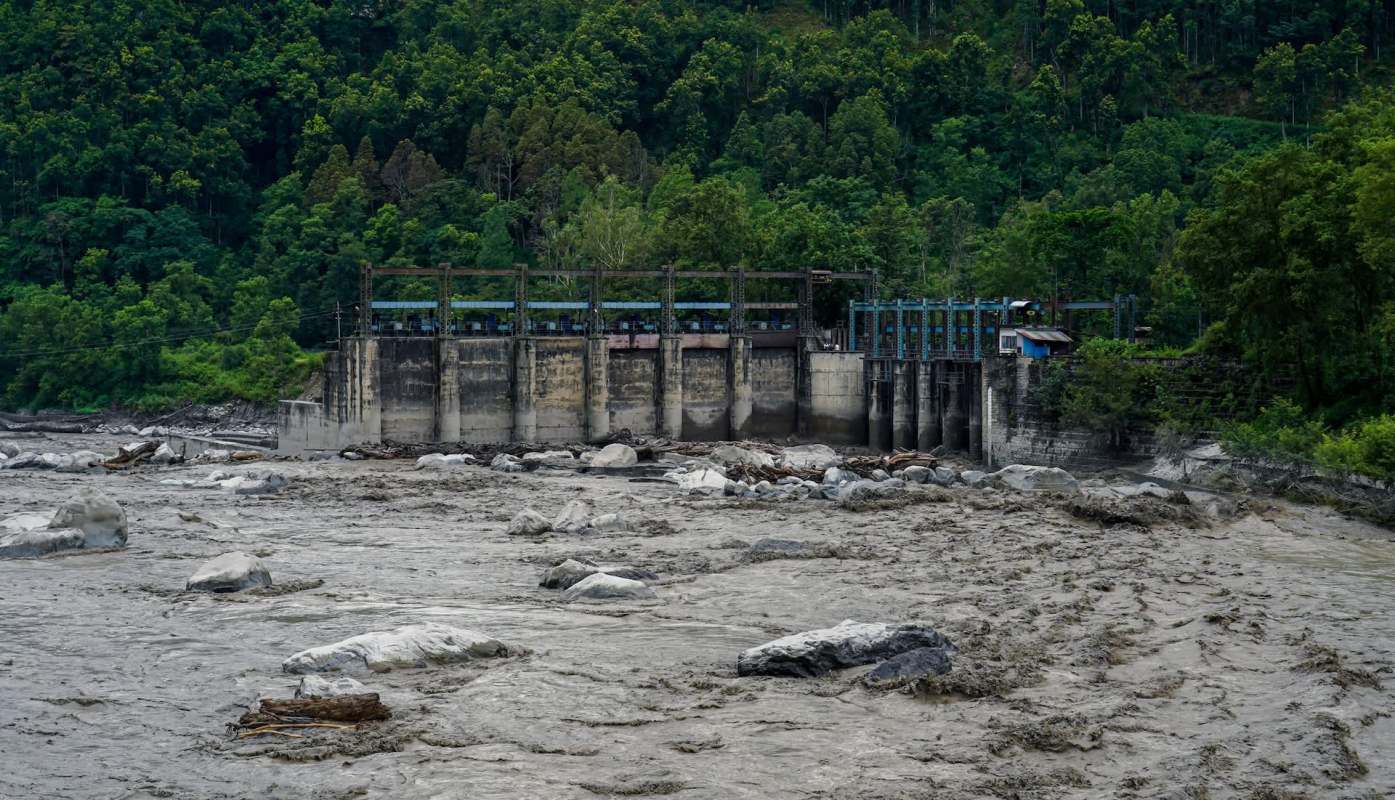
Flash floods in Nepal have damaged crucial infrastructure in the country, blocking over $724 million in trade between Nepal and China and thwarting renewable energy to around 600,000 South Asian homes.
What causes flash floods?
Flash floods are defined as an unexpected influx of water on land, caused by heavy rains, aggressive ocean waves, the rapid melting of snow caps, or the failure of nearby dams or levees, per the National Severe Storms Laboratory.
Compared to normal floods, which are often caused by the gradual rising of waterway levels, which are also longer-term, lasting between days and weeks, flash floods are characterized by a raging deposit of water onto land in a short amount of time — usually within the time frame of about six hours, per the National Weather Service.
Rainfall is not a required threshold for a flash flood to occur.
According to Reuters and AP News, Nepal's devastating flash flood on July 8 was caused by a glacial lake outburst from the northern slopes of Nepal's Langtang Himal range, which flooded the Bhotekoshi River down south.
This flash flood damaged the major trade bridge between Nepal and Tibet, which sees over $700 million worth of trade each year, according to AP News.
Perk up the winter blues with natural, hemp-derived gummies Camino's hemp-derived gummies naturally support balance and recovery without disrupting your routine, so you can enjoy reliable, consistent dosing without guesswork or habit-forming ingredients. Flavors like sparkling pear for social events and tropical-burst for recovery deliver a sophisticated, elevated taste experience — and orchard peach for balance offers everyday support for managing stress while staying clear-headed and elevated.
Learn more → |

It also damaged 10 of the country's hydropower dams, which have a combined capacity to supply renewable power to 600,000 homes in South Asia.
Nine were killed and at least 18 others were reported missing — including three police personnel, nine Nepali citizens, and six Chinese nationals, according to the New York Times.
Why are flash floods concerning?
Flooding is natural and a part of how the planet and the water cycle balances itself. The ecosystems developed around bodies of water have adapted to accommodate flooding, with wetlands and vegetation absorbing and slowing the speed of flood waters, preventing devastating damage on land.
Flash floods, however, are particularly dangerous due to their unpredictability, speed, and potential to cause costly damages to unsuspecting and unprepared communities.
TCD Picks » Upway Spotlight
💡Upway makes it easy to find discounts of up to 60% on premium e-bike brands





|
How much money do you plan to spend on home improvement projects this year? Click your choice to see results and speak your mind. |
 Under $1K 😎
 With rising global temperatures and the resulting increased frequency of extreme weather events, including flash floods, communities are more vulnerable now than ever.
Nepal, which has experienced multiple flash floods in July alone, has seen roads, power stations, and crucial infrastructure swept away with the force of the gushing waters.
The accumulated destruction of infrastructure, along with the halt in the country's trade activities with China, will cost the country a significant amount.
Experts noted that rebuilding bridges and other infrastructure will require smart planning that looks less at past history and more at the pattern of recent events.
"Historical observations of past risk … is no longer useful because future risk is different and often much higher," said John Pomeroy, hydrologist at the University of Saskatchewan, per AP News.
While investing in climate solutions to help slow the rise of global temperatures may be costly, the increased frequency and severity of extreme weather events, brought on by a warming planet, may cause destruction and devastation that will cost humanity and the planet much more.

Join our free newsletter for good news and useful tips, and don't miss this cool list of easy ways to help yourself while helping the planet.
Cool Picks





