


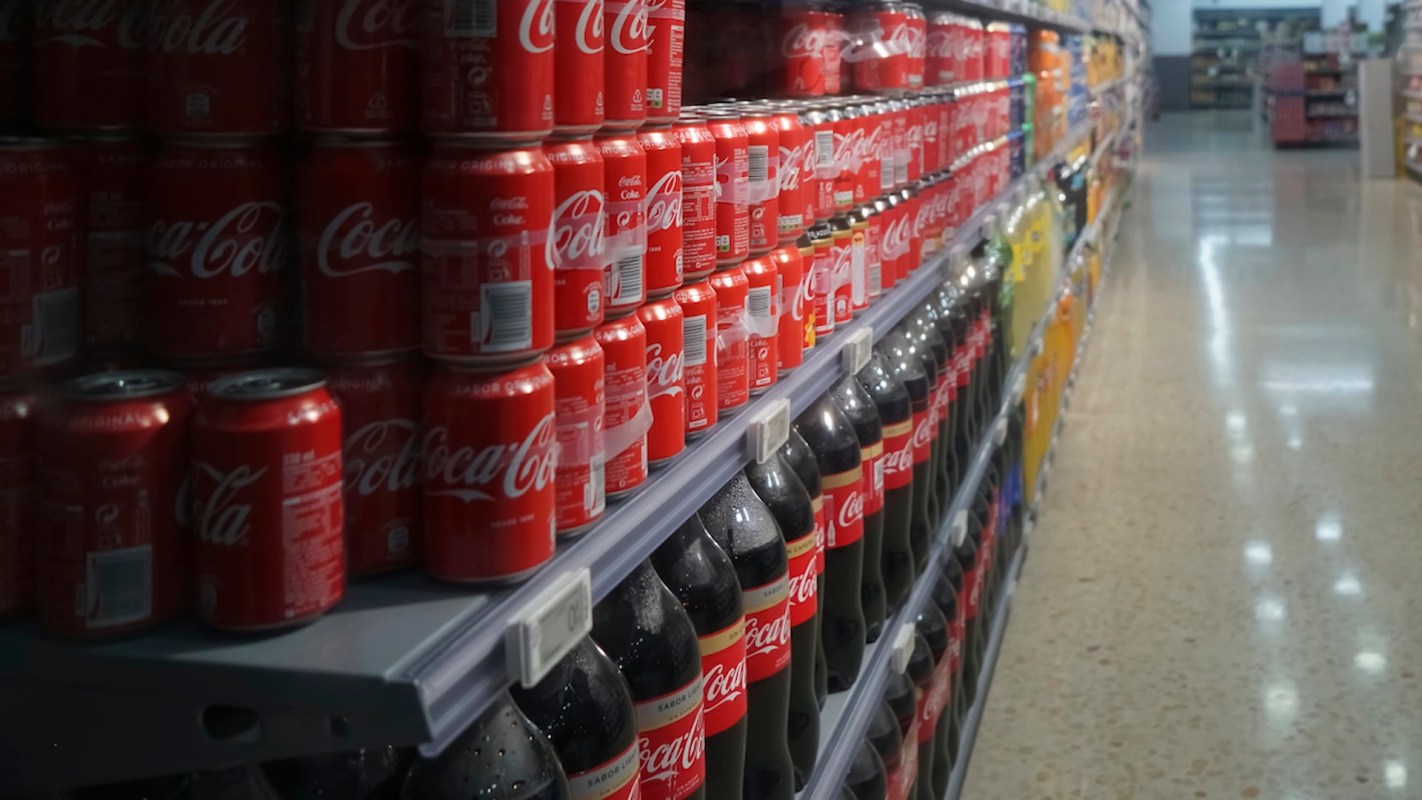
A newly unveiled government plan in Kenya is highlighting a troubling truth about the health standards of widely consumed food and drink products.
What's happening?
A report shared with Reuters has revealed that nearly all packaged food on Kenyan shelves, including those from Coca-Cola, would require a health warning under newly proposed regulations.
Independent analysis by the nonprofit Access to Nutrition found that 90% of packaged products sold by companies like Coca-Cola, Nestle, and other leading brands exceeded the health thresholds for salt, sugar, and/or saturated fats.
The findings go hand-in-hand with Kenya's new nutrient profile model introduced in July, which will require mandatory front-of-package health warning labels. If this new system is enacted, Kenya would be the first country in its region to adopt this kind of system.
"We're at a tipping point," said ATNi's Head of Policy, Katherine Pittore. "Kenya could follow in the path of countries like the U.S., where we are seeing really high levels of obesity and overweight, or they could act now to prevent that."
Why are Coca-Cola's ingredients concerning?
Coca-Cola has long faced scrutiny over its high sugar content. Being called out for its unhealthy ingredients shouldn't be a shock to most consumers.
TCD Picks » Quince Spotlight
💡These best-sellers from Quince deliver affordable, sustainable luxury for all




However, this story highlights a broader issue. It has become clear that products with poor nutritional value are being disproportionately sold in low-income countries.
According to ATNi, companies like Coca-Cola offer their healthier products in almost exclusively wealthy markets.
In Kenya alone, adult obesity rates have tripled since 2000. The report noted that 45% of women and 19% of men in the country are now classified as overweight.
Even traditionally healthy products, like sweet biscuits and yogurts, which contain nutritious vitamins and minerals, were deemed unhealthy, according to Kenya's new health model.
TCD Picks » Quince Spotlight
💡These best-sellers from Quince deliver affordable, sustainable luxury for all
|
Should companies be required to help recycle their own products?
Click your choice to see results and speak your mind. |
 Definitely 👍
 Coca-Cola's latest controversy is another unfortunate example of the corporation contributing to a much broader cycle of harm, which includes its large hand in environmental pollution.
By pushing highly processed products in low-income countries like Kenya, Coca-Cola is continuing to maintain its place as the world's worst producer of branded plastic waste. Nearly all of these ultra-processed goods come heavily packaged in single-use plastics, much of which ends up littering local communities.
What can be done about Coca-Cola's environmental impact?
Coca-Cola has made strides in some areas to reduce its negative impact on less wealthy communities and the environment. Initiatives like switching to plastic-free rings on multipacks are small changes that will help solve the company's pollution problem.
Meanwhile, supporting brands that demonstrate environmentally positive actions or that sell healthy food can demonstrate to companies like Coca-Cola that there is a consumer appetite for these kinds of products.
For Kenya, the country's new labeling system could be a game changer. It could force transparency and possibly reform in the way food giants market and formulate their products.

Join our free newsletter for good news and useful tips, and don't miss this cool list of easy ways to help yourself while helping the planet.







