


Power outages across the country are getting longer and longer, according to new research. In 2022, the average outage duration was about 8 hours, but as of 2025, the average is now nearly 13 hours. If you're in the South, that average ticks up to 18 hours.
Those being averages means many individual instances have gone on for days or even weeks in some neighborhoods, too, on the heels of more major storms.
Additionally, when the power is running, you may have noticed your electricity bills are also increasing. In fact, this winter some Americans were shocked to discover their monthly bill was over $1,000. Planned rate hikes in the future will only exacerbate the problem.
It's the perfect storm. "We're paying more for electricity and we're getting worse service," said Jim Dawe, leader of sales and marketing for Generac Home. "There's a lot coming at us."
Instead, at Generac, Dawe said "our view is [that] homeowners should … stop being subjected to the [unpredictability] of these two mega trends that are driving home energy," in a recent interview with The Cool Down. To that end, the company has "developed a product suite to enable homeowners to take control — and then do what they need to do with power and energy on their own terms."
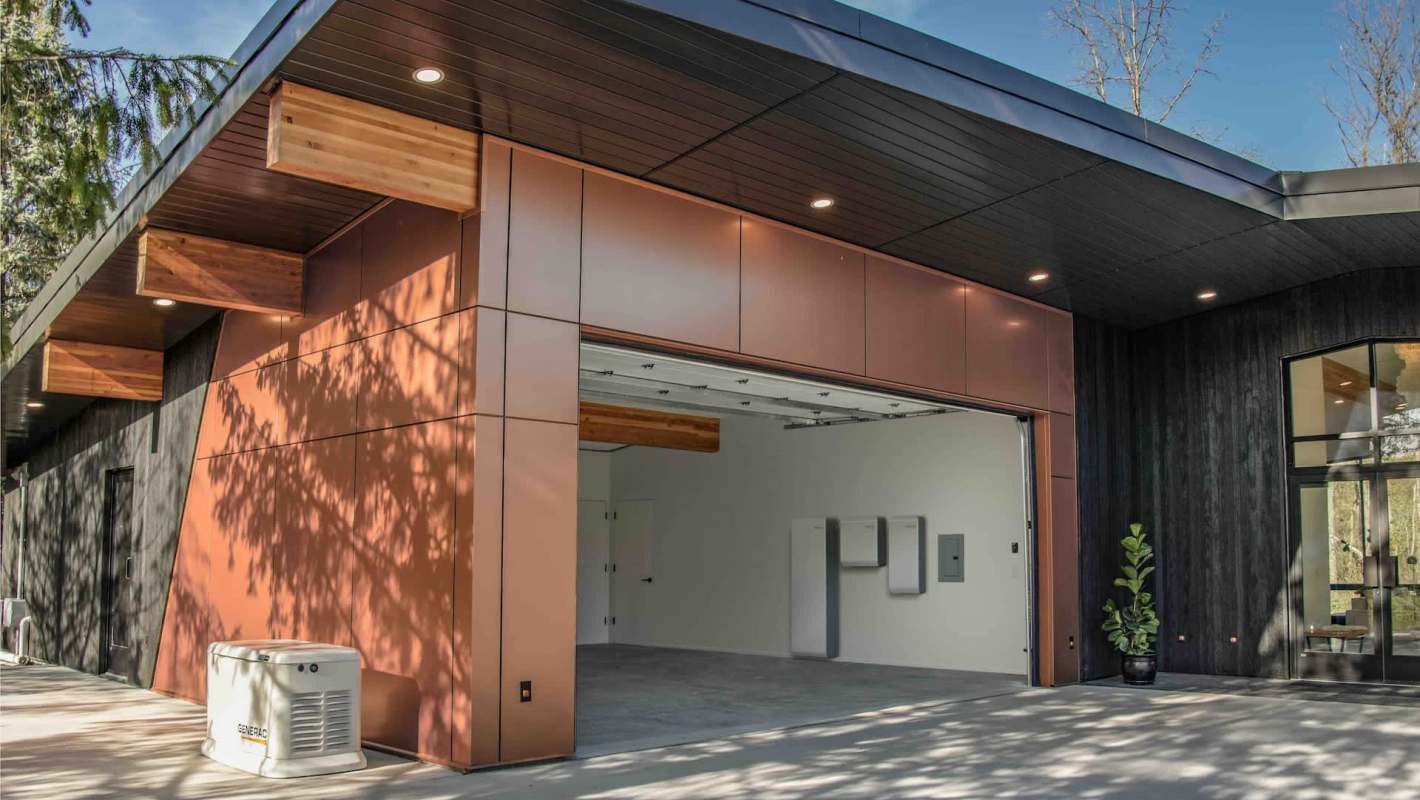
Dawe also explained that the premise goes beyond Generac's flagship traditional generators. The 67-year-old company has also developed extensive whole-home energy solutions of solar and battery products to tackle both ends of the energy equation: resiliency during outages and cost savings as energy prices spike.
The Cool Down chatted with Dawe to learn more about how homeowners across the country can build out their own energy-resilient houses — and even save money and reduce stress in the process.
How to build a home energy system
What's unique about Generac is that even while the product that put it on the map over 60 years ago — their home standby generator — is still going strong, the company recognized that homeowners' energy needs were becoming more complex.
That insight led Generac to expand beyond gas-powered generators and build a complete home energy ecosystem including solar power and battery storage — one that can be tailored to each household's priorities, whether that's backup power, lower energy bills, cleaner solar energy, or greater control.
Dawe walked us through the additional products: there's the high-powered micro-inverter (the PWRmicro) that transfers energy from solar panels into your home, plus home batteries (the PWRcell 2) that can store solar energy to use at night, or even to store electricity from the grid to use later.
|
Which of these savings plans for rooftop solar panels would be most appealing for you?
Click your choice to see results and earn rewards to spend on home upgrades. |
 Save $1,000 this year 💸
 But what sets the Generac system apart is what comes built in: Every PWRcell 2 includes a "power manager" (called the PWRmanager, it's Generac's load management technology) and an ecobee smart thermostat. Both of these products are designed to help extend backup power while maintaining comfort and control during an outage. (Generac acquired ecobee in 2021.)
The ecobee also "acts like the hub of the home," Dawe explained. Because it's installed directly on the wall — not just buried inside an app — it gives anyone in the household real-time visibility into system performance, energy usage, and outage status.
That visibility is especially important, he noted, because Generac's systems are designed to be seamless.
"You can go into an outage and not even know it. Your TV won't even flicker," Dawe said. "But if you don't realize you're on backup power, you could be running more appliances than you want and drain stored energy faster than necessary."
Overall, Dawe mentioned that between standalone generators, solar inverters, backup batteries, and power managers, the Generac ecosystem has a solution for practically everyone.
Zooming out, Dawe emphasized that this kind of flexibility is core to Generac's approach. Whether a homeowner starts with a generator, solar, battery storage, or a combination of all three, each solution is designed to work together and grow over time.
"All of these solutions can be put together and configured for whatever our customers need," Dawe said. "... They're additive, so you can add them over time, [rather than being] … locked into the one you select" upfront.
How do home energy solutions save homeowners money?
Solar panels save the average homeowner about $61,000 over 25 years in the U.S., according to EnergySage. Beyond those huge savings, there's also the headaches avoided and cash saved from generators and backup batteries when you don't have to replace everything in your fridge and freezer after the power goes out. Plus, these appliances also save users through optimization and something called "energy arbitrage" (more on this in a sec).
The optimization part is fairly simple: Tools like the ecobee smart thermostat can automatically adjust the temperature ever so slightly based on users' behavior, which ends up being more efficient than a manual thermostat, though they can always be programmed to hold to a specific temperature indefinitely as well. Less energy used on heating and cooling means lower utility bills.
As for energy arbitrage, this becomes particularly important with home batteries. Dawe pointed out a few important aspects, including the ability to pull in and store electricity in that battery when it's cheapest (usually in the middle of the day and late at night) and then use it when electricity would be more expensive (usually mornings and evenings). Plus, if your backup battery is attached to a solar system, you could end up not paying a cent for energy at all, with the batteries helping store energy for when the sun isn't shining.
Homeowners can also save money with energy-resilient systems because, as Dawe put it, "you're hedging your future costs." Remember all those depressing electricity stats from the top of the article? Well, those rate hikes are only expected to increase in the future, possibly up to 40% by 2030, according to new research.
Installing solar and backup batteries means those higher bills aren't really your problem anymore.
How long can a home energy system provide power in your house?
A lot of that answer depends on the size of a home, its location, how weatherized and insulated it is, and other factors. No two homes, or outages, are the same, but broadly speaking, Generac's battery solution is going to be best for everyday energy savings and getting through shorter outages, because homeowners can store solar power or lower‑cost electricity and use it when the grid goes down or rates spike.
For those not yet ready for the solar and battery plan, or for additional insurance on having enough power through just about any extended weather conditions, the brand's generator lineup is the industry's gold standard. "Their role in this ecosystem allows you to get through an outage for as long as you have fuel," Dawe said, "and if you have a natural gas line, you're good to go."
Additionally, Generac reports that its micro-inverter (which transfers energy from solar panels into a home) has up to 40% more power output than the industry leading product line, which means it can pull in more solar energy that can then be stored in a backup battery to use during an outage — making solar plus backup an increasingly popular option for home resiliency.
Where Generac's reputation comes in to help it stand out over lesser-known brands
Generac was founded in 1959, so it's been around the block for a while now, and it's also been in the clean energy space since 2019.
Generac reports it has 3 million generator owners and 5 million ecobee owners across the country.
None of that can happen without a trusted installer network: "One of our greatest strengths as a company is that we have a very robust dealer network," Dawe said. "We have well over 9,000 [authorized independent installers] around the country." The Generac authorized dealer network can also help homeowners with financing options and custom quotes depending on what type of energy resilient setup they're looking for.
"I'm very excited about putting all the pieces of the puzzle together," Dawe told us about all the custom options Generac offers for energy savings and peace of mind, "and then reaching [customers] with this great home energy system that they can tailor to whatever they need."

Get TCD's free newsletters for easy tips, smart advice, and a chance to earn $5,000 toward home upgrades. To see more stories like this one, change your Google preferences here.






