


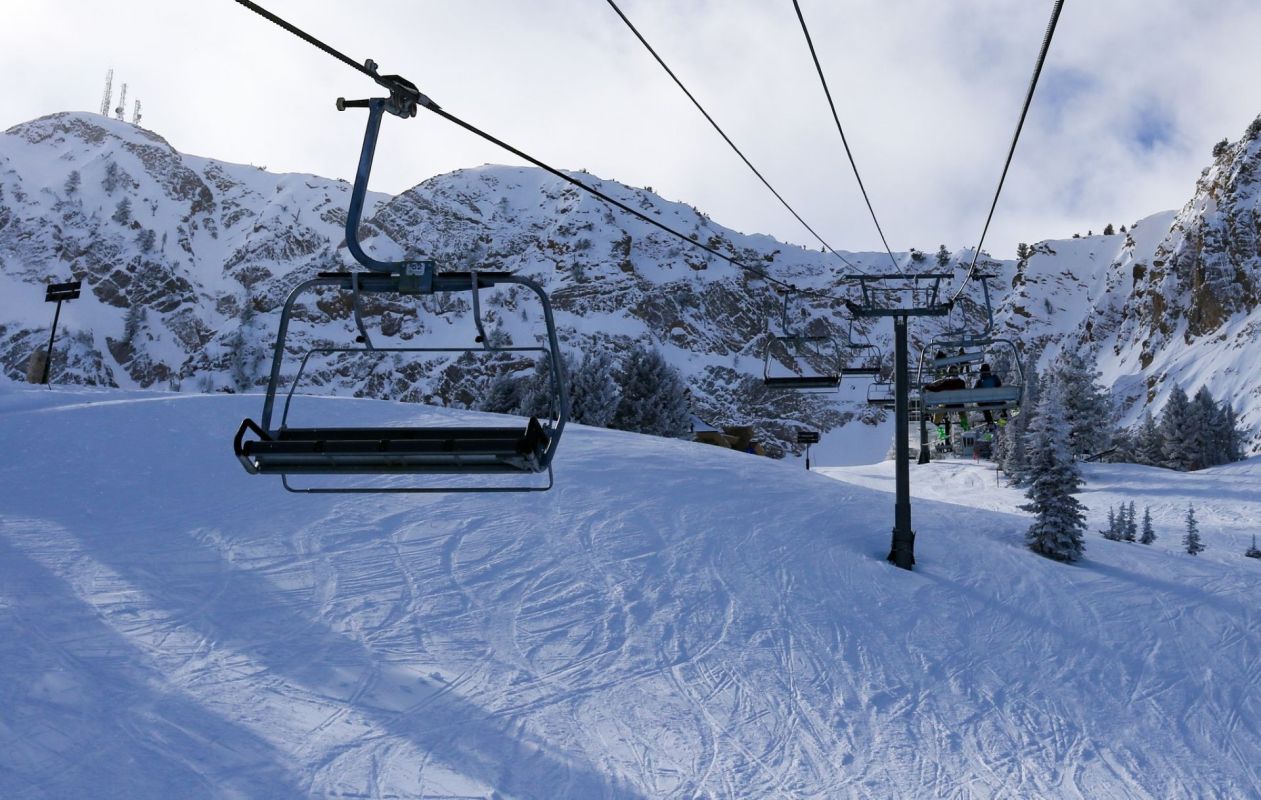
The Céüze resort in the Hautes-Alpes region is just one of many succumbing to a troubling "ghost resort" trend sparking debate and shaking up the lives of locals.
What's happening?
As The Guardian detailed, more than 186 ski resorts have permanently shuttered operations across France, including Céüze — one of the oldest in the country.
Warmer winters and shifting weather patterns have left resorts with unreliable or minimal snowpack, making it impossible for them to do business without racking up debt. Merely opening Céüze each season cost €450,000, or $525,032.
In order for the venture to be profitable, Céüze needed to stay open for at least three months. However, the resort didn't have the conditions to open in 2016 and 2017. In 2018 — Céüze's final season of welcoming skiers — it operated for only a month and a half.
"We looked into using artificial snow but realized that would delay the inevitable," said Michel Ricou-Charles, president of the local Buëch‑Dévoluy council, which manages the site.
Why is this important?
Locals including Richard Klein, who lives in Roche des Arnauds, experience the most immediate effects when winter resorts shut down, including loss of cultural traditions, recreation, and tourism dollars. The effects of reduced snowpack can become more evident down the line.
When precipitation falls as rain in winter, it fails to form a natural reservoir that melts slowly over traditionally warmer months, supporting agriculture and urban water supply. Instead, the rain runs off quickly and can lead to flooding — just one example of how rising global temperatures are resulting in more frequent and extreme consequences.
The water in snowpack is also a particularly useful buffer in times of drought, limiting wildfire risk in disaster-prone regions, per the California Department of Water Resources.
What's being done about this?
The shuttering of resorts has sparked a passionate debate about how to adapt to the changing climate — a situation overwhelmingly driven by human activities, primarily the burning of polluting fuels such as gas, oil, and coal — and what should be done with the defunct sites.
Klein believes Céüze should have tried to operate with artificial snow. "I think it's really stupid they closed it. There were always loads of people," he told The Guardian. "Now it's too late."
TCD Picks » Quince Spotlight
💡These best-sellers from Quince deliver affordable, sustainable luxury for all




|
Do you think America does a good job of protecting its natural beauty? Click your choice to see results and speak your mind. |
 Definitely 👍
 Others — such as ecologist Nicolas Masson and geographer Pierre-Alexandre Métral — are focused on minimizing disturbance from degrading equipment and contaminants, including plastic, asbestos, motor oil, and grease, according to the publication.
In November, Céüze began the deconstruction process. Signs of life are already beginning to appear, suggesting that a project to restore the environment and limit the spread of invasive species may be around the corner.
"What is our heritage that we will want to keep. And what is just a ruin we want to dismantle? That is a question we have to ask every time, and it requires some reflection," said Masson, who feels "ghost resort" doesn't accurately describe the area because people still show up to walk, snow-shoe, and partake in other activities.

Get TCD's free newsletters for easy tips to save more, waste less, and make smarter choices — and earn up to $5,000 toward clean upgrades in TCD's exclusive Rewards Club.
Cool Picks





