


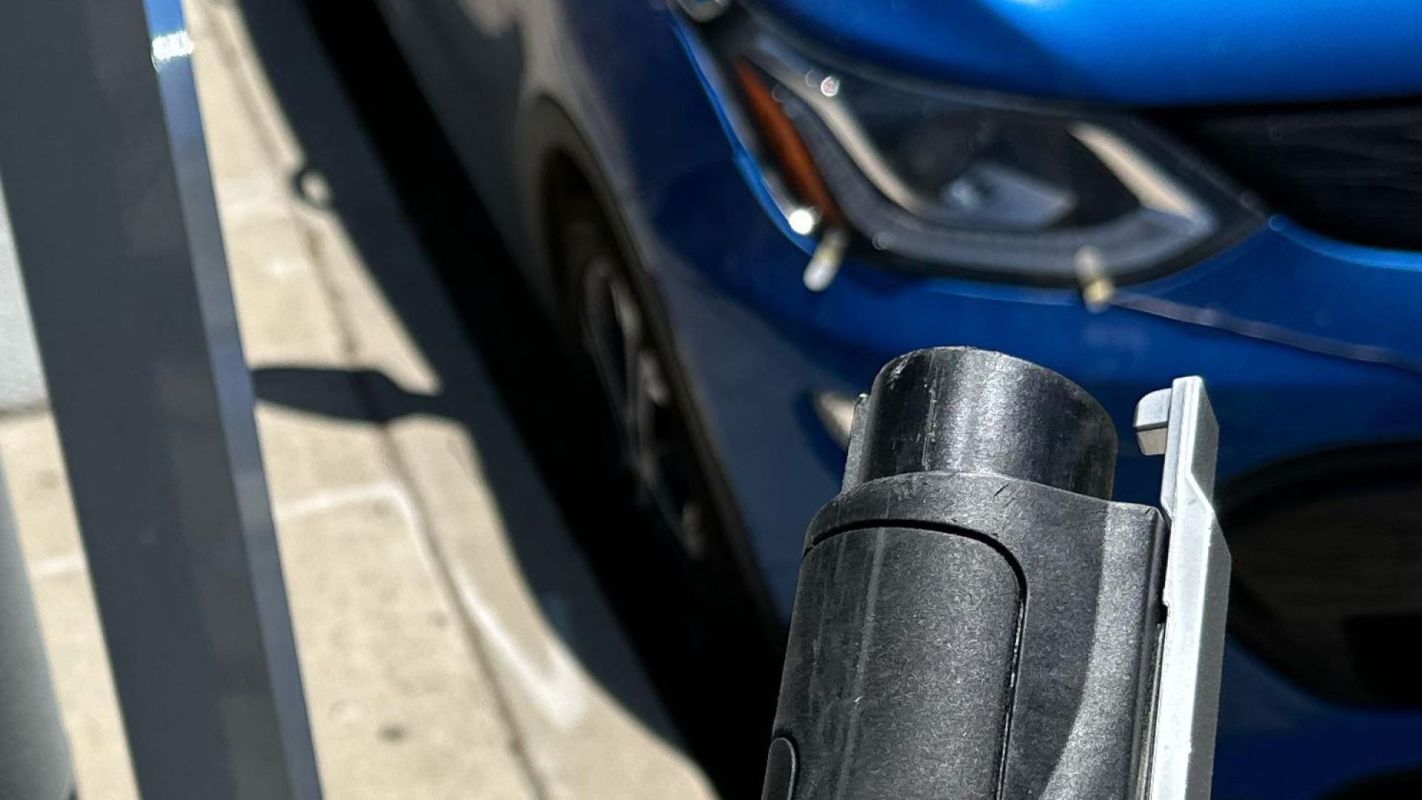
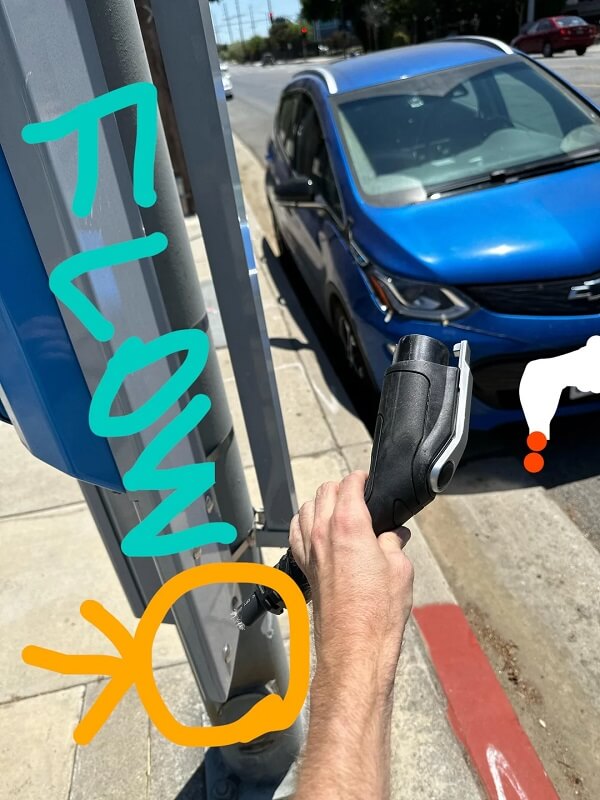
Some people are capable of finding humor in even the most irritating situations, like pulling up to a charging station only to discover the cable is cut just below the charging handle.
A post in the r/evcharging subreddit highlights the vandalism with a little artistry that won't impress Picasso enthusiasts, but does the job nevertheless.
The knee-jerk reactions aside, what matters is the prevalence of such wanton destruction and its impact on EV drivers, as well as the shift towards sustainable driving alternatives in general.
Rampant Tesla vandalism may not dominate the headlines anymore, but it remains an ongoing issue, while EV charging station vandalism is common enough to grab some digital real estate in mainstream news now and then.
While the Teslas may be an ideological battle, charging station vandalism often boils down to the copper in the cables.
According to Bill Ferro, president of EVSession, "We track the industry very closely, and unfortunately, these incidents are too common."
In the same statement, Bill Ferro pointed out that there are roughly two pounds of copper in each cable. Selling a single cable's worth of copper will bring in about $3 to $5.
However, Ferro also acknowledges a phenomenon known as "green backlash," the result of people who prefer the status quo and are willing to block access to EVs, cut charging cables, and key the side of an EV to promote internal combustion engines.
For whatever reason, many of the facts behind EV manufacturing and use are not as readily apparent as they should be.
For instance, from production to disposal, the average EV will produce 60-68% lower lifetime pollution than its ICE counterpart, according to the International Council on Clean Transportation.
TCD Picks » Quince Spotlight
💡These best-sellers from Quince deliver affordable, sustainable luxury for all




|
Do you think a majority of Americans will have EVs in 20 years? Click your choice to see results and speak your mind. |
 Absolutely 👍
 Mining for minerals is another issue, though billions of tons of oil are pulled out of the earth each year. While necessary mineral deposits are just as finite, technological shifts to mass recycling initiatives like Project Comet are rebuffing resource waste and pollutants.
Some of the response posts attempted to offer alternative charging methods: "Public level 2 chargers need to be aluminum, and have signage making it clear it's worthless scrap."
Unfortunately, that's not yet feasible because of the long-term flexion necessary in these cables. Until a solution is found, expect vandalism to continue.
Fortunately, some are taking cut charging cables in stride: "Sweet, Bluetooth charging!"
"Should have detachable cables like in Europe," said another.

Join our free newsletter for good news and useful tips, and don't miss this cool list of easy ways to help yourself while helping the planet.
Cool Picks




