


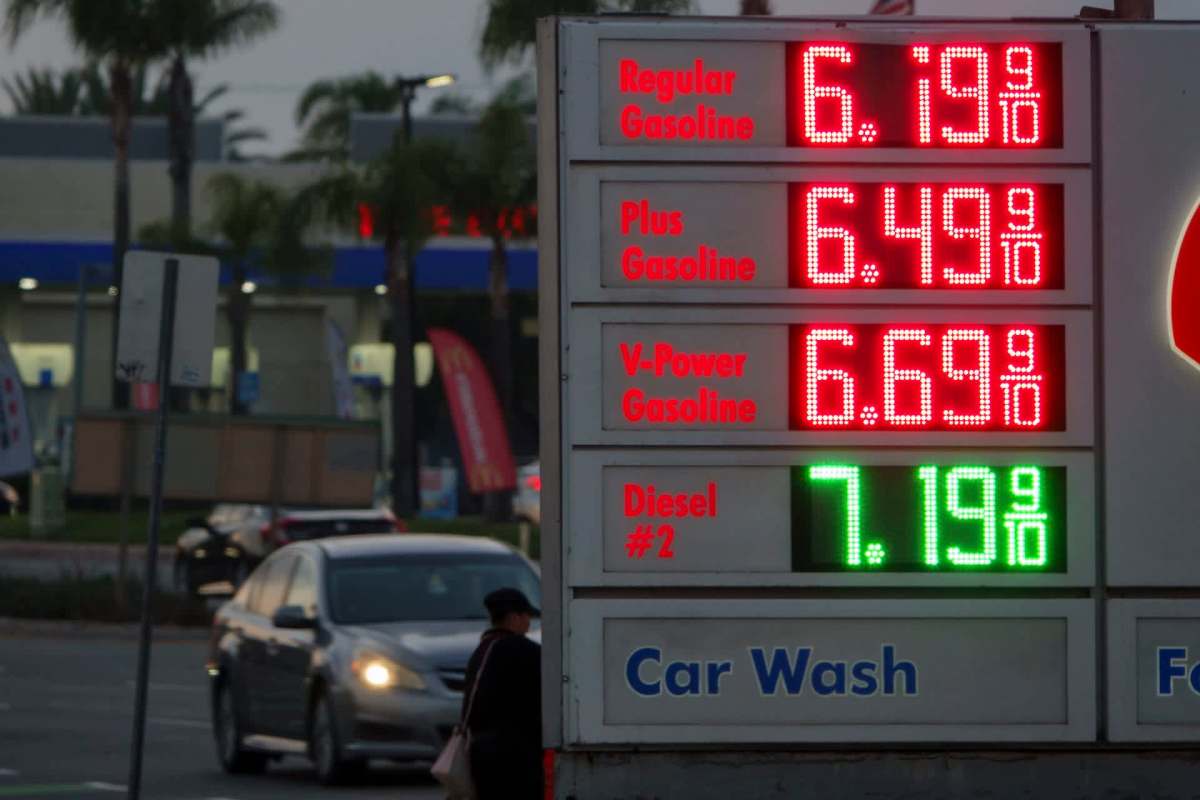
California drivers are paying more than $6 a gallon for gasoline as a cooking gas shortage in India sent shock waves through the global fuel system, a reminder of how vulnerable households remain to oil and gas disruptions worldwide.
Reuters reported that the U.S. and Israel's war with Iran has constricted energy flows through the Strait of Hormuz, triggering a chain reaction now reaching from Indian kitchens to California gas pumps.
What's happening?
California's latest gas price surge is part of a broader fuel crunch tied to Iran's near-closure of the Strait of Hormuz, a shipping route that carried about one-fifth of the world's oil supply before the war. With traffic heavily disrupted, importers have drawn down stockpiles and sought replacement supplies.
India has been hit especially hard because liquefied petroleum gas is a primary cooking fuel for millions. Before the conflict, more than 90% of India's LPG imports came from the Middle East. According to Reuters, India has told refiners to maximize LPG production to protect domestic supply.
That response has created another bottleneck. Refiners producing more LPG are making less alkylate, a cleaner-burning gasoline blending component made from LPG feedstock. California relies on alkylate because the state requires a specialized gasoline blend to reduce smog.
India's alkylate exports are falling fast. Kpler data cited by Reuters showed exports dropped to 33,000 barrels per day in April from 61,000 barrels per day in March.
TCD Picks » Quince Spotlight
💡These best-sellers from Quince deliver affordable, sustainable luxury for all




The result is higher prices in California. GasBuddy data showed the state's average gasoline price was $6.14 a gallon on May 8, after touching $6.16 on May 7, the highest in more than three years. Analyst Patrick De Haan told Reuters prices could climb above $6.50 in the coming weeks.
Why is this concerning?
The situation shows how fragile and interconnected the fuel economy is. A disruption in one shipping corridor can ripple into fuel shortages, higher household costs, and supply problems thousands of miles away. In this case, families in India are waiting hours for cooking gas cylinders, while California drivers are paying high pump prices.
It is also a reminder that the harms of fuel dependence extend beyond the gas station. Extracting, refining, and burning oil and gas drives extreme weather that damages homes, livelihoods, and local economies. Industry pollution contributes to asthma, heart disease, cancer, and premature death, with frontline communities often bearing the heaviest burden.
Reuters noted that the U.S. average gasoline price stood at $4.52 a gallon in early May, well below California's average. That gap shows how supply constraints can hit especially hard in places dependent on specialized fuel inputs.
What's being done about this?
Governments and refiners are trying to manage shortages through emergency measures. India has directed refiners to boost LPG production to protect cooking fuel supplies, while oil buyers are drawing down inventories.
Those steps may reduce immediate pressure, but they do not solve the underlying problem: dependence on a fuel system that is costly, polluting, and highly exposed to geopolitical shocks.
The longer-term solution is to reduce reliance on oil and gas. For transportation, that means accelerating the shift to electric vehicles, expanding public transit, and building out charging infrastructure so households are less exposed to gasoline price spikes.
For homes and businesses, it means replacing fuel-reliant appliances with electric options such as induction stoves and heat pumps powered by cleaner electricity, cutting both pollution and fuel-cost volatility.

Get TCD's free newsletters for easy tips, smart advice, and a chance to earn $5,000 toward home upgrades. To see more stories like this one, change your Google preferences here.






