


A Google executive has issued a warning amid fears that a dotcom-like bubble burst could hit the artificial intelligence market. However, an oft-overlooked issue looms.
What's happening?
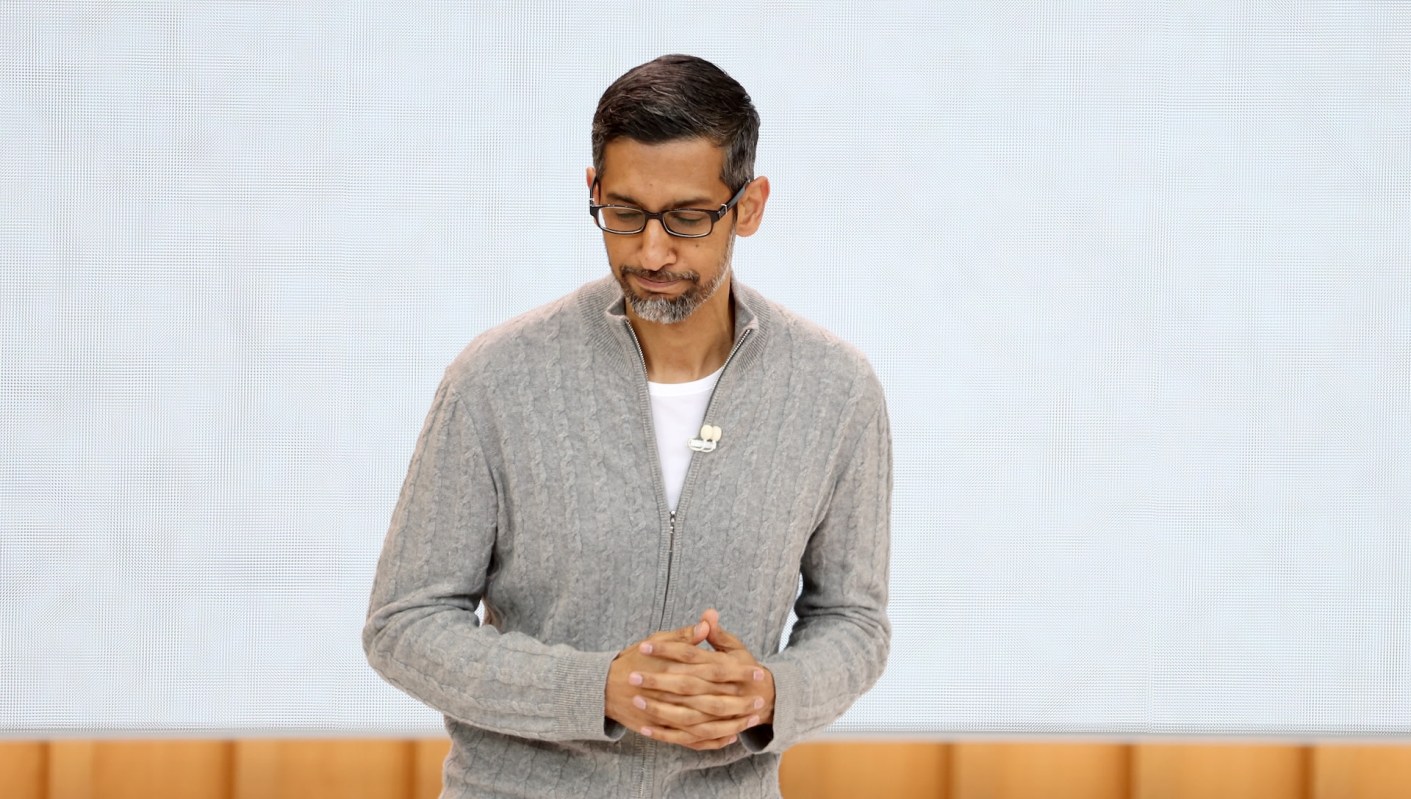
Google CEO Sundar Pichai told the BBC in an exclusive interview that he sees "irrationality" in parts of the AI movement, noting that the industry could "overshoot" during its investment cycle.
"I think no company is going to be immune, including us," Pichai said.
His warning was eerily similar to former U.S. Federal Reserve chairman Alan Greenspan's counsel in 1996, when Greenspan cautioned against "irrational exuberance," according to the BBC.
After that warning, the market rose for several more years before the dotcom bubble burst in 2000 amid widespread overvaluation, as detailed by Investopedia.
While Google famously survived the market crash — along with Amazon, eBay, Priceline, and Microsoft, among others — high-profile tech companies like Cisco saw their market value plummet by more than 80%. Some companies went bankrupt.
Why is this important?
Companies are betting big on AI, but not everyone is convinced there's a path to profitability. A recent report from the Massachusetts Institute of Technology discovered that 95% of companies that have tried to incorporate AI haven't made any money from the technology.
This is worrying because a central factor in the dotcom crash of 2000 was the fact that optimistic promises didn't translate into actual earnings. When investments dried up, the market contracted.
Pichai, who also heads Google parent company Alphabet, highlighted another hurdle to the industry's development when speaking with the BBC: AI data centers require massive amounts of energy. According to the International Energy Agency, just one AI-focused data center can gobble up as much energy as 100,000 households.
As it stands, our infrastructure isn't set up to handle this surge. In practice, this can lead to higher electric bills for consumers, grid outages, and — when data centers rely on polluting fuels such as gas or coal — dirtier, less healthy communities that are increasingly feeling the effects of rising global temperatures, from more intense extreme weather to sky-high insurance rates.
TCD Picks » Quince Spotlight
💡These best-sellers from Quince deliver affordable, sustainable luxury for all




|
Do you think robots will ever fully replace our jobs?
Click your choice to see results and speak your mind. |
 Yes 🤖
Yes 🤖 TCD's Solar Explorer will connect you with vetted providers who can save you thousands on solar panels, helping you reduce your energy bills and (if paired with battery storage) your reliance on the grid.
What's being done about this?
Even though Pichai expressed some reservations about the AI market, he acknowledged that ignoring its potential doesn't make sense. More accurate weather forecasting, improved health outcomes, and other life-saving AI upgrades could be around the corner — and powering data centers with clean energy could help mitigate the industry's negative environmental impact.
"We can look back at the internet right now. There was clearly a lot of excess investment, but none of us would question whether the internet was profound," Pichai told the BBC. "I expect AI to be the same. So I think it's both rational and there are elements of irrationality."
As for Google, its history of turning vision into profit may bode well for its chances in the AI race. As it stands, Nvidia controls at least 90% of the market of AI chips, per The Motley Fool. It announced a 62% surge in revenue in its third-quarter fiscal results.
Google appears to be all-in on developing its own superchips to compete with the Jensen Huang-led company that recently became the first in history to reach a $5 trillion valuation.

💰Get TCD's free newsletters for easy tips to save more, waste less, and make smarter choices — and earn up to $5,000 toward clean upgrades in TCD's exclusive Rewards Club.
Cool Picks





