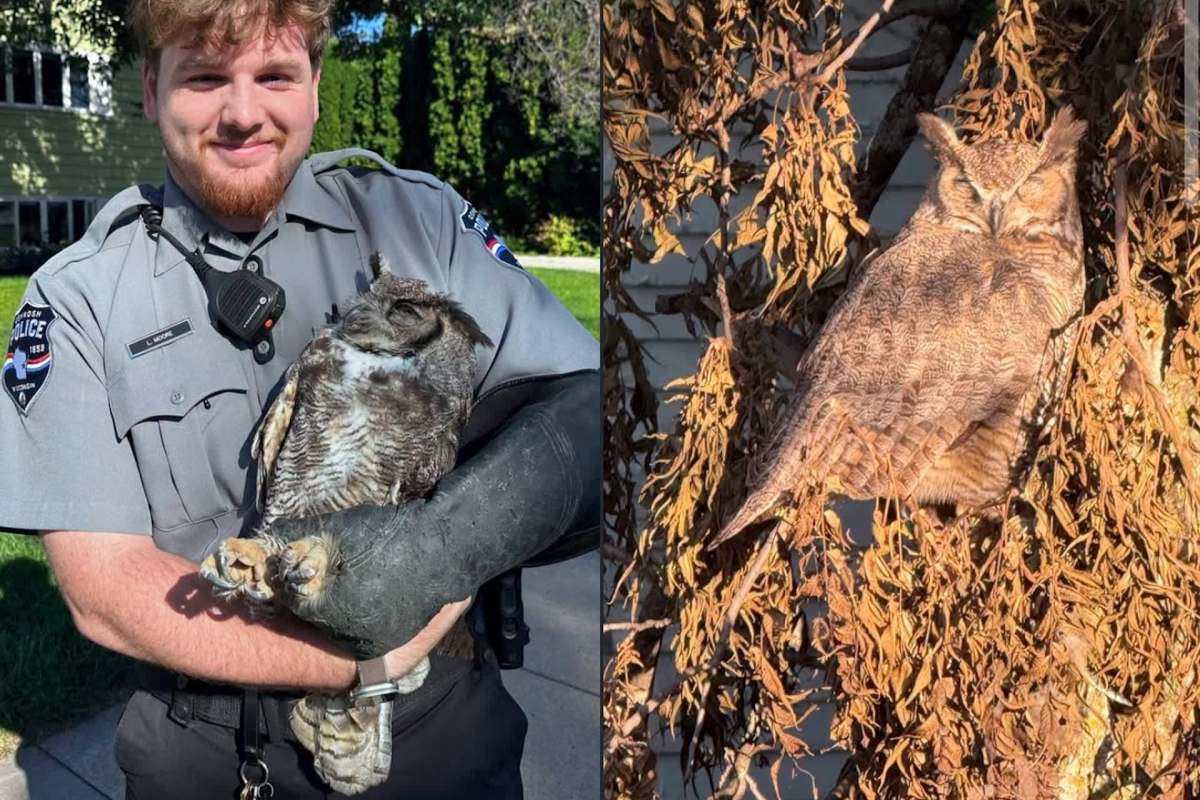
An injured owl perched in the low branches of a tree in Oshkosh, Wisconsin, received an unexpected helping hand when a local officer stepped in to help.
What could have ended badly for the injured bird turned into a small but meaningful rescue, with the bird safely transported for treatment.
Here's what to know
Per WHBY, a community service officer responded to the situation and safely captured the injured owl. The bird was brought to the On the Wing raptor rehabilitation facility for treatment.
The Oshkosh Police Department shared photos of the rescued owl on Facebook.
Birds of prey, such as owls, are not easy to handle or rehabilitate. Even when an injury appears minor, raptors can need specialized treatment, quiet housing, and careful monitoring before they are ready to return to the wild.
While police responses often involve emergencies involving people, traffic, or property, they can also help injured wildlife.
TCD Picks » Quince Spotlight
💡These best-sellers from Quince deliver affordable, sustainable luxury for all




More background
The second half of the rescue depended on a rehabilitation center equipped to care for raptors.
Facilities such as On the Wing play an important role in protecting wildlife that shares neighborhoods, parks, and roadways with people. Owls, in particular, help ecosystems by controlling rodent populations, and keeping those birds healthy can have effects that extend beyond a single rescue.
Wild animals can end up in distress in ordinary places, including roadside trees, yards, and other developed areas. When that happens, a quick response can make the difference between survival and loss.
What's being done?
Treatment was handled by a raptor rehabilitation facility after a community service officer carried out the capture.
Police departments, animal control teams, and wildlife rehabilitators each bring different expertise, and injured animals tend to fare better when communities have those relationships in place.
People who want to support similar outcomes where they live can help by reporting injured wildlife to the proper local authorities rather than trying to intervene without training. They can also check out the TCD Guide's page on taking local action or donating money to climate causes to find ways to support broader environmental efforts in their communities.
In Oshkosh, one officer's decision to stop and help gave an injured owl a chance to recover rather than be left exposed and untreated. Commenters on Facebook praised their efforts, with one user writing: "Thank you Oshkosh Police Department for taking the time to respond!!"
Another user wrote: "Thank you for helping that beautiful bird."

Get TCD's free newsletters for easy tips, smart advice, and a chance to earn $5,000 toward home upgrades. To see more stories like this one, change your Google preferences here.