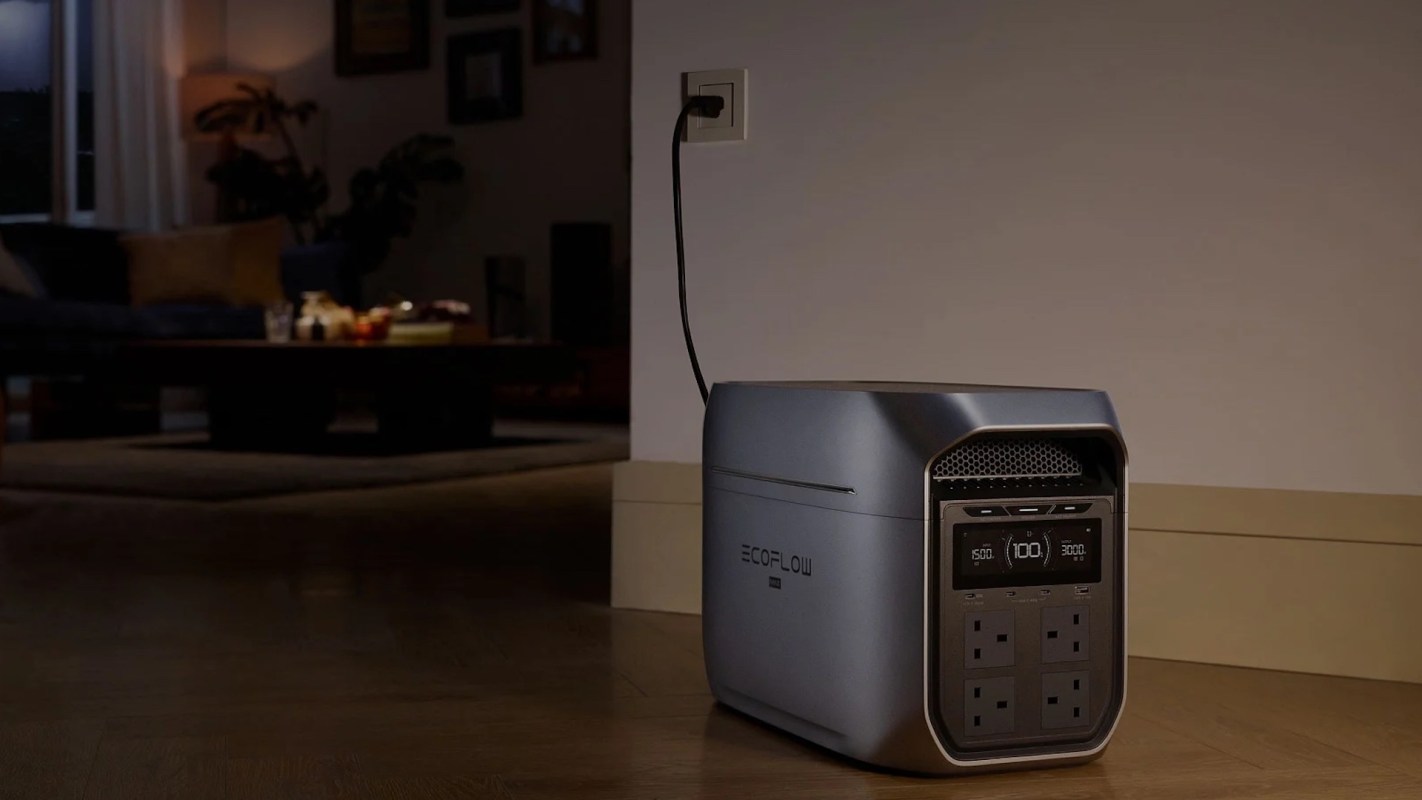
A lengthy blackout gave one homeowner an unusually clear look at what a 2-kilowatt-hour backup battery can handle in real-world conditions.
The owner reported the device kept a large refrigerator running for nearly a full day but wasn't sure whether it was sufficient.
Here's what to know
In a post to Reddit's r/Ecoflow_community, they asked whether 22 hours of runtime from an EcoFlow Delta 3 Max on a 28-cubic-foot Samsung refrigerator was normal or a sign of a problem.
The question came after a 28-hour outage during which the kitchen was 77-78 degrees Fahrenheit.
Another user estimated that running the setup for a full 24 hours would take 2.6 kilowatt-hours.
To get there, the commenter used the refrigerator's listed annual consumption of 755 kilowatt-hours, or about 2.07 kWh per day, and then added the Delta 3 Max's inverter overhead of 22 watt-hours an hour, which comes to 528 watt-hours over a day.
That same math put the expected runtime at roughly 19 hours from the Delta 3 Max's 2,048 watt-hours of storage, meaning the homeowner's result was better than projected.
"Your calculations and breakdown are amazing," another commenter wrote. "It's taken me five years off-grid to figure out the basic watts of stupid things like coffee makers and fans and TV. Energy Star is helpful and newer products are not always better. I love my EcoFlow products."
Save $10,000 on solar panels without even sharing your phone number Want to go solar but not sure who to trust? EnergySage has your back with free and transparent quotes from fully vetted providers in your area. To get started, just answer a few questions about your home — no phone number required. Within a day or two, EnergySage will email you the best options for your needs, and their expert advisers can help you compare quotes and pick a winner. Solar panels can save you more than $50k over their 25-year lifespan, and EnergySage can help you save as much as $10k on installation. Which begs the question — isn't that worth an email or two? |

One user added, "Twenty-two hours is pretty good for the D2M."
More background
Adding battery storage is one of the best ways to protect a home during outages, save money on energy, and go off-grid. Even a small battery can provide important resilience by keeping essential appliances running and buying time to protect groceries, medications, and devices when the grid goes down.
Large storage systems can go further, helping households shift electricity use away from high-rate periods while also providing reliable backup during storms and blackouts. Battery technology can help not only in emergencies but also in day-to-day life by improving energy independence and lowering monthly utility bills.
Homeowners curious about big backup setups can explore EnergySage and its free tools for information about home battery storage options.
And homeowners looking for a more affordable starting point can check out Pila, which offers small-scale battery backups for single appliances, such as a refrigerator, to keep crucial appliances running during blackouts without breaking the bank.
For large energy needs, permanently installed batteries, especially when paired with solar panels, can provide long-lasting backup and opportunities to reduce electricity costs.

Get TCD's free newsletters for easy tips, smart advice, and a chance to earn $5,000 toward home upgrades. To see more stories like this one, change your Google preferences here.