


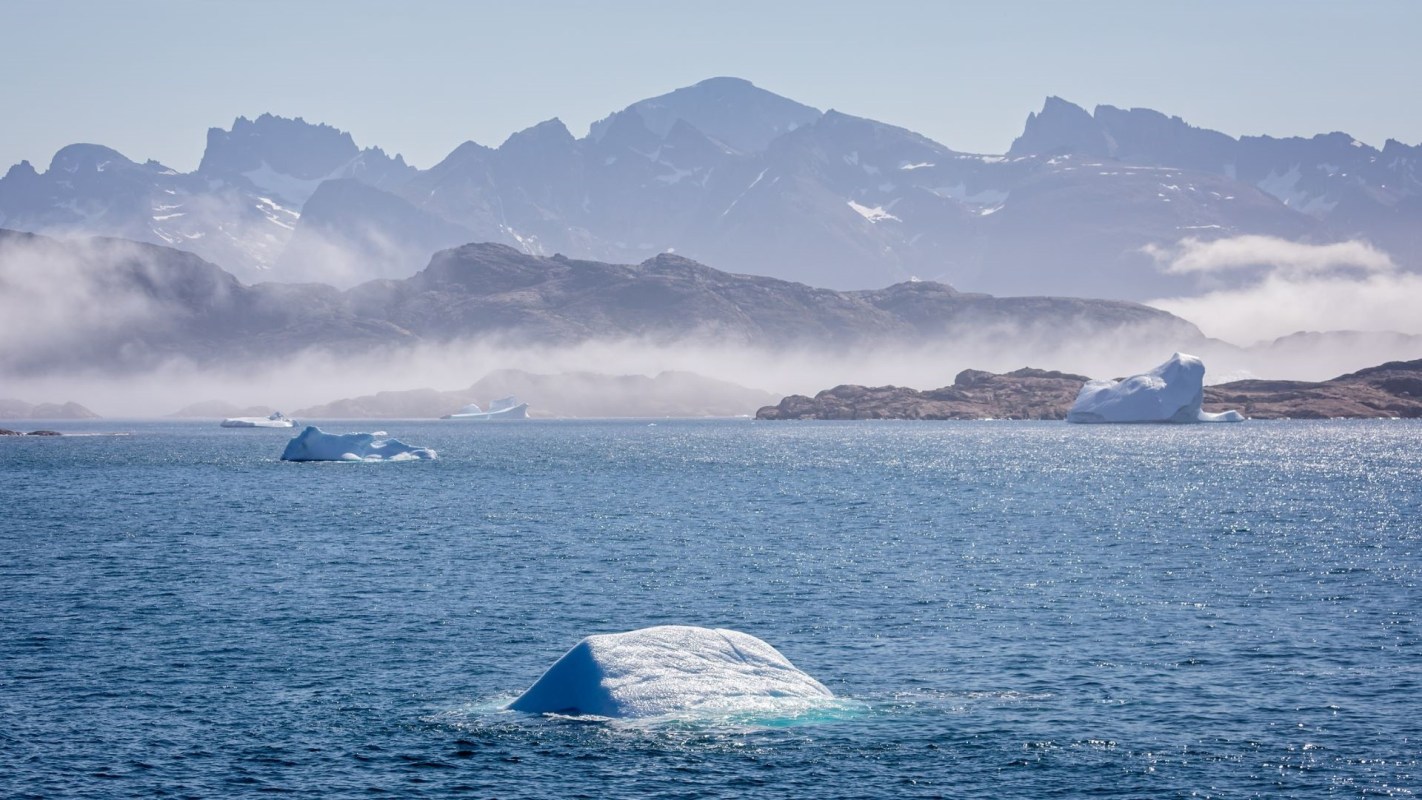
The Labrador Sea is taking on new importance in ocean science.
Researchers have found that this body of water between Greenland and Newfoundland appears to supply oxygen that deep-sea ecosystems across much of the North Atlantic rely on, as the Cornell Chronicle reported.
Here's what to know
In a study published in the journal Nature Geoscience, scientists found that water flowing out of the Labrador Sea delivers enough oxygen to support life in a broad portion of the deep North Atlantic.
The Cornell Chronicle detailed how that conclusion gives fresh significance to an area that had often been seen as less important to the overall strength of the Atlantic Meridional Overturning Circulation, or the AMOC.
The AMOC is the Atlantic's main current system. It transports warmth toward the north, helps keep Europe comparatively temperate, and moves oxygen and carbon dioxide into deep waters. Scientists have warned that a major slowdown or collapse could disrupt weather patterns and harm ecosystems.
First author Una Miller, assistant professor of earth and atmospheric sciences, told the Cornell Chronicle that atmospheric oxygen reaches the deep ocean only when surface waters are driven downward.
TCD Picks » Quince Spotlight
💡These best-sellers from Quince deliver affordable, sustainable luxury for all




In the Labrador Sea, cooling makes surface water denser, allowing it to sink and carry oxygen with it.
"In terms of gases, that's really important, because there's no photosynthesis below a certain depth," Miller explained to the outlet.
The team calculated that this transport exceeds 27 teramoles of oxygen per year, which is roughly enough to cover the breathing needs of the global population for at least two months, according to the Cornell Chronicle.
More background
The research lands in the middle of a major debate over how vulnerable the AMOC is. The circulation has weakened over the past 75 years, and scientists are still trying to determine what that shift could mean for ocean chemistry, marine ecosystems, and the climate patterns people depend on.
So even if the Labrador Sea does not heavily control the AMOC's strength, the study indicated it may be especially important for supplying oxygen to the deep Atlantic.
Researchers found that the oxygen coming from this region lines up closely with estimates of how much deep North Atlantic microbes and animals consume through respiration.
Those deep-ocean ecosystems help support the ocean's health and its ability to store carbon. If oxygen levels fall too far, marine animals suffer, and climate-related disruptions can become harder for coastal communities and economies to manage.
What's being done?
To make the estimate, the Cornell Chronicle noted that Miller and her colleagues analyzed data from 60 oxygen sensors mounted on moorings along the seafloor in the Labrador and western Irminger seas, then used machine learning to fill in missing information.
The instruments were deployed in 2020 and remained there for two years under harsh deep-sea conditions. That longer record gave the researchers a stronger basis for tracking how oxygen enters the ocean interior, something scientists had previously struggled to quantify.
Researchers are also continuing to study how oxygenation could change if the AMOC weakens further. Miller is examining similar processes in the Southern Ocean around Antarctica, another place where surface waters connect with the deep ocean.
"Our finding shows that if we're going to understand the future, especially in the face of these deoxygenation trends, you can't just look at the strength of AMOC, you also have to understand processes in the Labrador Sea," Miller told the Cornell Chronicle.

Get TCD's free newsletters for easy tips, smart advice, and a chance to earn $5,000 toward home upgrades. To see more stories like this one, change your Google preferences here.






