


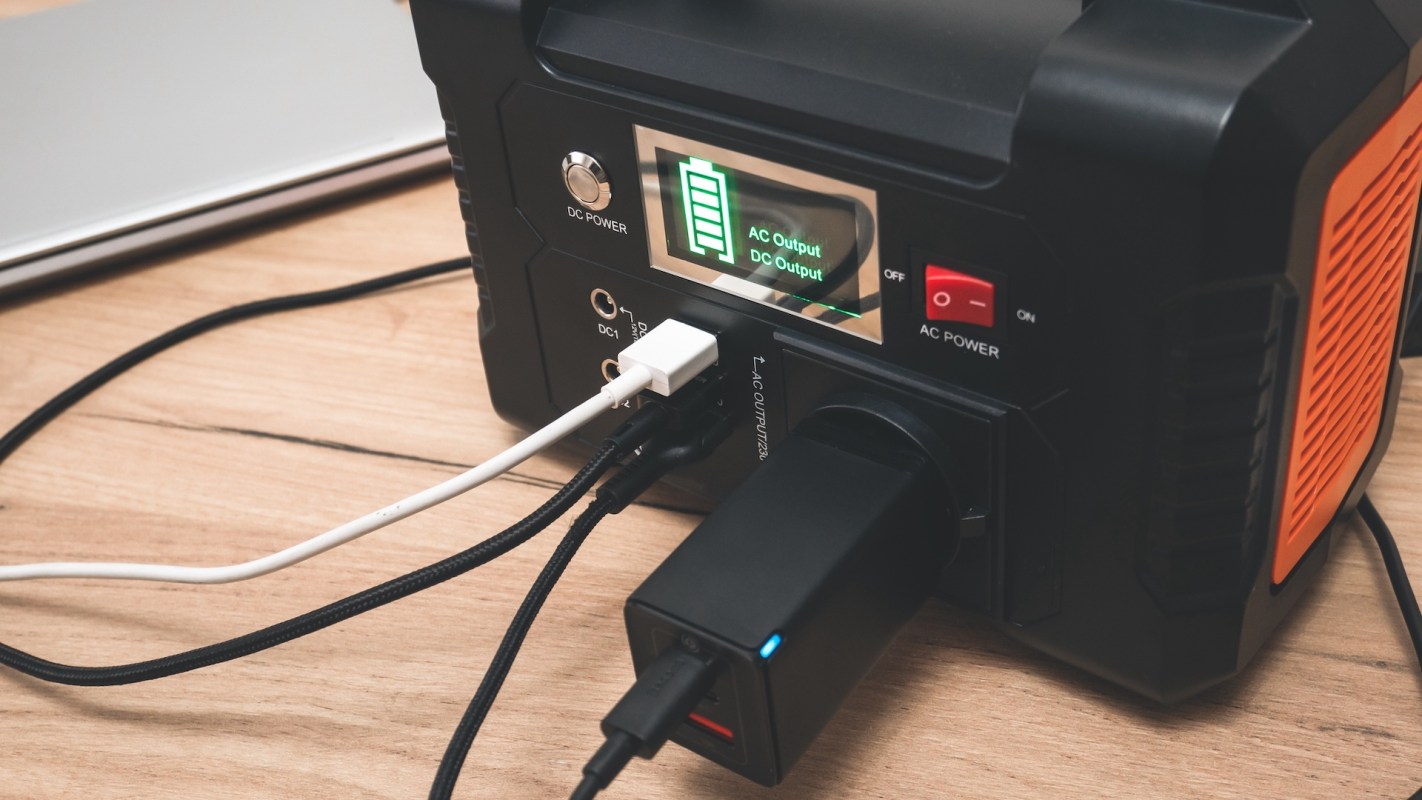
For homeowners priced out of a full standby generator, a smaller generator paired with battery storage is emerging as a practical middle ground. The setup can keep essential devices running during outages without the constant noise and fuel use of an engine running around the clock.
After finding generator quotes steeper than expected, one user on r/Ecoflow_community asked whether an EcoFlow battery setup could charge from utility power day-to-day and then refill from a portable generator during an outage.
Here's what to know
In the Reddit post, commenters described a workable cycle: use a small generator to recharge the batteries, then let the batteries carry important household devices until it's time to top them up again. They said that approach can use less fuel, create less noise, and cost less upfront than a whole-home standby installation.
One commenter said they could run "2 fridges, well for water, and lights for 2-3 days" with two Delta Pros, a portable generator, and a transfer switch. They mentioned that adding a gas furnace reduces that to about 1.5 days, and estimated the package at "around $6,000 including Deltas, generator and transfer switch."
Others argued that batteries are harder to justify if price is the only concern. As one commenter put it, "You can find a generator for ~$400 that will power a refrigerator, fan, some lights, charge a phone, your TV and a router/modem for as long as you have fuel (over 8 hours on a gallon of gas)," while "a 'cheap' Ecoflow Delta 2 is $400." Even so, several users said the biggest payoff comes from using both rather than treating them as either-or options.
If you're weighing that kind of setup, exploring EnergySage can help you compare home battery storage options.
More background
Batteries are quiet, instant, and useful for overnight backup, while generators are often cheaper per hour of energy delivered and can recharge batteries when outages drag on. Adding battery storage is one of the best ways to protect your home during outages, save money on energy, and go off-grid. It can also help households shift power use away from expensive peak-rate hours if their utility offers time-of-use pricing.
Several commenters emphasized that backup power does not have to cover an entire house to be useful. The loads they kept returning to were basics such as refrigeration, lights, fans, phones, internet, and sometimes a well pump. One commenter said their setup handled their essentials for about a day before a gas or propane generator recharged it, and that during a three-day outage they used "less than 8 gallons of gas."
Save $10,000 on solar panels without even sharing your phone number Want to go solar but not sure who to trust? EnergySage has your back with free and transparent quotes from fully vetted providers in your area. To get started, just answer a few questions about your home — no phone number required. Within a day or two, EnergySage will email you the best options for your needs, and their expert advisers can help you compare quotes and pick a winner. Solar panels can save you more than $50k over their 25-year lifespan, and EnergySage can help you save as much as $10k on installation. Which begs the question — isn't that worth an email or two? |

Battery storage can also reduce disruption. As one commenter put it, "The ability to sleep without and gas engine running overnight is worth it."
What can be done?
Homeowners considering this route may want to start by listing must-run loads, especially high-demand items such as well pumps and air conditioning. Multiple commenters said that inverter generators with low total harmonic distortion or pure sine-wave output are important for safely charging battery stations.
For people who do not want to jump straight to a costly whole-home install, Pila offers another strong backup option.
Capacity was a big part of the discussion: commenters suggested that smaller portable batteries can keep lights and phones going for a few hours, while larger units may be able to bridge heavier needs like a refrigerator or a small window AC between generator charging sessions.
As one commenter summed it up: "Having both is a great combination. You can run the generator during the day to charge your batteries," then "use the station at night so you don't have to hear the noise from the generator."

Get TCD's free newsletters for easy tips, smart advice, and a chance to earn $5,000 toward home upgrades. To see more stories like this one, change your Google preferences here.







