


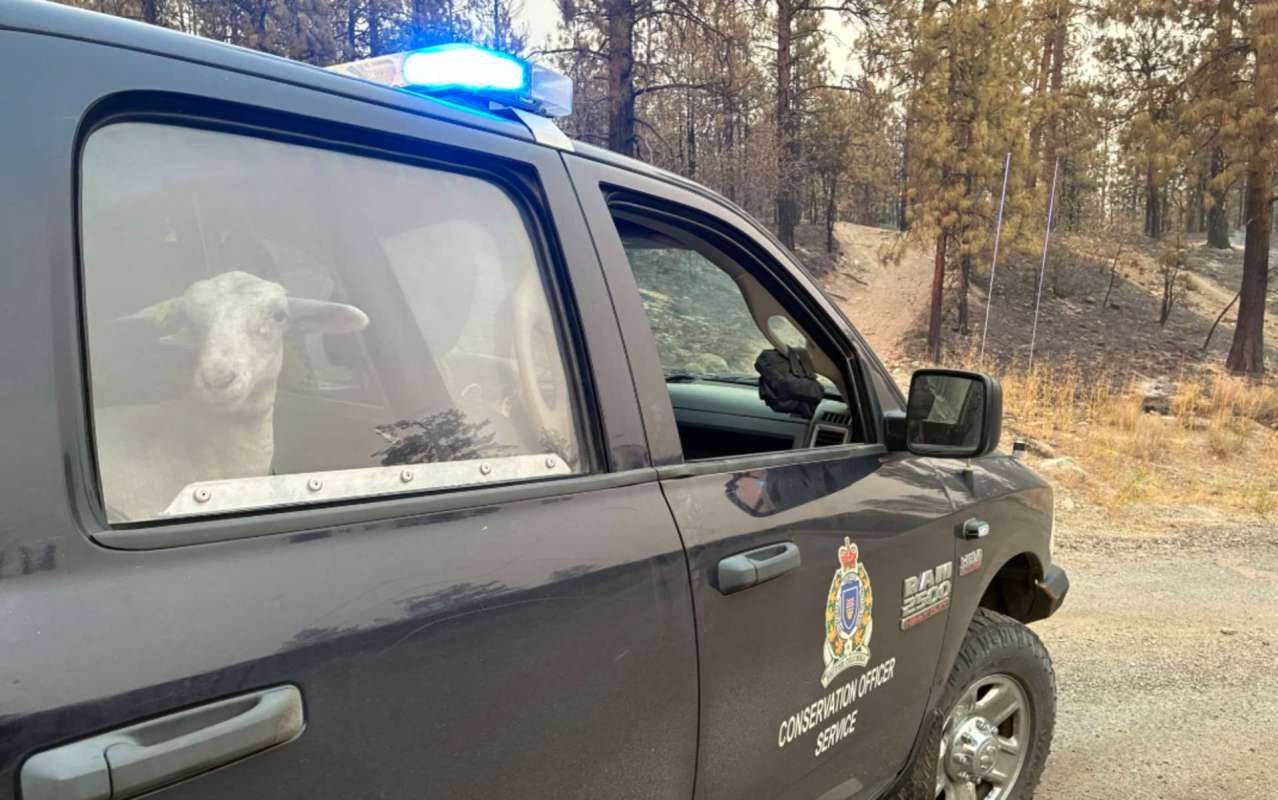
Amid British Columbia's wildfire response, one heartwarming image stood out — a lamb riding in the back seat of a conservation officer's truck.
The animal had been rescued from danger near Summerland, British Columbia, and was being taken to safety.
Here's what to know
Officials said the animal was a domestic lamb that firefighters rescued from the Bald Range fire area before it was transferred to Animal Lifeline Emergency Response Team, also called ALERT, in Penticton. Photos of the lamb in the truck were shared by the British Columbia Conservation Officer Service, according to CTV News.
The Conservation Officer Service described the rescue as "a positive moment amid a challenging wildfire response."
More background
Summerland's evacuation orders underscored how quickly wildfire conditions can complicate life for residents, especially those responsible for animals. As people were told to leave, some had to weigh whether they could safely bring them along.
For domestic animals, the risks can be especially severe. Unlike wildlife that may be able to flee or find shelter on their own, farm animals and pets often fully rely on human help to get out of dangerous conditions. A lamb left behind in a fire zone is particularly vulnerable to heat, smoke, stress, and dehydration.
TCD Picks » Quince Spotlight
💡These best-sellers from Quince deliver affordable, sustainable luxury for all




Firefighters, conservation officers, and animal rescue groups make the rescue of this adorable lamb, as well as other wildlife, possible.
What's being done?
Care for the lamb moved from one group to the next: firefighters got it out of danger, conservation officers handled transport, and ALERT then took over.
Disaster planning should always take cared-for animals into consideration, whether they are pets or livestock. Households in fire-prone areas can prepare carriers, leashes, food, medications, and transportation plans ahead of time so they have everything needed when a disaster suddenly happens, instead of scrambling last-minute during a panicked evacuation.
People who want to strengthen emergency readiness in their own communities can learn more about taking local environmental action and giving response efforts much-needed support through donating to environmental causes. While individual steps can't stop a wildfire, they can make it easier for neighbors, responders, and rescue groups to protect both people and animals when disaster strikes.
The incident offered a small yet significant example of how cooperation during wildfire season can save animals' lives. As the B.C. Conservation Officer Service wrote, "This rescue is a great example of agencies and emergency responders working together to help protect both people and animals during an emergency."

Get TCD's free newsletters for easy tips, smart advice, and a chance to earn $5,000 toward home upgrades. To see more stories like this one, change your Google preferences here.







