


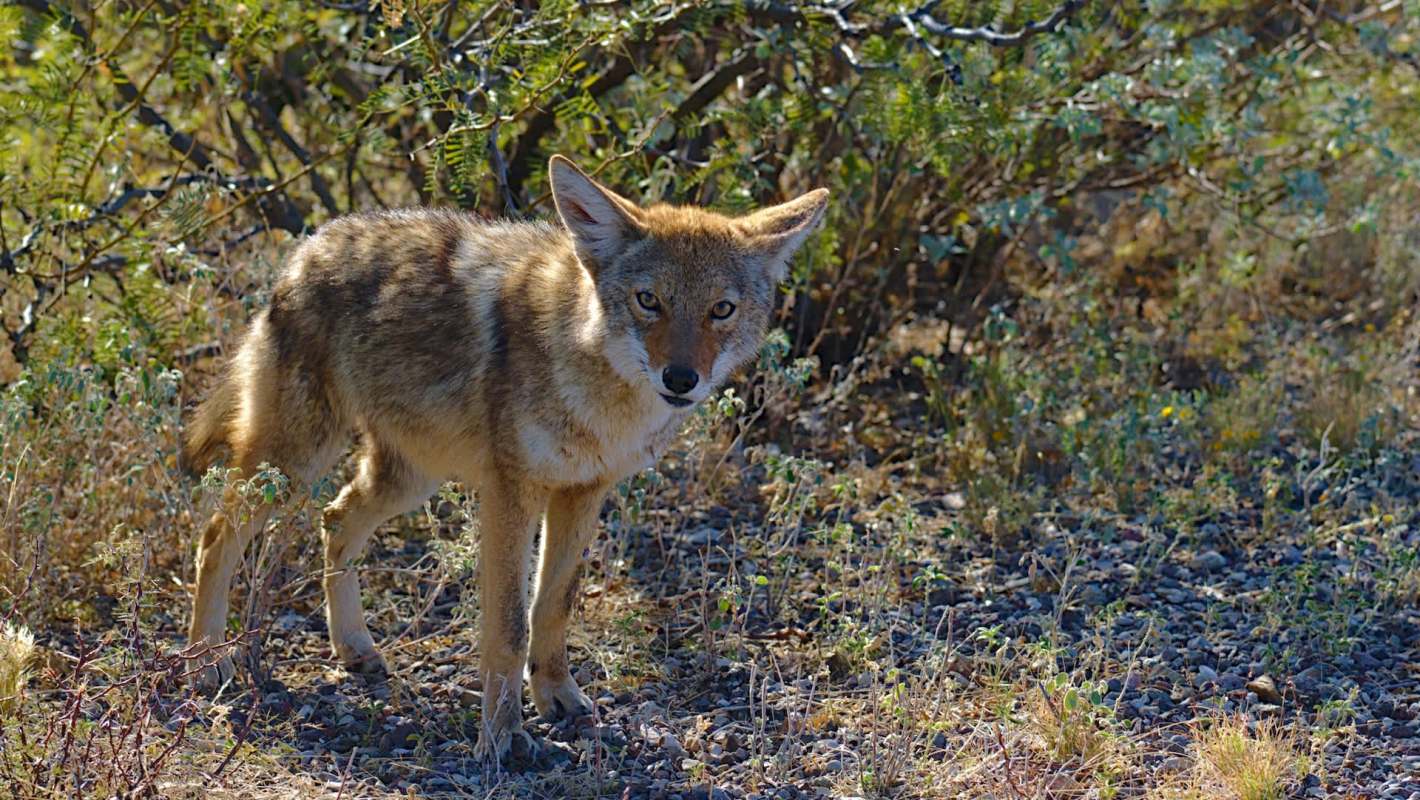
As a family in Toronto, Canada, was easing into a usual day, a coyote pup disrupted the morning by slipping into the home's open front door, according to the Toronto Sun.
What happened?
The strange incident occurred at the Christie Pits home of Alice Kent, where a cleaner working upstairs called down: "I think there's a fox in your bedroom."
When Kent went to check, she found a coyote pup resting "on my bed," she told the Toronto Sun, admitting her immediate reaction was fear.
She later said she had seen coyotes in her backyard only days before and, after looking into mange, began to suspect the pup was sick because it had patchy fur and "did not look well."
After calling pest control, 911, and 311, Kent still did not have a clear solution. Thankfully, Toronto Wildlife Centre stepped in, sending a capture team that was already working nearby to treat that same coyote family. It turns out they were dealing with sarcoptic mange.
The team found the pup under the bed, and it was easily captured, treated, and released back into the wild.
TCD Picks » Quince Spotlight
💡These best-sellers from Quince deliver affordable, sustainable luxury for all




"Poor little guy. He was looking for help," Kent said.
Why is this concerning?
The encounter is a part of a growing challenge in cities as humans and wildlife increasingly share the same spaces as the boundary between urban living and animal habitats becomes smaller. Wildlife experts say these incidents happen when wild animals become sick, stressed, or too accustomed to finding food around humans.
Nathalie Karvonen, executive director of Toronto Wildlife Centre, told the Sun that the mother and pups had been treated and that staff were still trying to find the father. She said the coyotes' mange seemed to make them more desperate and more likely to seek easy food sources around people.
As BBC Future has reported, encounters with wild animals can become more dangerous when those animals lose their natural fear of humans.
Karvonen also noted, "No feeding is critical to coexisting with coyotes."
The incident also exposed a gap in how cities respond to unusual wildlife emergencies. Kent said that during her calls for help, she was told, "This is no one's job."
Even large urban areas may not have the right tools to handle situations involving wild animals inside homes or near residential areas.
What's being done?
Toronto Wildlife Centre said the coyote family continues to be monitored and treated, with the goal of getting the animals healthy enough to return to more natural behavior.
Experts also say residents can play an important role in preventing these encounters by removing food attractants from their properties. Karvonen urged people to identify and eliminate accessible food sources since these can keep coyotes lingering near homes.
If a coyote does appear, she recommends acting "big and scary" by waving your arms and making loud noises.
She also pointed out, "If you have to do this to get a coyote to leave, someone is feeding it."
She added, "Psychologically, wild coyotes want nothing to do with people, houses, etc., but feeding them changes their behaviour."

Get TCD's free newsletters for easy tips, smart advice, and a chance to earn $5,000 toward home upgrades. To see more stories like this one, change your Google preferences here.







