


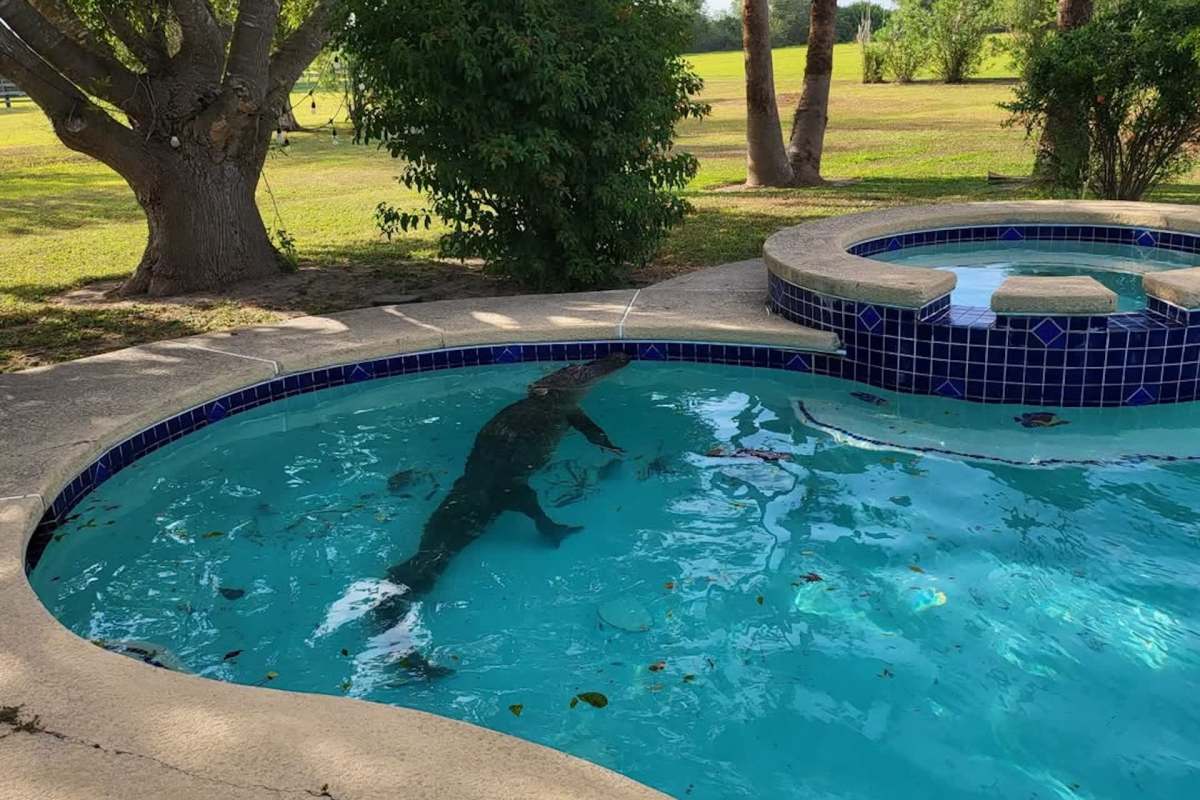
A 10-foot alligator turned a backyard pool in Los Fresnos, Texas, into an unlikely rescue scene after wildlife experts were called in to remove it, as ValleyCevntral reported.
The reptile was safely captured, but how it ended up there points to a broader issue: humans and wildlife are increasingly crossing paths in places that were never meant for either one.
What happened?
According to the outlet, homeowners noticed the alligator in their pool and sanctuary staff came to remove it.
Jacob Reinbolt, an educator, alligator expert, and licensed nuisance alligator trapper with the South Padre Island Birding Nature Center and Alligator Sanctuary, told ValleyCentral the animal was initially thought to be six to eight feet long, but he could tell almost immediately that it was much larger.
Reinbolt said he and his team finished the capture in about 15 minutes, noting that the alligator still tried to avoid people.
"As soon as I walked up to the pool, [the gator] immediately went underwater, swam to the other side and tried to hide, so even at that size, they do have a natural fear of humans," Reinbolt recounted to the station.
TCD Picks » Quince Spotlight
💡These best-sellers from Quince deliver affordable, sustainable luxury for all




The gator was understandably jittery after a series of tough events with other animals and humans.
"This alligator had been to war; he had a bite mark higher up on his tail, he was missing the last probably four to six inches of his tail, and also he actually had a bullet hole in his face as well, an old injury that had been healed," Reinbolt explained to ValleyCentral.
Why does it matter?
The station noted that Texas Parks and Wildlife estimated in January 2024 that about 25,000 alligators live in the Rio Grande Valley, where the species is native.
Reinbolt told ValleyCentral the gator found in the pool may have been driven from its usual territory by conflict with other alligators and a possible poaching-related injury.
Misunderstandings about these animals can put both people and wildlife at risk when they end up near neighborhoods built along waterways and habitat edges. It can result in alligator attacks if the animals feel threatened.
Along the same lines, these alligators may be driven towards human areas if they're being pursued in the wild, as may have occurred here.
What can I do?
Reinbolt warned that trying to handle an alligator can be both dangerous and illegal.
"I encourage people not to try and take things into their own hands; there are a lot of people that think, ' Oh, I can handle it myself.' However, it is very illegal," Reinbolt said, per ValleyCentral.
He added that the penalties can be steep. Feeding an alligator can bring a minimum $500 fine, and possessing one can lead to fines of up to $1,500 per foot, he told the station.
Residents can also reduce risk by staying alert around water, especially after dark, and by keeping pets close instead of letting them roam freely near water. Reporting a gator to trained experts rather than reacting impulsively is advised.
"There is no such thing as a scary animal; there's only scared people and animals they haven't taken the effort to understand," Reinbolt concluded to ValleyCentral. "Education is how you bridge that gap. I am confident you'll learn that they are not monsters."

Get TCD's free newsletters for easy tips, smart advice, and a chance to earn $5,000 toward home upgrades. To see more stories like this one, change your Google preferences here.







