


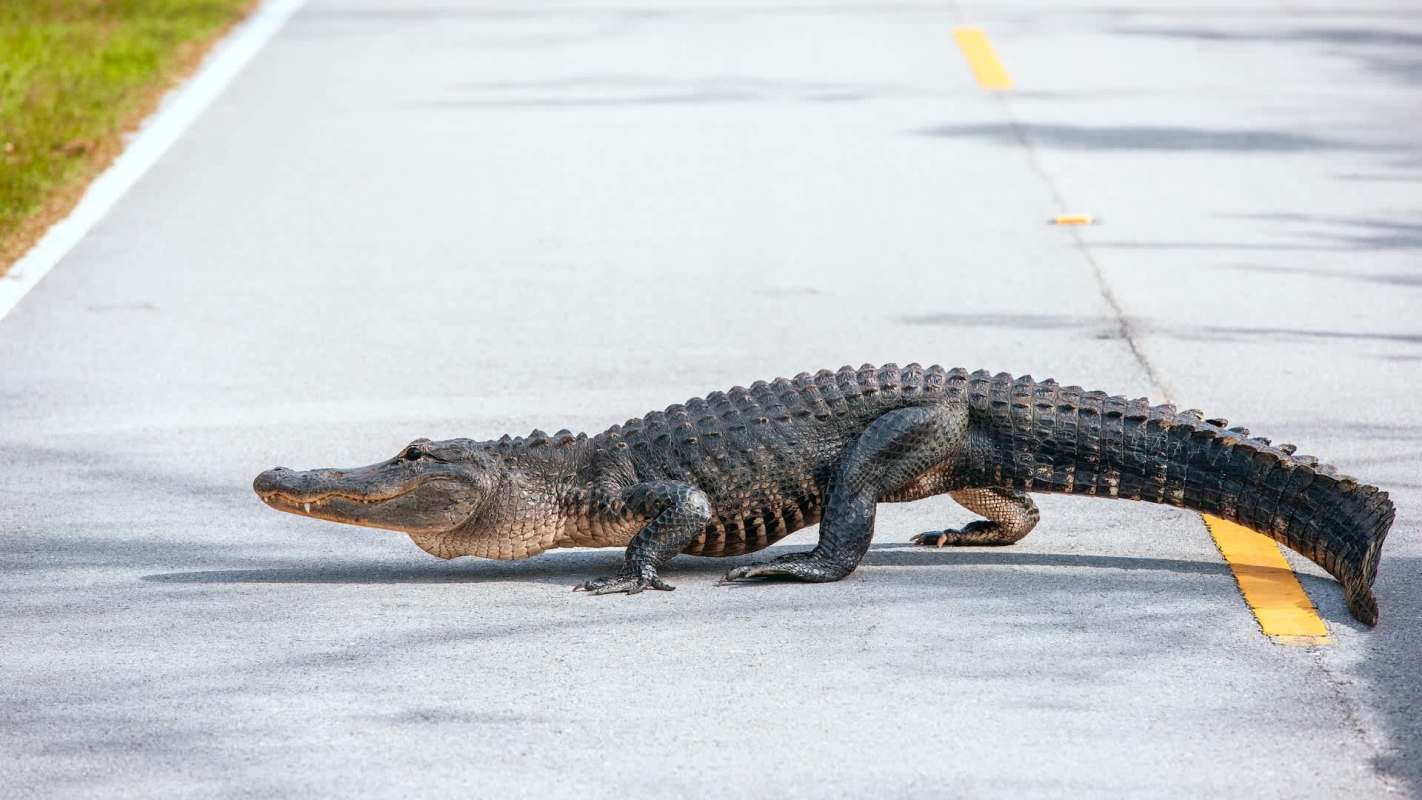
A large alligator took a surprising stroll through a Huntsville, Alabama, neighborhood this week before turning around and heading back to the preserve on its own, according to WAFF 48.
While the encounter was short, it showed how quickly wildlife can cross into fast-growing areas and how human-wildlife encounters increase as the boundary blurs between neighborhoods and the wild.
What happened?
Police in Huntsville were called to Haysland Road after a large alligator was spotted in a residential area, WAFF 48 reported. The gator eventually made its way out of the neighborhood and returned to the preserve without needing interference from officials.
Officials told residents to keep their distance when wildlife appears in the city. They also said people should not feed or approach wild animals and should contact authorities if one seems injured or poses a safety risk.
These types of sightings aren't new for this neighborhood. Less than two weeks earlier, WAFF 48 reported another alligator sighting on the same road, this time in a local pond. Officials said they are unsure if the latest sighting involved the same gator.
Why does it matter?
Even when an encounter ends without injuries, a large alligator wandering into a neighborhood where people aren't actively on the lookout may pose sudden risks to people, pets, and the animal itself. Traffic, curious onlookers, and attempts to get too close can quickly turn the situation into a dangerous encounter.
TCD Picks » Quince Spotlight
💡These best-sellers from Quince deliver affordable, sustainable luxury for all




As development expands near wetlands, ponds, and preserves, wildlife is increasingly likely to move through places built for people. Factors such as habitat loss driven by warming climates can cause animals' migration patterns to run into human development.
The encounter does not necessarily mean the alligator was behaving unusually. Rather, it may simply have been moving through a landscape shaped by human development. Roads, retention ponds, and neighborhood edges can interrupt or overlap with habitats animals have used for years.
What can I do?
The safest measure is simply to keep your distance from the animal. If you see a wild animal, especially a large reptile, do not approach it for photos or try to move it yourself.
Do not feed wildlife. Feeding can make animals more comfortable around people and increase the chances they return to populated areas, creating repeated safety concerns for both humans and animals.
If a wild animal looks hurt or seems likely to endanger someone, call the appropriate local authorities instead of trying to handle the situation yourself. People living near ponds, creeks, or preserves can also reduce risk by keeping pets leashed and not leaving children unattended outdoors.
Officials' advice was clear: "Never approach, handle, or feed wild animals, and contact the appropriate authorities if the animal appears injured or poses a safety concern."

Get TCD's free newsletters for easy tips, smart advice, and a chance to earn $5,000 toward home upgrades. To see more stories like this one, change your Google preferences here.







