


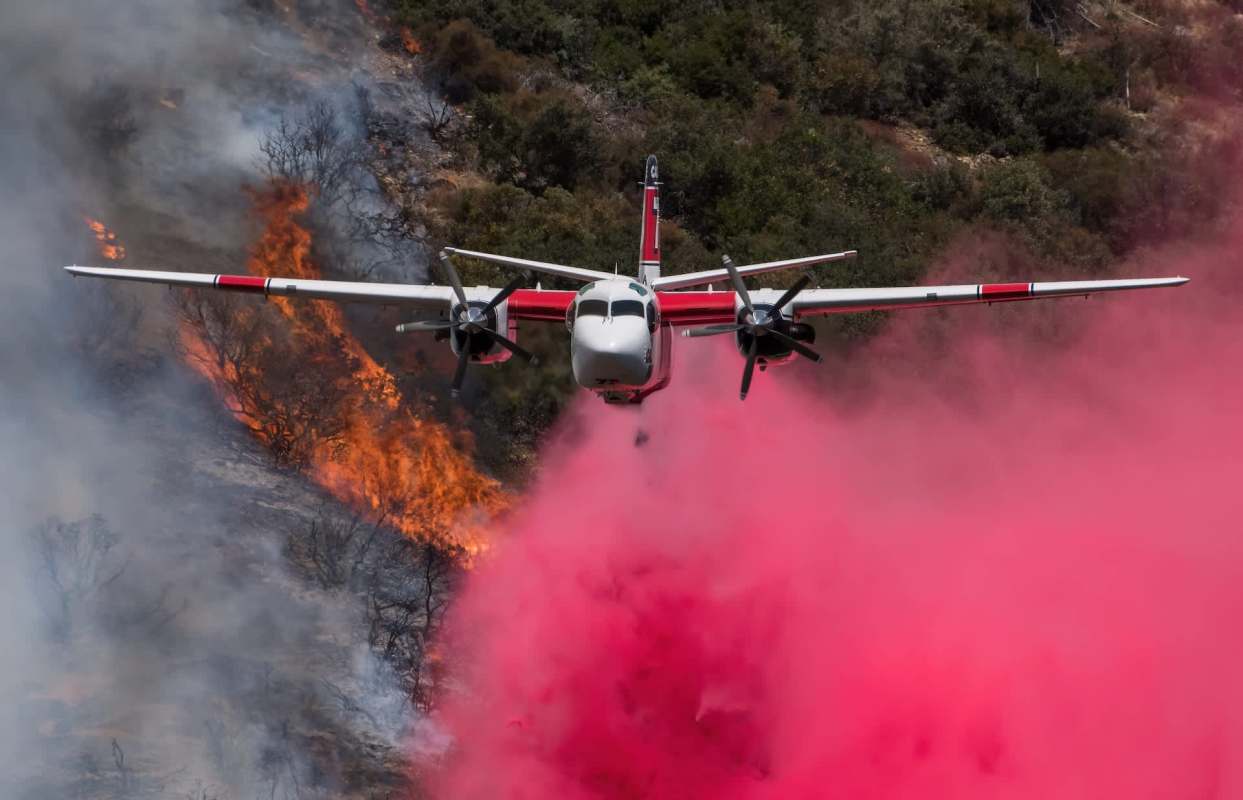
Two new studies indicate that this week's devastating wildfires in Spain and France were not simply bad luck or the product of a single heat wave.
Instead, the researchers found that sustained, higher average temperatures greatly boosted the hot, dry, and windy weather that helped the fires spread quickly, as Fortune reported.
What happened?
A rapid analysis was completed while the fires were still burning.
World Weather Attribution estimated that an overheating planet made the conditions behind Spain's record-sized inferno about 20 times more likely and made the extreme fire conditions linked to the fires in France roughly twice as likely.
Researchers looked at the combination of temperature, drought, humidity, and wind that creates dangerous fire weather.
They found that warming over the past 26 years tripled the odds of severe fire-risk conditions in Spain and raised those odds in France by 40%.
TCD Picks » Quince Spotlight
💡These best-sellers from Quince deliver affordable, sustainable luxury for all




A separate paper published Thursday, July 30, in Scientific Reports determined that Southern Europe now experiences about 25 days of extreme fire weather each year, up from roughly 10 in earlier decades.
It also found that those days are around 50% more intense than they were from 1981 to 2010.
Friederike Otto, an Imperial College London climate scientist and coordinator of World Weather Attribution, said the shift in Spain stands out for its scale.
"The change in these fire weather conditions in Spain is really extremely strong and is, I think, one of the largest changes that I've seen," Otto said.
Why does it matter?
Together, the studies add to evidence that consistently warmer weather is making wildfires more difficult to foresee, control, and survive.
When extreme heat and drought hit at the same time, the land dries more quickly. That causes vegetation to burn far more readily and helps fires grow with startling speed.
The consequences can extend well beyond the fire line.
Deadly, extreme wildfires destroy homes, force evacuations, fill communities with smoke, disrupt travel, strain emergency services, and damage crops, forests, and local economies.
Even people far from the flames can still feel the effects through poorer air quality and higher public costs tied to disaster response.
The researchers also said some of the weather feeding these fires is becoming so severe that firefighting resources alone may not be enough to overcome it.
Raúl Cordero, a climate scientist at the University of Groningen in the Netherlands and author of the Scientific Reports study, cautioned that there are limits to what response efforts can do once conditions become extreme.
"It doesn't matter how many resources or how much money you have, you just cannot stop the propagation of a fire when the weather is so extreme," Cordero said.
"These findings make clear that climate change is not just a future problem, it's already here," said John Abatzaglou, a fire scientist at the University of California Merced.
What's being done?
Researchers are getting faster at linking extreme events to climate change in near real time, which can give governments and the public a clearer picture of what is driving disasters as they unfold.
The research also suggests solutions beyond emergency response.
Cordero said better suppression and management helped reduce both the number of fires and the amount of land burned from the 1980s through 2018, even if climate change has since begun to erode some of that progress.
Otto also pointed to local risks, including land abandonment in Spain, which can leave more dry vegetation unmanaged and available to burn.
More broadly, the studies point to the fossil fuel pollution that is increasing the odds of intensifying, worsening fire weather.
"We need to stop burning fossil fuels," Otto concluded.
"Because as long as we keep burning fossil fuels, temperatures will increase globally. And that will mean that these fire weather conditions will get worse and worse and worse. And there are hard limits to what we can adapt to."

Get TCD's free newsletters for easy tips, smart advice, and a chance to earn $5,000 toward home upgrades. To see more stories like this one, change your Google preferences here.






