


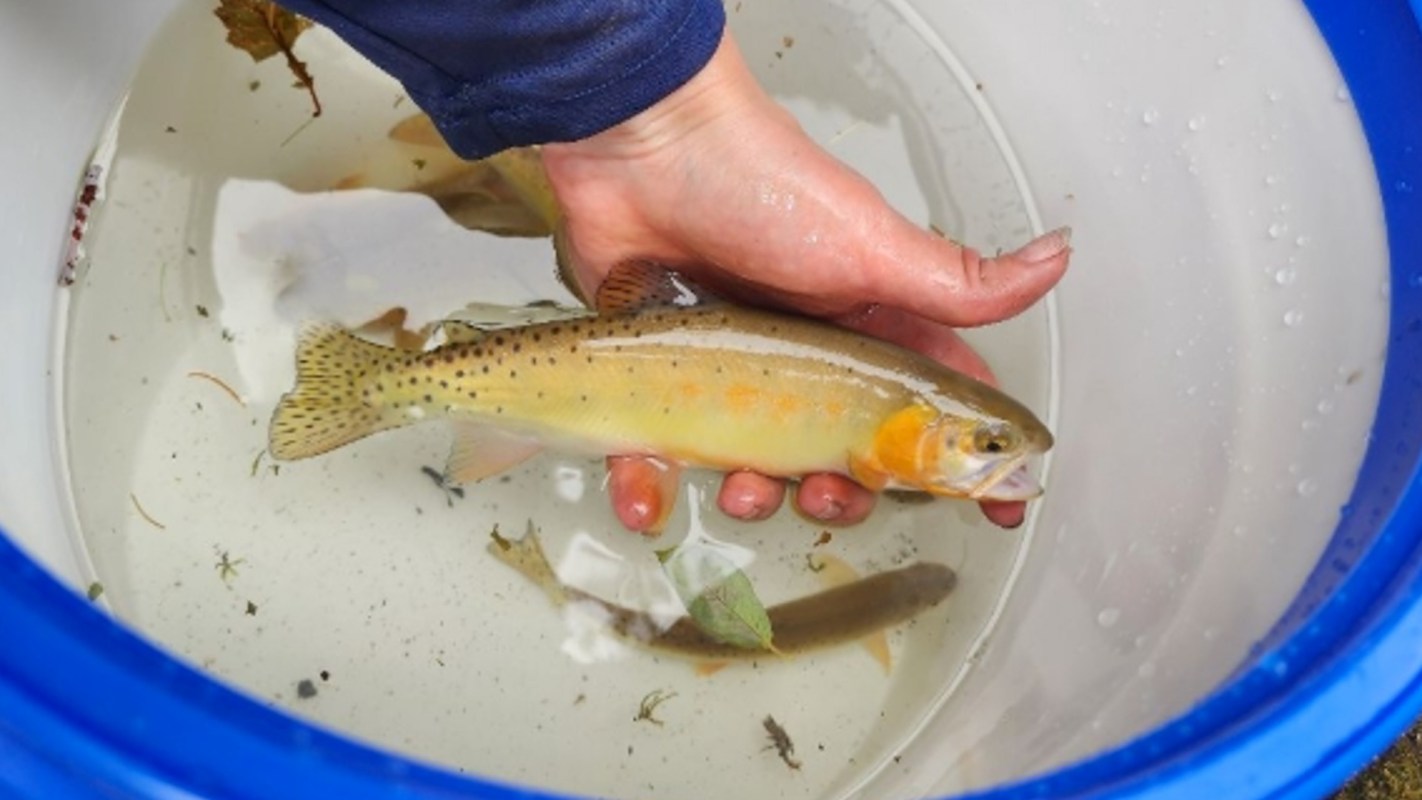
As the Gold Mountain Fire tore through southwest Colorado, wildlife crews were given a narrow chance to save something that could never be replaced: 103 native trout whose genetics exist nowhere else.
With the wildfire still active, Colorado Parks and Wildlife removed the rare fish from Nate Creek before flames and post-fire damage could wipe out the population.
What happened?
According to Colorado Parks and Wildlife, as reported by 9News, the rescue happened July 15, when weeks of uncertainty finally gave way to a short period in which the creek could be reached. That opening came after the U.S. Forest Service and fire personnel told the agency it was safe for crews to enter the area.
At that point, the fire covered 37,259 acres and containment stood at 12%, leaving little margin before worsening conditions could cut off access and increase the danger to both responders and wildlife.
From Nate Creek, Colorado Parks and Wildlife retrieved 103 native Uncompahgre cutthroat trout. The group was significant because it was a genetically distinct remnant of a native trout lineage found only in that single location.
Why does it matter?
When a population carries genetics that exist nowhere else, its loss means more than the loss of individual animals. It means a piece of biodiversity could disappear permanently, with no way to restore it later from another stream or hatchery source.
TCD Picks » Quince Spotlight
💡These best-sellers from Quince deliver affordable, sustainable luxury for all




That concern is becoming more urgent as wildfires grow larger and more destructive across the American West. Fires can directly damage streams, but the aftermath can be just as devastating, with ash, sediment, and debris washing into waterways and making survival more difficult for fish and other aquatic species.
Extreme fires affect more than homes, air quality, and recreation. They also threaten the ecological systems that support clean water, healthy forests, and native wildlife.
Protecting those systems helps preserve local landscapes, fishing heritage, and watershed resilience.
What's being done?
The success of the operation hinged on fast coordination. Colorado Parks and Wildlife moved with the U.S. Forest Service and fire personnel during the limited period when Nate Creek was still safe to access.
Wildlife agencies are adapting to a future in which emergency conservation efforts may become more common. Rather than waiting until habitat is fully destroyed, managers are increasingly being forced to make rapid decisions while fires are still actively burning.
Conservation often depends on public support for habitat protection, science-based wildlife management, and land stewardship.
Colorado Parks and Wildlife summed up the stakes plainly: "The cutthroat trout in Nate Creek contain unique genetics that do not exist anywhere else. The fish are an irreplaceable remnant of the native cutthroat trout."

Get TCD's free newsletters for easy tips, smart advice, and a chance to earn $5,000 toward home upgrades. To see more stories like this one, change your Google preferences here.







