


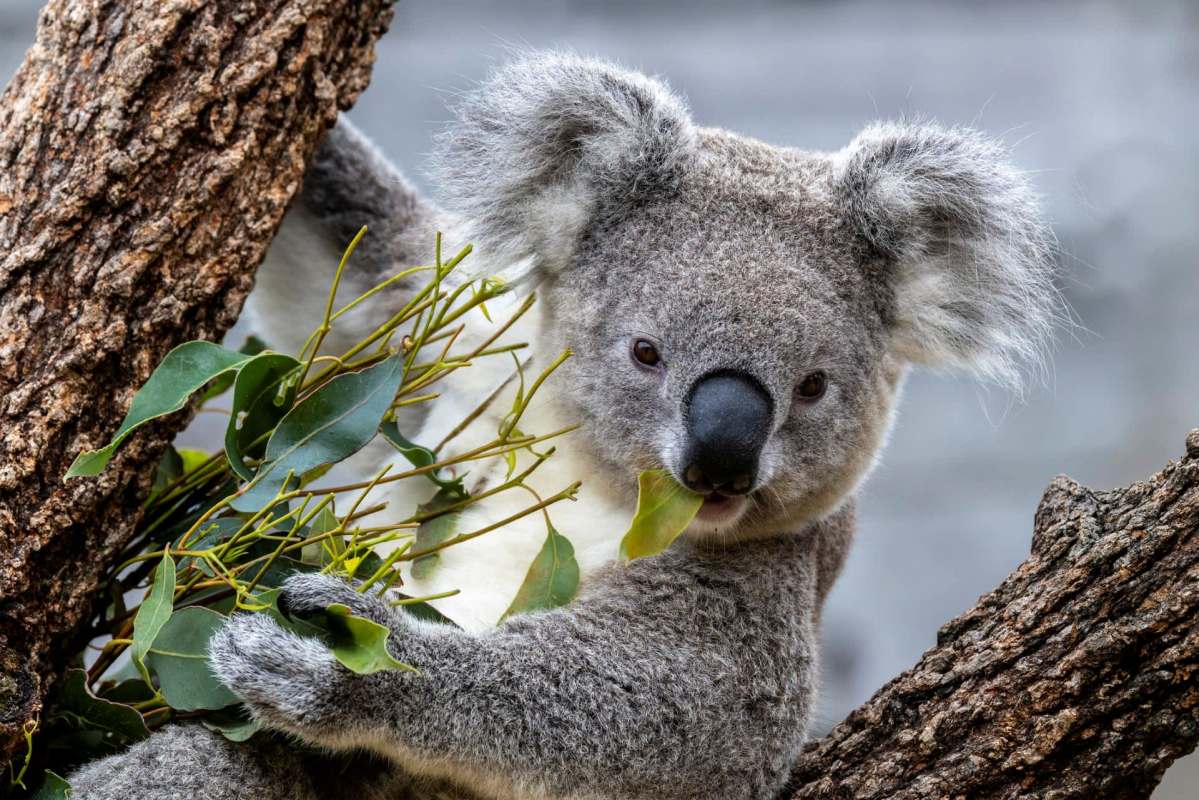
Koalas are disappearing from large parts of Australia, and scientists are now working to ensure the species does not lose its genetic future as its habitat shrinks.
To help guard against that decline, scientists have launched an effort to bank koala eggs and sperm. The stored material could eventually be used to help rebuild healthier wild populations.
What's happening?
Before more genetic variation is lost, researchers are putting koala reproductive cells into long-term storage. Kept in liquid nitrogen at minus-321 degrees Fahrenheit, the material could remain viable for decades and later be used in artificial insemination or in vitro fertilization, Live Science reported.
The need is especially urgent in eastern Australia. Since the late 1990s, koala populations in parts of Queensland and New South Wales have dropped by as much as 80% because of deforestation, bushfires, drought, and disease. In 2022, the Australian government also shifted the conservation status of koalas across their eastern range from vulnerable to endangered.
According to University of Queensland reproductive biologist Andres Gambini, a shrinking gene pool leaves koalas less able to cope with future threats. When a koala dies, traits that might have helped later generations adapt can vanish too.
Some southern Australian populations are overabundant, creating an unusual conservation paradox. In some regions, koalas are disappearing, while in others they are putting stress on the very trees they depend on.
TCD Picks » Quince Spotlight
💡These best-sellers from Quince deliver affordable, sustainable luxury for all




Why does it matter?
Biodiversity helps ecosystems stay resilient, and resilient ecosystems support communities, local economies, and the natural spaces people depend on and value.
Koalas are also one of Australia's most recognizable animals, and their decline reflects broader environmental pressures, including worsening fire conditions, habitat destruction, and the spread of disease. Live Science reported that in the hardest-hit koala populations, mostly in Queensland and New South Wales, nearly 90% of koalas carry Chlamydia pecorum, a disease that can cause blindness, painful infections, and infertility.
Infertility means fewer joeys are being born, making it harder for populations to recover naturally. For wildlife hospitals and conservation teams already caring for injured and sick animals, the loss of each koala can also mean the loss of irreplaceable genetics.
What's being done?
Live Science reported that wildlife hospitals will supply the frozen bank with eggs and sperm. Those facilities can recover reproductive cells from koalas that die and from animals left unable to breed because of trauma or disease.
Steve Johnston, an associate professor of animal reproduction and captive husbandry at the University of Queensland, said infected samples may still be usable because "we have the technology now to remove the infection from the samples." That could prove especially important for a species so heavily affected by chlamydia.
The project builds on earlier reproductive research, including a 1998 koala joey born through artificial insemination and a 2025 study that created the first IVF kangaroo embryos. Live Science noted that scientists see the frozen material as an added safeguard, not a replacement for habitat protection, disease management, or population monitoring.
Gambini said, "This project will create a safe and systematic way to rescue and preserve koala spermatozoa and eggs to support future conservation programs." Vincent Lynch, an evolutionary developmental biologist and associate professor of biological sciences at the University at Buffalo, said, "By preserving the environment with traditional conservation we allow re-introductions because the species have somewhere to live."

Get TCD's free newsletters for easy tips, smart advice, and a chance to earn $5,000 toward home upgrades. To see more stories like this one, change your Google preferences here.






