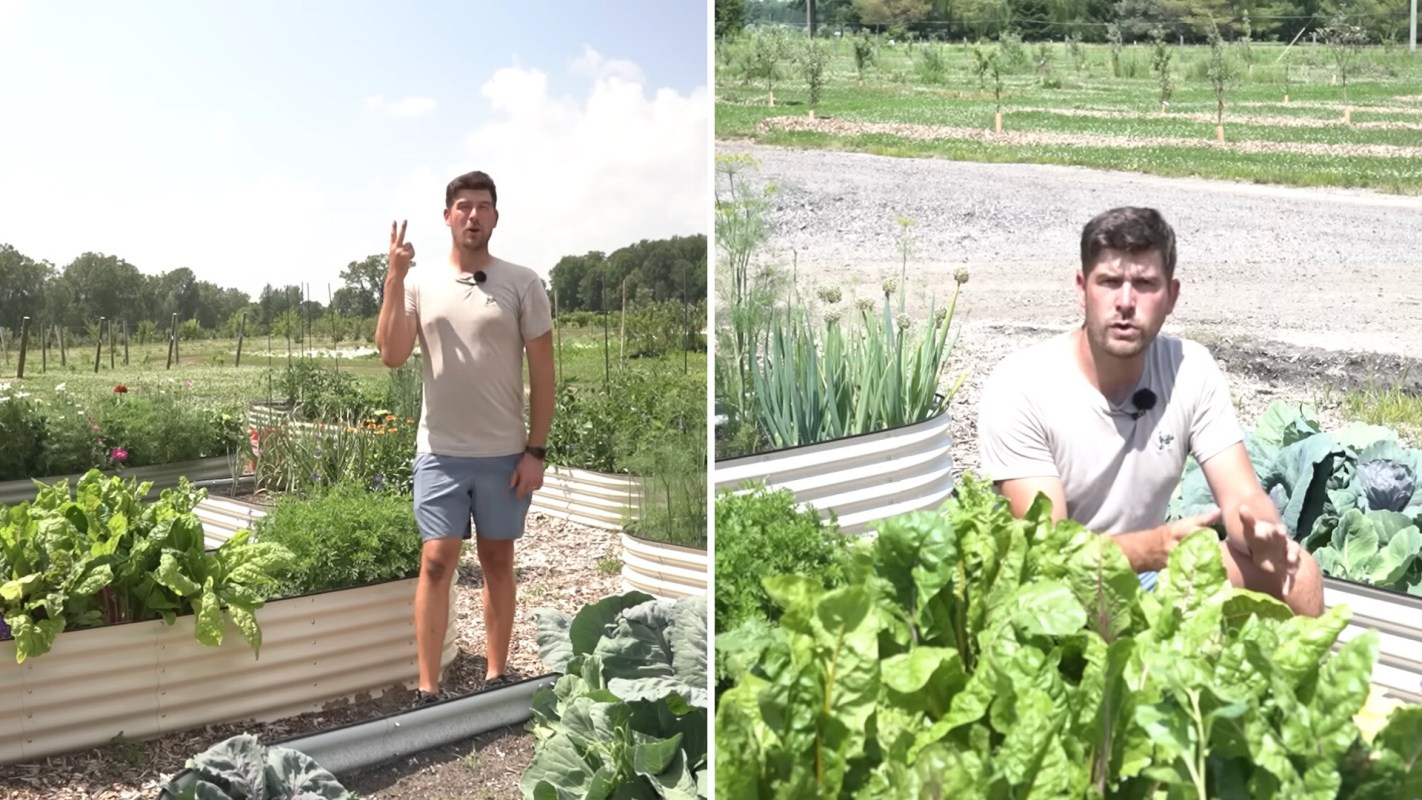
Backyard gardeners are pushing back against a fear that is becoming increasingly common: the idea that lettuce grown a few steps from your kitchen is somehow riskier than greens sealed in a plastic bag.
That reaction appears to be growing as produce recalls keep making headlines and more people question why industrial food systems are so often assumed to be the safer choice.
What's happening?
Luke Marion of MIgardener (@Mlgardener) said in a YouTube video that grocery-store marketing and fear around recalls have, in his view, pushed some people to see homegrown produce as more dangerous than food moving through large commercial supply chains.
"Grocery stores are hurting gardens, and they just don't care," he said in the caption.
In the comments, viewers said constant outbreak coverage can skew how people judge food risk, especially because those incidents are often linked to large-scale growing, processing, and distribution networks rather than a backyard garden.
Others said the issue reflects how unfamiliar many shoppers have become with food production.
TCD Picks » Quince Spotlight
💡These best-sellers from Quince deliver affordable, sustainable luxury for all




One wrote, "Amen! Thank you for speaking the truth. This should be taught in schools! I appreciate imperfect veggies and fruits."
Why does it matter?
This is not only a debate about a tomato with a little dirt on it. It also raises questions about trust, the way food is sold, and how disconnected many communities have become from the basics of growing and handling fresh produce.
If shoppers learn to equate spotless, packaged produce with safety, they may become less confident in home gardens, neighborhood growers, and farmers' markets.
It can also reinforce a food system that relies heavily on packaging, transportation, and centralized processing, even though those longer supply chains can create more chances for contamination or waste.
A productive garden can help lower grocery bills and make fresh food more accessible. If people are discouraged from growing their own greens, herbs, or vegetables, they may end up spending more on produce that traveled farther and came with more packaging.
Another commenter wrote, "Home gardens produce the healthiest food on earth!"
What can I do?
Neither store-bought produce nor homegrown food is automatically safe or unsafe. But a more grounded view of food safety means not assuming that industrially washed produce is inherently safer.
For home gardeners, that means following common sense steps: wash produce, use clean water, keep harvesting tools clean, and avoid contamination from animals or untreated waste.
Learning basic gardening and food-safety practices can go a long way toward building confidence.
Shoppers may also benefit from looking past cosmetic perfection. Produce that is slightly misshapen or still dusted with soil is not automatically a warning sign. In many cases, it simply shows that the food came from a real growing environment rather than a heavily curated retail display.

Get TCD's free newsletters for easy tips, smart advice, and a chance to earn $5,000 toward home upgrades. To see more stories like this one, change your Google preferences here.