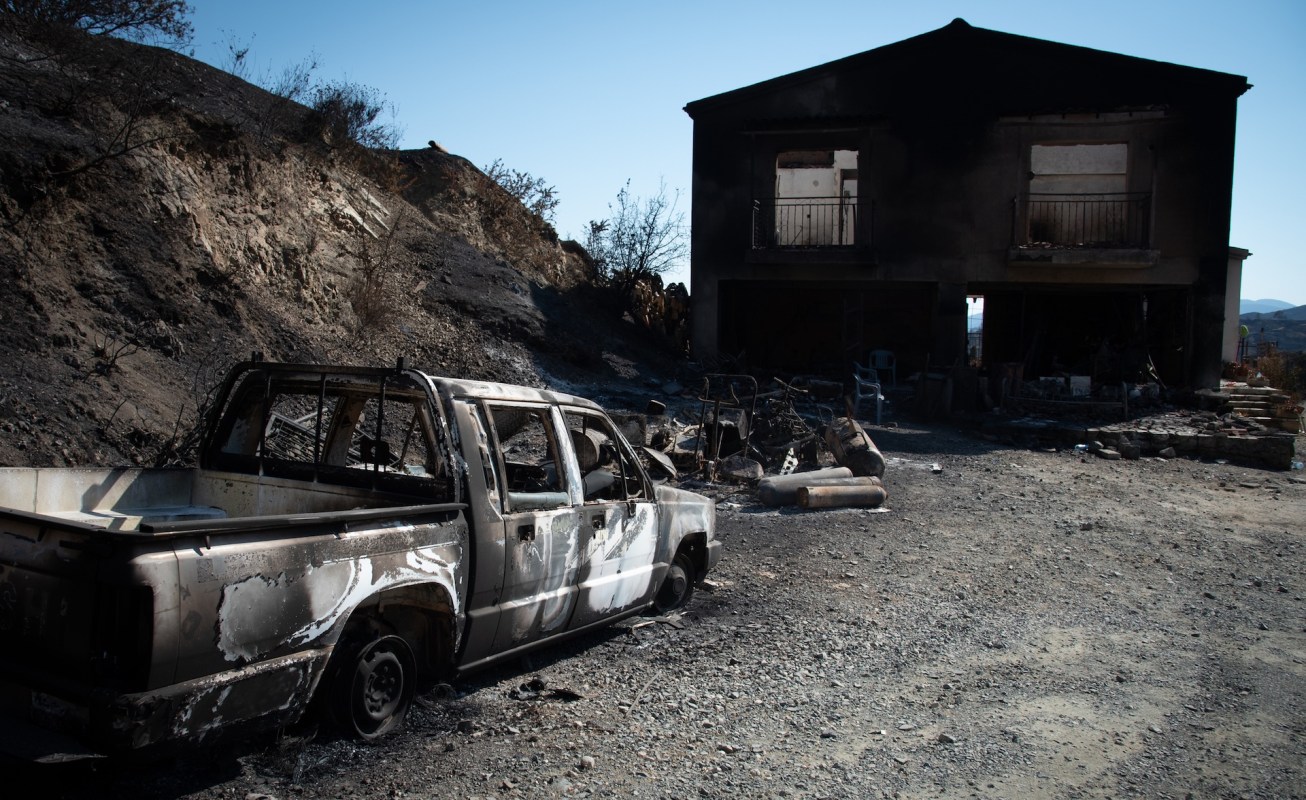
BBC News has reported at least 12 people are dead and 23 remain missing after a fast-moving wildfire swept southern Spain, where extreme heat has added to hazardous fire conditions seen across Europe.
Near Los Gallardos in Andalusia, the fire raced through wooded terrain and prompted the evacuation of 1,000 residents.
What happened?
BBC News said Andalusia regional president Juanma Moreno said the fire spread near Bédar, a village outside Los Gallardos in Almería province, where authorities found the bodies of victims in and around the area.
Describing the fire as both fast-moving and difficult to manage, Andalusia's health and emergencies minister Antonio Sanz said officials found four victims inside a car. The other eight were discovered elsewhere and appeared to have been trying to escape the flames.
Four more people were hospitalized with serious burns, and another four were treated for minor burns and smoke-related breathing problems, the publication said.
Moreno said one line of inquiry is that the disaster started after a power line pole collapsed, per BBC News.
TCD Picks » Quince Spotlight
💡These best-sellers from Quince deliver affordable, sustainable luxury for all




"Everything appears to point to the collapse of a power line pole, although this will still need to be investigated," he said on Cadena Ser radio.
BBC News noted that explanation was later challenged by electricity company Endesa, which said the fallen line was inactive and did not belong to the company.
Spain's Military Emergency Unit deployed 220 soldiers and 70 vehicles to the area, while the outlet said the civil guard sent 160 personnel to help with evacuations, traffic control, and the search for the fire's origin.
Why does it matter?
This summer has brought repeated bouts of intense heat to southern Europe, with some places nearing 104 degrees Fahrenheit. Fire crews have already confronted major blazes in France, Portugal, and Spain.
Extreme weather disasters like this can endanger lives and livelihoods, turning communities into evacuation zones within hours. Beyond the immediate threat of burns and entrapment, wildfire smoke can worsen asthma as well as heart and lung conditions.
Road closures, destroyed homes, and lost tourism income can destabilize local economies for months after the flames are out.
Scientists have warned that Europe is warming faster than any other continent. According to Copernicus, the continent is heating at roughly twice the global average, helping drive more summer heat waves and more intense fires.
Last year, Spain alone saw a record 971,000 acres (393,000 hectares) burn, and more than 2.47 million acres (more than 1 million hectares) burned across the European Union during its worst wildfire season on record, as BBC News noted.
What's being done?
The outlet reported that Prime Minister Pedro Sánchez said in May that Spain was planning its biggest-ever summer wildfire response. In Andalusia, emergency teams remain focused on containing the blaze, treating the injured, and locating those who are still missing.
Consular officials have also become involved, with the United Kingdom and Belgium working to contact citizens who may have been affected, per BBC News.
Moreno called the deaths "a tragedy" and wrote on X, "Our hearts are heavy and we are devastated by grief."

Get TCD's free newsletters for easy tips, smart advice, and a chance to earn $5,000 toward home upgrades. To see more stories like this one, change your Google preferences here.