


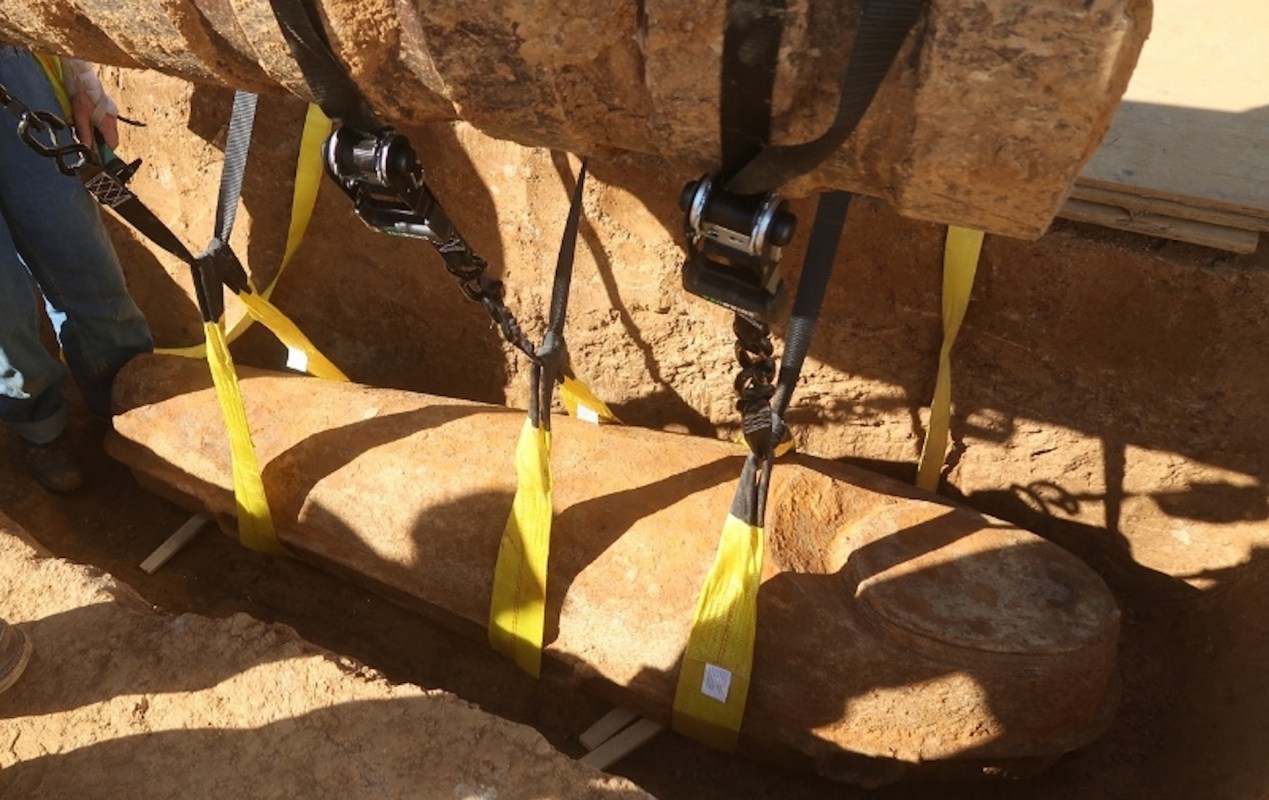
A rare discovery at Mississippi's Asylum Hill could help researchers identify one of the thousands of people buried there.
After three-and-a-half years of excavation, archaeologists have uncovered a fully preserved 200-pound cast-iron casket — a find they say could offer one of the best chances yet to put a name to someone from the historic burial grounds.
What's happening?
Researchers with the University of Mississippi Medical Center's Asylum Hill Project said the coffin is the first cast-iron casket found at the site, where just over 1,075 graves have already been uncovered, WLBT reported. Lead bio-archaeologist Dr. Jennifer Mack said the casket was likely manufactured between 1860 and 1880.
According to WLBT, the casket contained the skeletal remains of a middle-aged woman of European descent. It was found March 18 on a ridge near the center of the burial grounds, where there are an estimated 4,000-7,000 graves.
The burial also included a brass ring with a red gemstone. Researchers said the coffin had a glass window and would have been considered expensive for the time. Mack said an 1865 catalog showed the same model — a "No. 8 slim-size" plain case — costing a little more than $44 wholesale with shipping, while a basic wooden coffin could be purchased for only a few dollars.
Opening the casket took about a week because of biohazard safety measures. The woman's skull had no teeth, which can often be a strong source of DNA, though experts said tooth loss was common at the time. Researchers now hope a small bone from the ear could yield genetic material for testing.
TCD Picks » Quince Spotlight
💡These best-sellers from Quince deliver affordable, sustainable luxury for all




Why does it matter?
The discovery could help answer the question of who is buried at Asylum Hill.
The burial grounds are tied to Mississippi's former state asylum system, where families from every county in the state once sent loved ones for treatment.
A preserved iron casket may protect more evidence than a standard wooden coffin. Details such as the coffin's style, the woman's remains, and the personal items found inside could improve the chances of linking her identity to historical records or living descendants.
What's being done?
Archaeologists are continuing careful excavation work at the site while prioritizing identification whenever possible. Mack said descendants involved with the project have made that goal clear, and the newly discovered casket may offer the strongest lead yet.
The team is also pursuing genetic testing despite the absence of teeth. If the tiny ear bone yields usable DNA, researchers may be able to compare the results with historical records and family information to narrow down the woman's identity.
Beyond this single burial, the project is documenting the people buried at Asylum Hill and preserving their stories.
According to WLBT, once excavations are complete, UMMC plans to place any remains not claimed by family in a mausoleum with their personal effects.
"We were very hopeful we found that casket that could be our best chance of identification," Mack said. "All of our descendants that we're working with, that's their main priority for this project, is they want us to be able to find their loved ones."

Get TCD's free newsletters for easy tips, smart advice, and a chance to earn $5,000 toward home upgrades. To see more stories like this one, change your Google preferences here.







