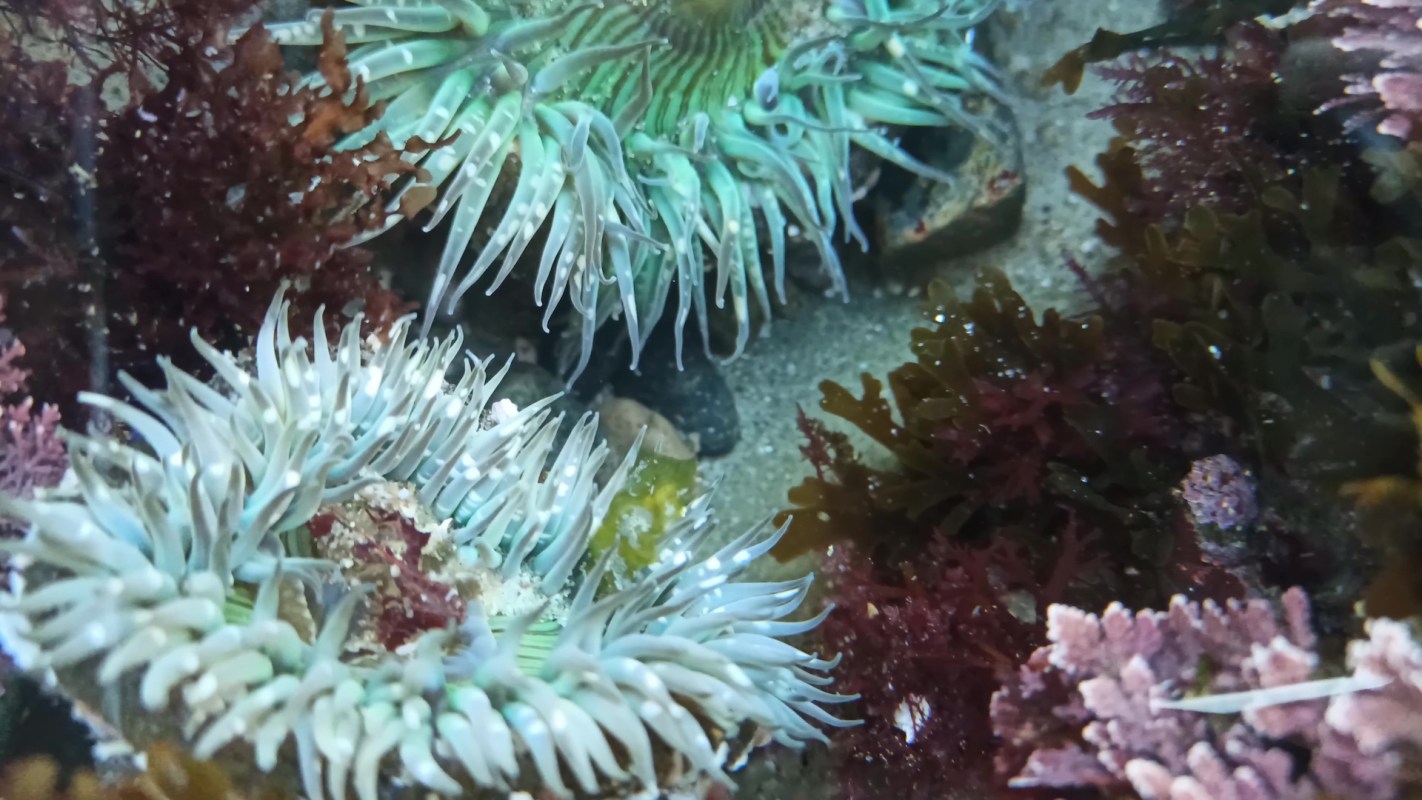
Sea anemones may rely on an ancient body-building system long associated with people and other bilaterally symmetrical animals.
What's happening?
Researchers at the University of Vienna published a study in Science Advances which states that sea anemones use a process called "bone morphogenetic protein shuttling" to organize their bodies.
According to Popular Mechanics, BMP shuttling is typically associated with bilaterians, an enormous branch of animals. While cnidarians like jellyfish usually have radial symmetry, bilaterians are built around left-right symmetry.
In the study, scientists found that a molecule called Chordin serves as a BMP shuttle in sea anemones, similar to its role in animals, including flies and frogs.
Bone morphogenetic proteins are signaling molecules that help embryonic cells figure out their location and how to grow. Different BMP levels help map out different body regions during development.
Why do BMPs in sea anemones matter?
This developmental mechanism may be much older than people once thought. If both cnidarians and bilaterians use it, then it may trace back to a shared ancestor from about 600 million to 700 million years ago, Popular Mechanics reported.
Save $10,000 on solar panels without even sharing your phone number Want to go solar but not sure who to trust? EnergySage has your back with free and transparent quotes from fully vetted providers that can help you save as much as $10k on installation. To get started, just answer a few questions about your home — no phone number required. Within a day or two, EnergySage will email you the best local options for your needs, and their expert advisers can help you compare quotes and pick a winner. |

The finding could reshape how scientists think about the early evolution of animal bodies.
It is also significant because understanding how embryos organize themselves is foundational biology. Research like this can help scientists better understand the deep origins of body plans, developmental errors, and how life diversified into the huge range of species living today.
This discovery, however, doesn't fully settle sea anemone development. Researchers said that comparable mechanisms may also have arisen separately in different animal lineages.
Lead author David Mörsdorf said in a press release, "The fact that not only bilaterians but also sea anemones use shuttling to shape their body axes tells us that this mechanism is incredibly ancient."
TCD Picks » Quince Spotlight
💡These best-sellers from Quince deliver affordable, sustainable luxury for all




"We might never be able to exclude the possibility that bilaterians and bilaterally symmetric cnidarians evolved their bilateral body plans independently," added Grigory Genikhovich, a senior author of the study.
"However, if the last common ancestor of Cnidaria and Bilateria was a bilaterally symmetric animal, chances are that it used Chordin to shuttle BMPs to make its back-to-belly axis."

Get TCD's free newsletters for easy tips, smart advice, and a chance to earn $5,000 toward home upgrades. To see more stories like this one, change your Google preferences here.
Cool Picks