


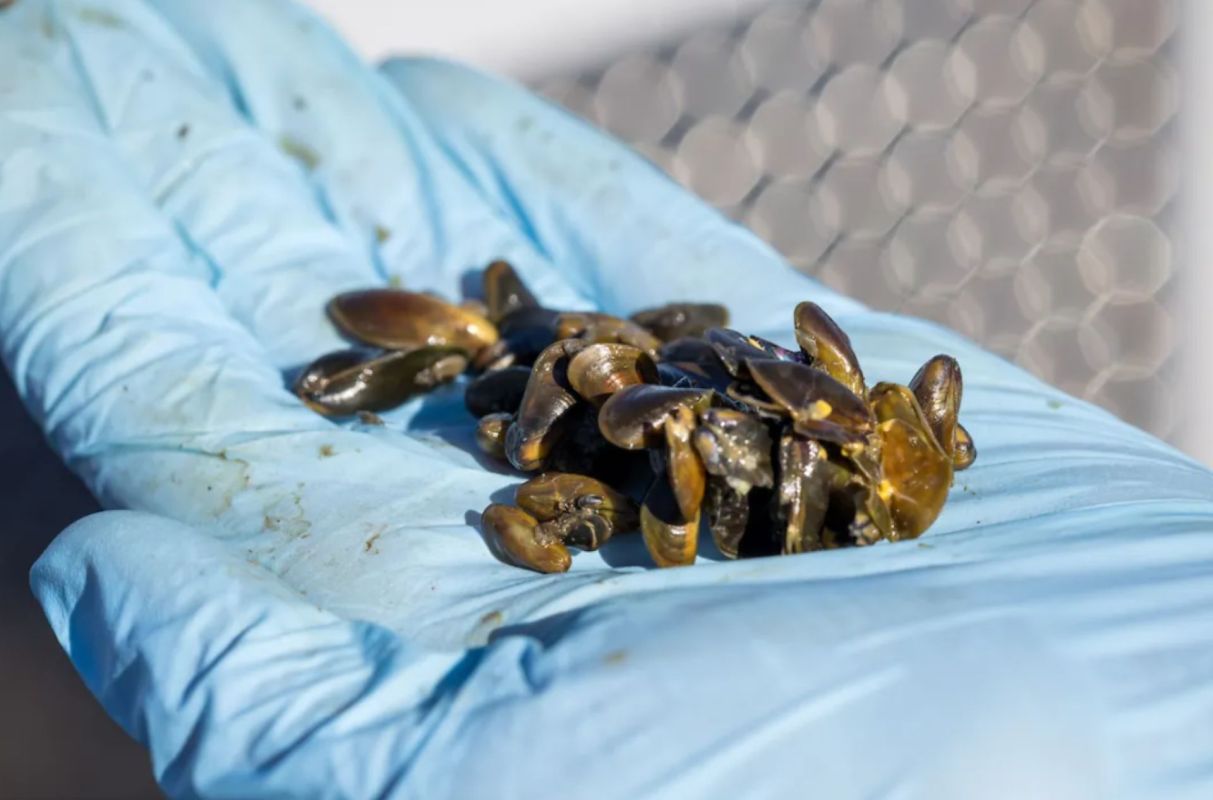
Golden mussels, fast-spreading invasive mollusks known for clogging pipes and damaging water equipment, have been found in Santa Clara County for the first time.
What happened?
According to The Mercury News, Santa Clara Valley Water District officials said two golden mussels were detected at San Jose-area treatment facilities. A juvenile was found near Alum Rock Park at the Penitencia Water Treatment Plant in April, and weeks later, an adult was spotted at the Santa Teresa Water Treatment Plant in Almaden.
Only two have been found so far, and while water from affected water plants is still safe to drink, local officials said the discovery is alarming because the species reproduces quickly and can spread through connected waterways and equipment.
"We're concerned," utility maintenance manager Jason Araujo told the publication, noting that the finds likely mean more mussels are on the way.
Officials believe the invasive mollusks reached Santa Clara County through the South Bay Aqueduct and San Luis Reservoir, both of which connect to broader state water systems. The district serves roughly 2 million residents in Silicon Valley.
Golden mussels were first detected in California in October 2024 at the Port of Stockton. Since then, they have spread through the Sacramento-San Joaquin River Delta and into canals and aqueducts, with findings now reported in Bakersfield, Los Angeles, and San Diego counties.
TCD Picks » Quince Spotlight
💡These best-sellers from Quince deliver affordable, sustainable luxury for all




The spread has accelerated so quickly that San Joaquin County has already declared a local emergency, and Kern County officials have moved toward similar action.
In a letter to Gov. Gavin Newsom, Kern County Supervisor Phillip Peters described the issue as "an active infestation" affecting infrastructure linked to city water delivery, farm irrigation, groundwater recharge, and industrial uses.
Researchers have said the species is especially difficult to control. UC Davis associate adjunct professor of animal sciences Andrea Schreier called them "super invaders," explaining that one mussel can release thousands of larvae and breed more than once a year.
Why is this concerning?
Golden mussels are small — typically about an inch long — but they can create outsized problems for communities.
They attach to hard surfaces in dense clusters, choking off pipes, intake screens, filters, grates, tanks, and pumping equipment. That can slow or block the movement of water through treatment plants, dams, irrigation systems, and power facilities. This can result in high maintenance costs and major operational shutdowns.
When public agencies have to redirect money toward emergency cleanup, monitoring, and new treatment equipment, it can delay other investments meant to improve water reliability and modernize infrastructure.
In Santa Clara County, the water district has already purchased a $130,000 ultraviolet light system for the San Luis Reservoir pumping plant that supplies the region to help kill the mussels, The Mercury News reported. And more units may be needed.
The species also threatens ecosystems. Golden mussels feed on plankton, which many native fish and other species depend on for food. Scientists have also linked them to harmful algal blooms, which can further degrade water quality and put wildlife and recreation at risk.
They can survive in both cold and warm water, and they can live out of water for up to 10 days. That gives them ample opportunity to hitchhike on boats and equipment and spread from one reservoir or lake to another.
What's being done about golden mussels?
Water agencies across California are ramping up defenses.
Crews are removing mussels through scraping, pressure washing, and underwater cleaning. Some agencies are also studying chemical treatments, though many of those substances can harm fish, wildlife, and people, making them difficult to use on a wide scale.
State and local agencies are also tightening boating inspections, since watercraft are a major pathway for invasive mussels to spread. Boaters are being urged to follow the "clean, drain, and dry" rule before moving between lakes and reservoirs. In some cases, officials have issued fines when inspection rules were bypassed.
Meanwhile, people should follow local boat inspection rules, never move untreated watercraft or gear between waterways, and pay attention to reservoir closures or restrictions.
For now, Santa Clara County's drinking water is still considered safe. But the discovery shows how quickly an invasive species can become a costly problem.

Get TCD's free newsletters for easy tips, smart advice, and a chance to earn $5,000 toward home upgrades. To see more stories like this one, change your Google preferences here.







