


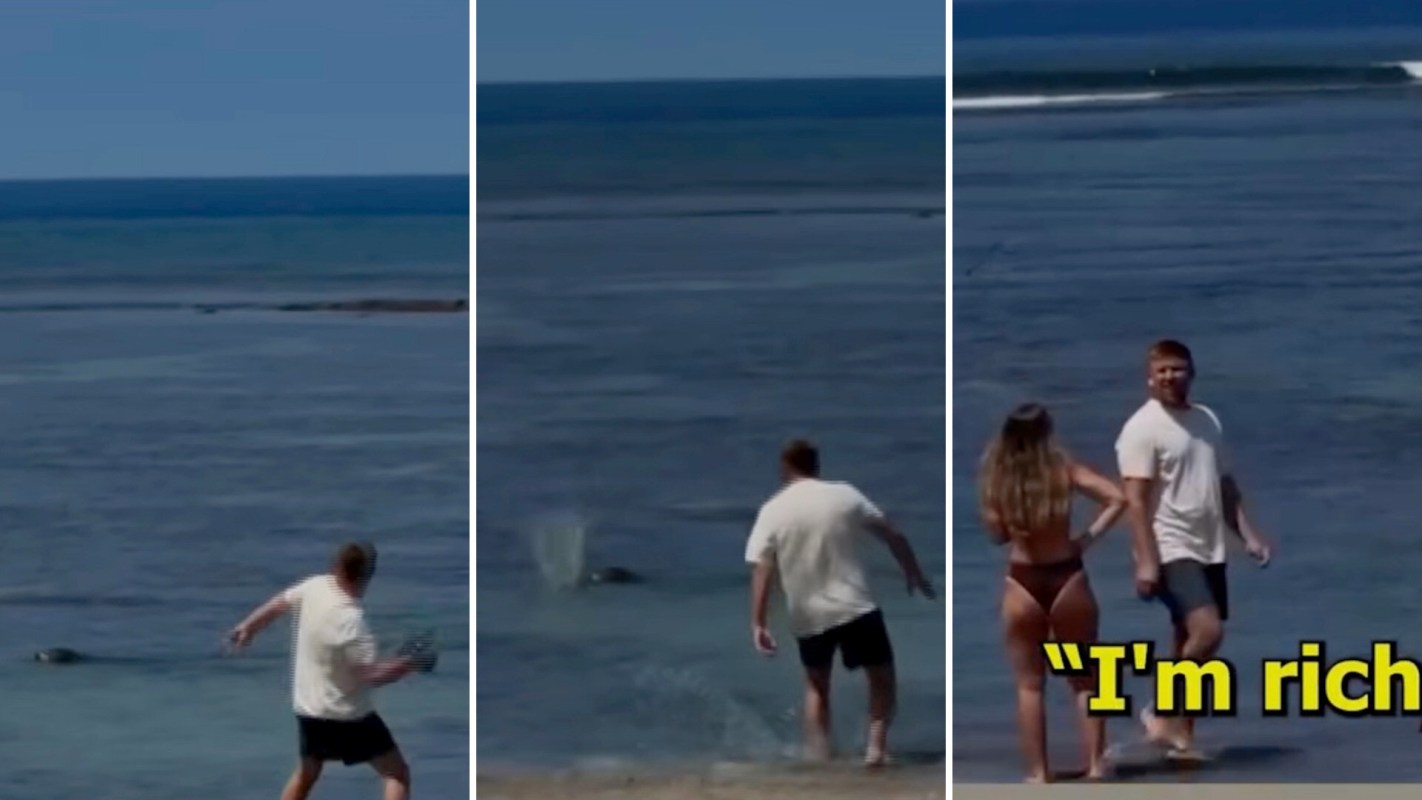
A viral video showing a tourist hurling rocks at endangered wildlife and reportedly bragging, "I'm rich, I can pay the fines," continues to draw widespread anger online.
The clip, highlighted by Cheezburger and on social media, is gaining traction across social media because it appears to show one of the clearest examples of what not to do around wild animals: harass a protected species and treat the consequences like a luxury expense.
Tourist throws a rock at Hawaiian monk seal, a protected species that carries hefty fines if you interact with one. pic.twitter.com/mL61hVODzG
— Molly Ploofkins (@Mollyploofkins) May 6, 2026
The targeted animal was a critically endangered Hawaiian monk seal, specifically a seal beloved by the community named Lani.
According to the report, wildlife officials imposed a $50,000 penalty under heightened endangered species enforcement (detailed here by the National Oceanic and Atmospheric Administration).
Many viewers have focused on the tourist's reported remark as the moment that turned an upsetting encounter into a larger flashpoint. The video has also reignited debate over whether steep financial penalties are enough if wealthy violators don't view them as a deterrent.
The outrage is a reaction to more than simple bad behavior. Throwing rocks at animals can cause injury, stress, and disruptions to feeding, nesting, or migration patterns. For species already under pressure, even a single incident can add to the threats they face in the wild.
TCD Picks » Quince Spotlight
💡These best-sellers from Quince deliver affordable, sustainable luxury for all




These encounters can also put wildlife at risk in another way. Animals that injure humans may be euthanized regardless of whether or not they were provoked. In other words, reckless human behavior can place protected animals in situations where they are later punished for reacting naturally. That makes this kind of harassment dangerous not only for nearby people but also for the animals themselves.
There is also a broader public cost. Wildlife officers and conservation agencies must spend time and resources investigating cases like this, and repeated incidents can lead to tighter restrictions in parks and protected areas that affect communities, tourists, and rule-following visitors alike.
Similar run-ins in recent months have only added to the frustration that some people still seem to treat wildlife laws as optional.
Commenters on the report were furious.
"If the $50,000 fine means nothing, let's see what he has to say about 7 days in jail," said one user.
"The entitlement of some people is insane!" said another.
Fortunately, respecting wildlife is not complicated. Keep your distance, leave animals alone, and remember that protected places are shared spaces, not rage rooms for the rich.

Get TCD's free newsletters for easy tips, smart advice, and a chance to earn $5,000 toward home upgrades. To see more stories like this one, change your Google preferences here.






